Kite with Arabic writing found near Gaza border
Israeli authorities said a kite with Arabic writing was found Tuesday near the Gaza border, calling it a “red line,” with few details released.
Omar Farouk ·
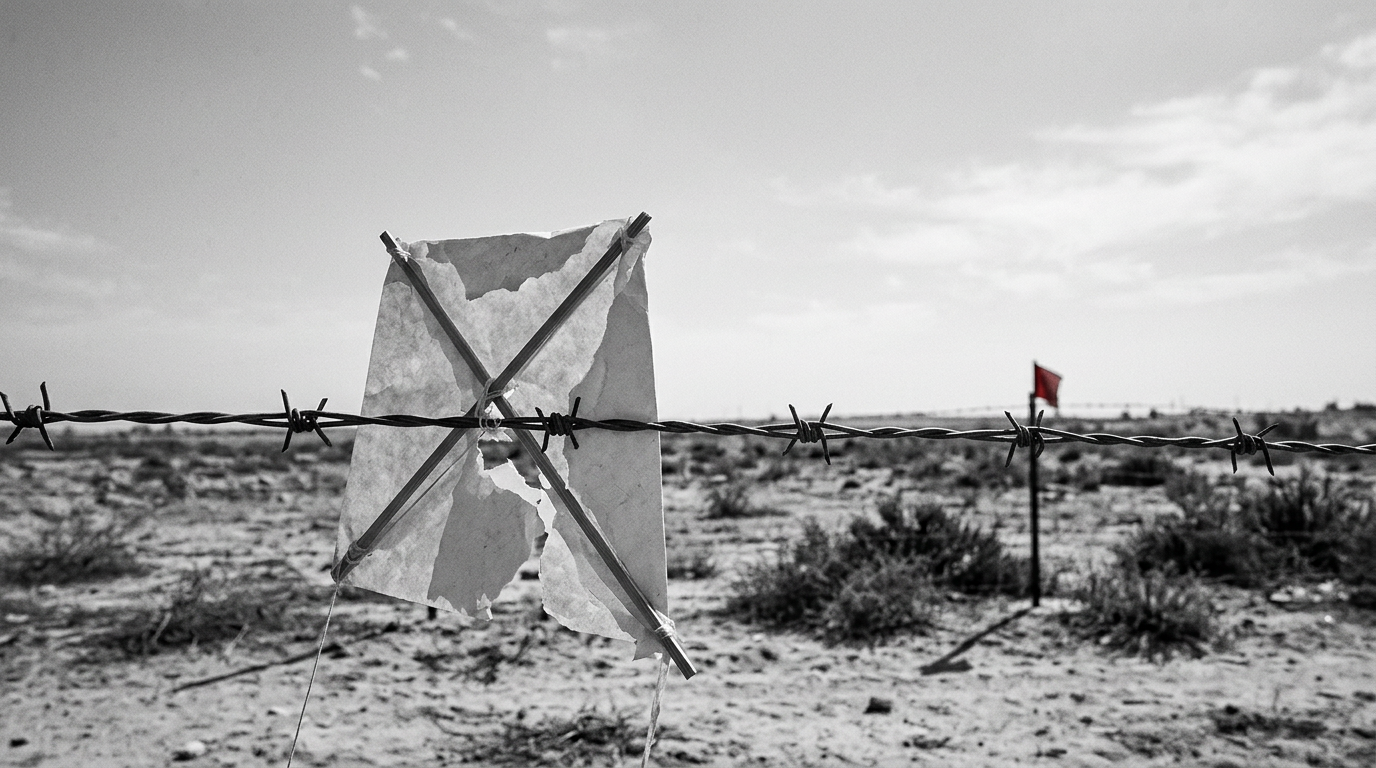
Israeli authorities said a kite bearing Arabic writing was found on Tuesday in Simhoni Forest near the Gaza border, calling the incident “crossing a red line.” Officials did not provide additional operational details in their initial description.
The discovery follows an earlier incident from weeks ago, when another kite originating from Gaza was found near Moshav Shuva. Taken together, the two findings have reinforced concern in communities along the border about recurring, low-tech airborne objects entering the area.
Officials cite a “red line” but offer few Officials cite a “red line” but offer few specifics In statements referenced in the report In statements referenced in the report, Israeli officials used the phrase “crossing a red line” to describe the latest kite incident. However, the practical meaning of that label has not been spelled out, and the statements did not clarify what response—if any—would follow from the discovery. Officials also did not indicate whether the kite was assessed as a security threat, a provocation, or a nuisance. The lack of detail has left open questions about how authorities are categorizing such incidents and what thresholds they believe have been met. Recurring low-tech airborne items along the border Kites, balloons, and other improvised airborne items have appeared periodically near the Gaza border for years, according to Israeli security discourse around the area. The way these objects are treated has varied, with some episodes framed as disruptive but limited, and others discussed as potential security threats. Officials and public discussion have often linked these objects to possible uses beyond their physical presence, including carrying messages or serving as a means to test responses. In that framing, the incidents are described as part of a broader pattern of non-kinetic pressure rather than isolated events.
Heightened vigilance since October 7
The Gaza border zone remains highly contested, with Israel maintaining increased vigilance and frequent security activity since the October 7 attack and the subsequent war. In that environment, even small incidents can draw heightened attention from both officials and local residents. Residents of nearby communities have repeatedly pressed the Residents of nearby communities have repeatedly pressed the government and military to preserve deterrence and to avoid normalizing recurring incidents they believe could gradually weaken border security. The use of “red line” language is being cited in a context where expectations around enforcement and response remain high.
Open questions ahead of possible clarification by July 25, 2024 What remains unclear is how Israeli defense authorities define “crossing a red line” in operational terms for non-kinetic airborne objects. It is also not yet known whether any Palestinian faction will publicly claim responsibility for the kite as deliberate messaging.
By 2024-07-25, attention is likely to focus on whether Israeli defense authorities issue further statements clarifying what the label means. Observers will also watch whether Israel announces new defensive protocols or enforcement measures tied specifically to improvised airborne objects, or whether the episode is treated as an isolated nuisance and quickly overtaken by larger security developments.