

Spanish housing protests grow amid surging rental costs
Protests over Spain’s housing crisis have intensified, with demonstrators demanding immediate legislative reform and threatening the stability of the current…
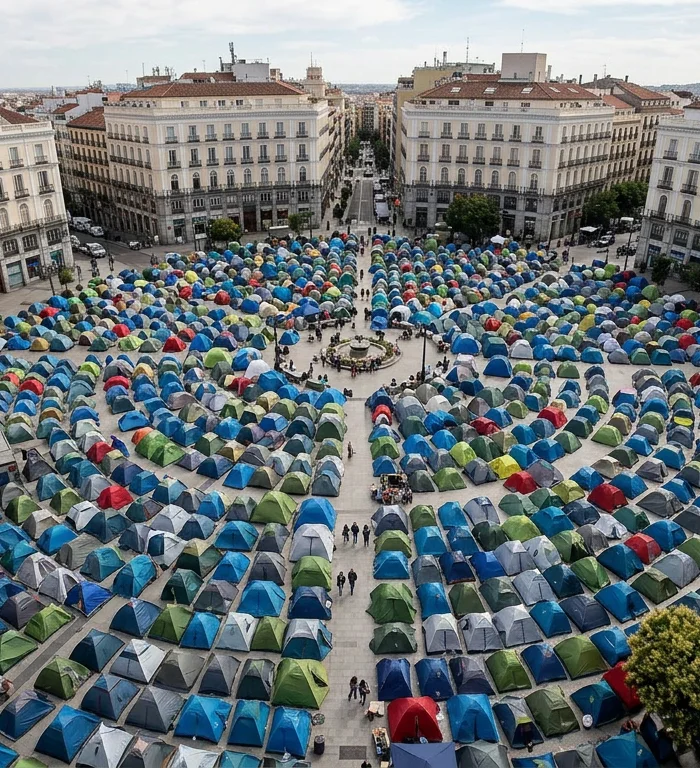
A growing tent encampment in Madrid’s Puerta del Sol plaza, now exceeding 300 tents, serves as a focal point for nationwide protests against rising housing costs. Demonstrators are demanding immediate government intervention, including a halt to evictions and stricter regulation of rental markets. The movement explicitly links the survival of the current administration to significant housing policy reforms.
Rental prices in Spain have increased by 80% over the last decade, while property values have risen by 63%. This economic pressure has triggered widespread public unrest, drawing comparisons to the 2011 15M movement that reshaped Spanish politics. The current mobilization includes organized occupations of government offices and major thoroughfares in multiple cities.
Government Under Pressure for Housing Action Prime Minister Pedro Sánchez faces mounting pressure to Prime Minister Pedro Sánchez faces mounting pressure to issue a royal decree on housing to address these grievances. Housing campaigners issued a list of demands ahead of the government's weekly meeting, including measures to halt evictions and regulate short-term and room rentals. The government’s ability to enact substantive legislative change remains constrained by a fractured parliament. Failure to satisfy the protesters' demands risks further destabilizing the coalition government, as public frustration over housing affordability reaches a critical threshold. Economic Impact and Political Instability
Government Under Pressure
The protests underscore the economic strain on Spanish households, particularly young people, who face difficulties affording housing. Analysts say the movement could force the government into difficult policy choices, potentially impacting economic stability as it seeks to balance market demands with social welfare.
The outcome of the current housing protests will likely shape the country's political landscape, potentially influencing the longevity of the current coalition and the direction of future social and economic policies.
More stories
- Eisenkot secures first coalition deal but lacks majority
- Germans oppose Ukraine aid as poll shows support slipping
- Kim Jong-un receives 10 envoys after constitutional shift
- Ukraine claims Libya strike sinks Russian naval corvette
- COP31 climate talks collapse over fossil fuels and funds
- Russian military faces 1,087 recorded suicides in Ukraine war
- Ukraine forces retake 51 sq km in northern Donetsk push
- Treasury weighs Iran sanctions waiver for Najaf flights
- Several men arrested in 'major incident' near RAF base in West of England used by US Air Force, homes evacuated - Reports
- Trump Takaichi call puts China coordination back in focus
Latest news
- Trump prepares tariffs on China and other major exporters
- New-car buyers pay record average $50,087 in October
- Banks face ECB reserve debate over liquidity and profits
- Investors see Anthropic debut gains fade below $83 a share
- Iraq orders federal control over Kurdish-area oilfields
- Nvidia shares retreat as AI rally cools before PCE data