Negev gun smuggling urged to be treated as terrorism
Calls in Israel’s public debate this week urged treating Negev weapons smuggling as “terrorism,” shifting it from crime to a national security issue.
Omar Farouk ·
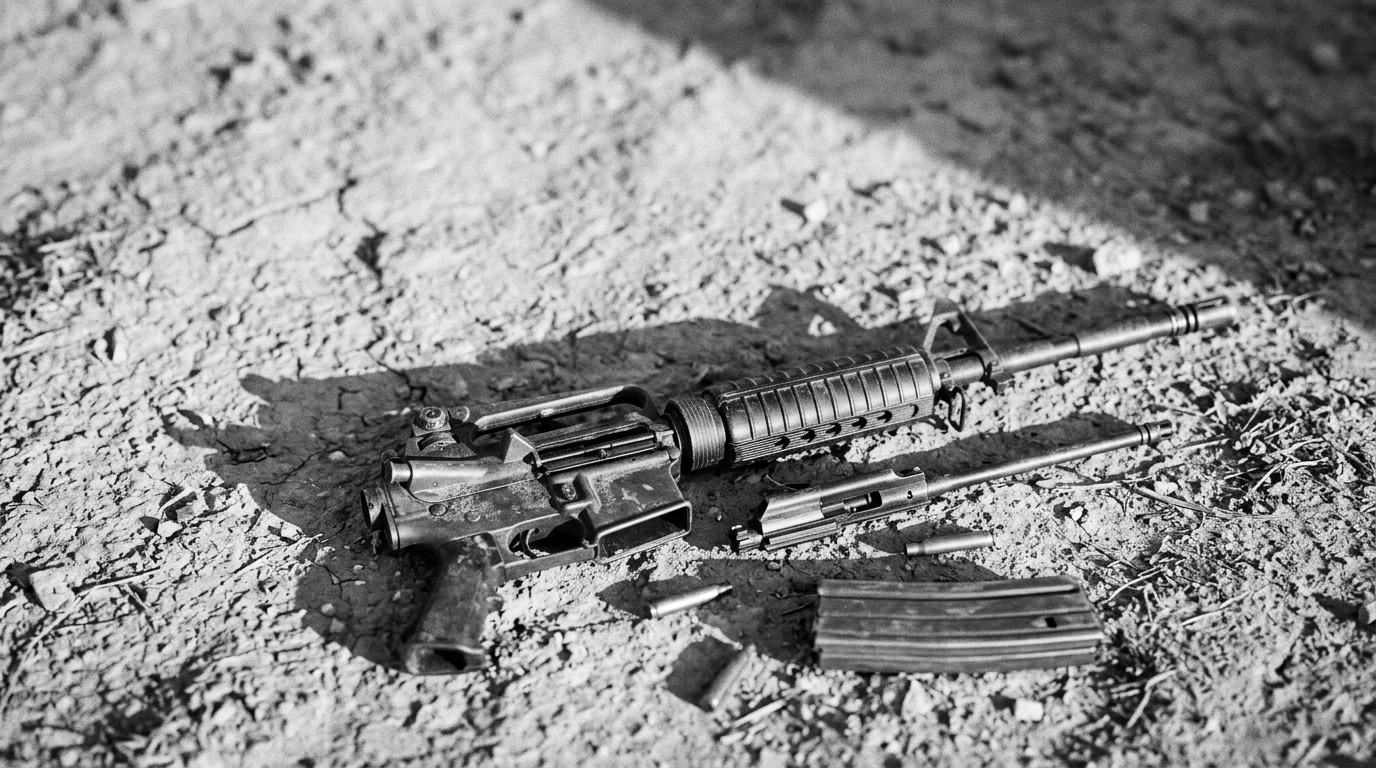
Calls are gaining traction in Israel’s public debate to handle weapons smuggling in the Negev as a national security matter rather than standard criminal enforcement, with one prominent opinion writer urging authorities to define it as “terrorism.” The argument appeared this week in a commentary published in an Israeli newspaper’s opinion section.
The writer presented the spread of illicit firearms and reports of escalating gunfire as an internal-security failure that continues even as the Gaza war dominates Israel’s political and media agenda. The author argued that residents of communities in the Negev are increasingly exposed to nighttime shooting and fear, and claimed the situation was less acute under former Prime Minister Naftali Bennett.
Negev debate centers on Bedouin communities and governance Negev debate centers on Bedouin communities and governance gaps Prime Minister Naftali Bennett The column focused on the Bedouin community in southern Israel and alleged criminal networks operating in the region, arguing for a tougher state response. It positioned the problem not only as an issue of crime but as a challenge to the state’s ability to maintain order in a strategically sensitive area. The Negev is Israel’s large southern region bordering Egypt and the Gaza Strip. It includes a sizable Bedouin population, with some residents living in recognized towns and others in villages Israeli authorities consider unrecognized. Bedouin leaders and civil society groups have long pointed to gaps in infrastructure, policing, and economic opportunity, according to the source material. Israeli governments, meanwhile, have argued that land-use disputes and illegal construction complicate governance and the provision of services.
Criminal violence and cross-border routes overlap in weapons discourse Discussion of weapons proliferation in Israel is typically Discussion of weapons proliferation in Israel is typically framed in two overlapping tracks: criminal violence inside Israel, including in Arab and mixed communities, and cross-border smuggling routes that can involve Sinai, Gaza, and the Jordanian frontier. The opinion piece did not lay out specific supply chains. Even without detailing routes, the argument echoed a recurring political claim in Israel that illicit firearms can circulate from multiple sources and then feed feuds, extortion, and organized crime in the south. In practical terms, accelerating illegal weapons flows would primarily affect domestic security, the source material said, raising insecurity for residents, adding strain to policing capacity, and increasing tensions between the state and minority communities. “Terrorism” framing raises legal and civil liberties questions The column’s call to label smuggling as “terrorism” would, if adopted, shift the policy conversation toward counterterrorism tools. The source material noted that such a shift could broaden legal and operational latitude for the state, while also raising questions about civil liberties and community relations. Beyond internal dynamics Beyond internal dynamics, the Negev’s location near strategic corridors means any sustained deterioration could intersect with regional security considerations. The source material said this could complicate Israel’s posture along its southern approaches and interact with Egypt-facing security coordination.
However, the source material also flagged uncertainty: the argument is rooted in an opinion column and does not provide official statistics, police data, or named government statements to substantiate trendlines. It said a key test by 2024-08-31 would be whether officials announce a dedicated Israel Police or government campaign focused on illegal weapons in the Negev, such as a task force, funding line, enforcement operation, or publicized seizures and arrests, alongside formal reactions from Bedouin municipal leaders or representative bodies.