

Iran-linked vessels cross Hormuz despite US blockade
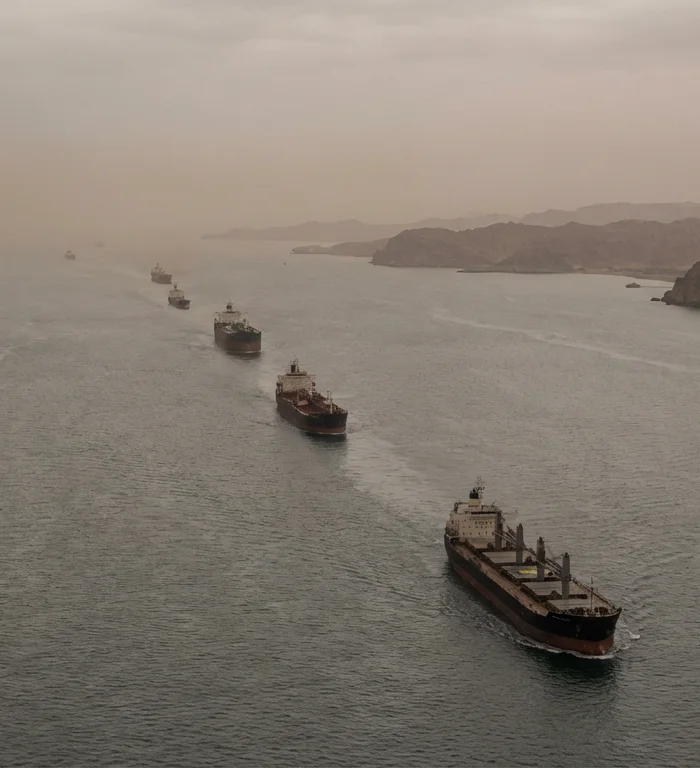
Iran-linked vessels crossed the Strait of Hormuz since Monday despite a U.S. naval blockade, ship-tracking data and officials said.
S. S. S. Central Command began the blockade targeting maritime traffic to and from Iranian ports. Officials said the operation was designed not to obstruct ships passing through the strait when their voyages were to or from other countries.
Ship-tracking information from MarineTraffic showed that two of the vessels, the bulk carrier Christianna and the tanker Elpis , had previously called at Iranian ports. The Christianna had visited Bandar Iman Khomeini , while the Elpis had called at Bushehr , the data indicated. The Elpis is under U.S. sanctions linked to Iran-related trade, according to the same account.
Two other tankers, Rich Starry and Murlikishan , also sanctioned by the U.S. for Iranian links, were shown by tracking data to have passed through the strait overnight. Separately, the tracking information suggested that at least three additional vessels without apparent Iranian connections have crossed the waterway since the blockade began.
The movements come during a period of elevated regional tension following the breakdown of ceasefire talks and President Donald Trump announcing the blockade. Trump said the step was taken in response to Iran’s failure to reopen the strait. The Strait of Hormuz is a central corridor for global shipping, and the past six weeks have seen major disruption that has affected energy prices and international supply chains.
Before the conflict, an average of 138 ships transited the strait each day, underscoring the scale of normal traffic through the channel. With disruption persisting, concerns remain about the risk of escalation and the possibility of attacks on commercial vessels. Safety risks for navigation have also been highlighted due to the potential presence of sea mines.
In response to the security environment, the Islamic Revolutionary Guard Corps (IRGC) Navy has published permitted routes intended to steer ships away from a designated “dangerous area” in the channel. U.S. Navy forces have deployed destroyers to clear sea mines that had been laid, officials said. How quickly traffic patterns normalize, and whether further incidents occur, remain key uncertainties for shipping operators and energy markets that rely on the strait.
More stories
- Bardella denies antisemitism claims over teenage messages
- Washington targets China in new tariff push on trade ties
- Eisenkot secures first coalition deal but lacks majority
- Germans oppose Ukraine aid as poll shows support slipping
- Kim Jong-un receives 10 envoys after constitutional shift
- Ukraine claims Libya strike sinks Russian naval corvette
- Turkish Foreign Minister Accuses Israel of Strategically Framing Ankara as a Regional Enemy
- United States Initiates Naval Blockade of Iranian Ports Following Collapse of Peace Talks
Latest news
- Retailers rethink Black Friday as discount fatigue grows
- Japan data centers face lawsuits over residential sites
- S&P puts Nvidia credit rating on watch over board concerns
- Musk pledges two SpaceX shares per child in new US giveaway
- Morocco targets 2030 World Cup final with new stadium bid
- Barclays puts AI bust risk at center of US growth debate
- US inflation reaches 3.8% before December Fed rate meeting
- Türkiye Desk: GTA 6 drains UK mobile spend as Turkish studios feel pressure