FDA nomination pushes Trump into MAHA confirmation fight
President Trump’s choice of Heidi Overton to lead the FDA has drawn opposition from some MAHA advocates before confirmation.
Amira Hassan ·
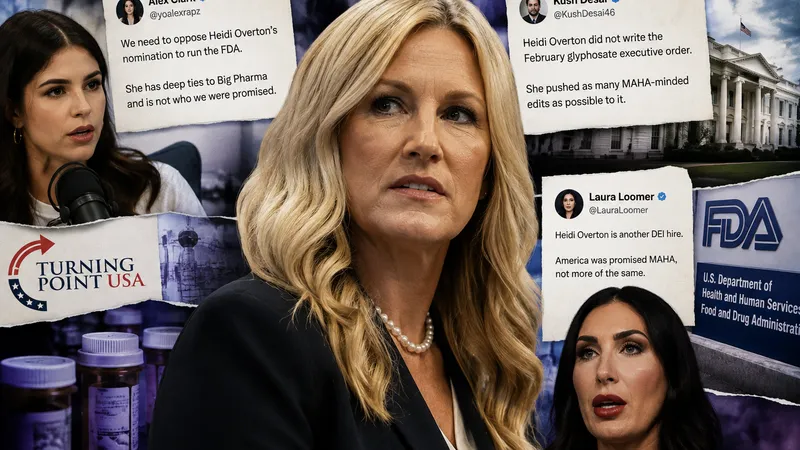
FDA nomination of Heidi Overton has opened a fight between President Trump’s White House and MAHA advocates before confirmation.
The dispute centers on whether Overton, a key Trump aide, is aligned with the health-focused faction that backed parts of Trump’s second-term coalition. The pushback has turned a personnel decision into an early test of how the White House manages pressure from activists who see health policy as central to the administration’s mandate.
MAHA pressure reaches Overton
Alex Clark of Turning Point USA, described as a leading online voice in the Make America Healthy Again movement, urged her followers to oppose Overton’s nomination. Clark partly framed her criticism around alleged ties between Overton and large drugmakers, a claim that has not been independently established in the source material.
Laura Loomer, another right-wing commentator, also attacked the choice and called Overton “another DEI hire.” The criticism places Overton between a White House defending its nominee and a segment of pro-Trump activists that wants tighter alignment between personnel choices and MAHA priorities.
The opposition is not uniform. The source material says not everyone in the MAHA movement is against Overton, which points to an internal dispute rather than a consolidated break with the White House.
Glyphosate order enters fight
One flashpoint is a February executive order on glyphosate signed by President Trump. White House spokesman Kush Desai said Overton did not write the order and instead “pushed as many MAHA-minded edits as possible” to the document.
That response shows how the White House is trying to separate Overton from policy decisions that critics inside the movement may reject. It also suggests the administration wants to present her as a channel for MAHA influence rather than an obstacle to it.
The Food and Drug Administration role gives the nomination more weight than a routine appointment. The agency’s leadership matters to drug approvals, food oversight and public-health regulation, areas where MAHA activists have sought to push the administration toward a more skeptical stance on pharmaceutical and chemical-industry influence.
Confirmation becomes coalition test
The coming confirmation process gives Overton’s critics a formal venue to press their case. If Clark and other online figures keep mobilizing opposition, the White House may face pressure to spend political capital defending a nominee from within its own base.
If that pressure fades, Overton’s path could become a narrower personnel dispute, with the White House able to argue that criticism of the February order misstates her role. In that scenario, the immediate effect would be to preserve Trump’s choice while limiting the split inside the MAHA coalition.
If the opposition broadens, the dispute could complicate the administration’s health-policy agenda before Overton takes office. A prolonged fight would give industry critics, MAHA advocates and White House officials competing incentives to define what loyalty to the movement means in regulatory appointments.
The wider health sector will watch less for the rhetoric than for the confirmation record that follows. Drugmakers, food companies and public-health groups would all read Overton’s answers for signs of how she might approach enforcement, approvals and agency priorities.
The main open issue is whether criticism from MAHA figures remains an online campaign or becomes a confirmation obstacle. For President Trump, the nomination is now also a coalition-management problem: keeping a movement ally engaged while asking it to accept his chosen FDA leader.