South Carolina Senate runoff tests Trump’s GOP pull again
The South Carolina Senate runoff pits Darline Graham, backed by President Trump’s campaign appearance, against Ralph Norman after a damaging debate.
Lauren Collins ·
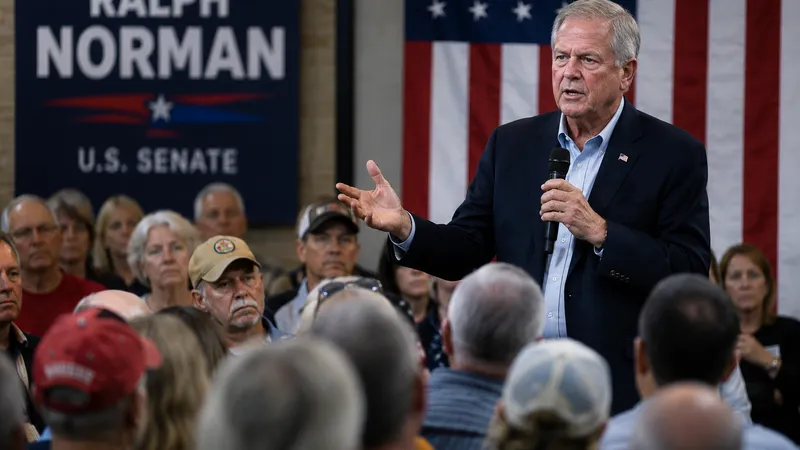
The South Carolina Senate runoff could deny Sen. Darline Graham six more years if Republicans nominate Rep. Ralph Norman tomorrow.
The special election contest has narrowed into a test of Republican identity in a state where personal loyalty, family succession and ideological positioning now overlap. Graham is seeking the seat once held by her late brother, while Norman is pressing a case rooted in House Freedom Caucus politics.
Norman presses debate doubts
Norman has centered his closing argument on Graham’s performance in the runoff’s only debate, presenting electability as the immediate question for Republican voters. At a Friday night town hall, he argued that the party risked choosing a weaker nominee for the general election.
“She’ll get beaten by the Democrat,” Norman said. “Y’all saw how she debates. The candidate that the Democratic Party has put up is smart.”
The argument is aimed at Republicans who may agree with Graham on policy but worry about how she would perform after the primary. In that framing, Norman gains if the runoff becomes a judgment on campaign strength rather than on family name or presidential proximity.
Graham leans on Trump appearance
Graham campaigned with President Trump in Myrtle Beach on Friday, giving her the visual advantage of appearing beside the dominant figure in Republican primary politics. Her pitch was not only loyalty to Trump, but a claim that she would cast votes from a more conservative position than Lindsey Graham did.
“On illegal immigration, I’m tougher than he was,” Graham said, putting immigration at the center of her closing message. The line is designed to blunt a familiar attack from the right: that a successor tied to an establishment name would govern as a continuation of that record.
For Graham, the benefit is clear if Republican voters treat Trump’s presence as validation. The risk is that the Myrtle Beach appearance cannot erase doubts raised in the debate, especially if voters see the Senate race as a general-election calculation rather than a tribute to continuity.
Haley link complicates Trump test
Norman’s candidacy carries an unusual complication for the Trump-aligned primary electorate. He endorsed Nikki Haley, not President Trump, in the 2024 Republican presidential primaries, a distinction that would make a Norman win different from the other defeats suffered by Trump-backed candidates.
Ten Republicans endorsed by President Trump have lost primaries, including his first choice in South Carolina’s governor’s race. Norman would be the first winner in that group who sided with Haley over Trump in 2024, according to the campaign dynamic described in the race.
That makes the runoff less clean than a simple establishment-versus-insurgent contest. Graham has the Trump event and the family connection; Norman has the Freedom Caucus brand and a closing message that says the party should prioritize who can survive the next round.
Runoff choice shapes November
The Democratic nominee is already part of the Republican argument, even before the GOP has chosen its candidate. Norman’s warning rests on the claim that debate skill and campaign discipline will matter against a Democrat he described as smart.
If Graham wins, the party’s path would run through Trump’s public support and her promise to vote to the right of her late brother on immigration. That outcome would help Republicans who want a nominee tied to the state’s existing political network, but it would leave her needing to answer the electability concerns Norman has made central.
If Norman wins, the immediate gain would go to the Freedom Caucus wing and to Republicans willing to look past his 2024 Haley endorsement. The loss would fall on the premise that a Trump-aligned appearance is enough to secure a runoff when voters are weighing performance, not only allegiance.
For the Senate, the practical question after tomorrow is which version of conservatism South Carolina Republicans choose to send forward. One is attached to a familiar name and a Trump campaign stop; the other is built around movement credentials and a sharper warning about the Democrat waiting next.