

Falklands fishing pressure puts U.S. South Atlantic policy on spot
Hundreds of vessels, including fleets from China and Spain, are increasing activity near contested waters as UK-Argentina fisheries cooperation stays frozen.
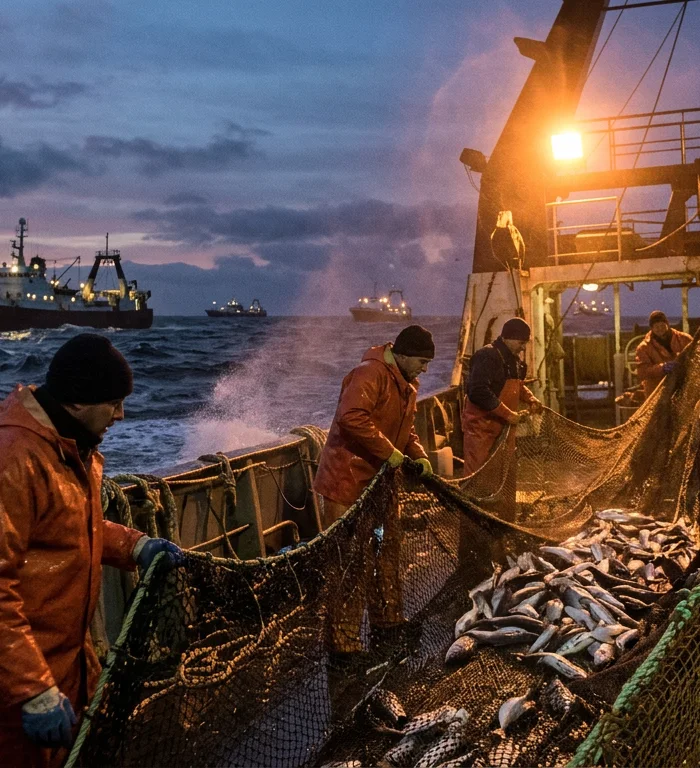
Hundreds of fishing vessels from China, Spain and other countries have stepped up activity near the Falkland Islands, according to a report that warned of stock-depletion risks in the South Atlantic.
The pressure matters in Washington because it cuts across three U.S. interests at once: countering China’s distant-water fleet, preserving ties with the UK and deepening defense relations with President Javier Milei’s Argentina.
Falkland Islands
The contested waters around the Falklands, known in Argentina as the Malvinas, sit inside a sovereignty dispute that neither London nor Buenos Aires has resolved. Argentina claims the islands, while the UK administers them and maintains a military presence there.
The immediate fisheries problem is that the bilateral conservation framework that once helped the UK and Argentina share South Atlantic fisheries data has collapsed, according to the supplied material. That leaves fishing activity around adjacent waters harder to monitor and easier for large foreign fleets to exploit.
China’s role gives the dispute a broader security edge. U.S. Southern Command has treated illegal, unreported and unregulated fishing as a maritime-security concern, especially when Chinese fleets operate near Latin American waters and rely on distant logistics networks.
For the White House, the issue is diplomatically awkward. Milei has moved Argentina closer to Washington and Western defense institutions, but Argentina’s claim over the Malvinas remains politically fixed in Buenos Aires and directly conflicts with the UK position.
That creates a narrow lane for U.S. policy. Washington can support maritime-domain awareness, Coast Guard cooperation and fisheries monitoring without endorsing either side’s sovereignty claim.
If the U.S. backs a monitoring arrangement with Argentina that includes illegal-fishing surveillance, the global effect would be a modest check on China’s distant-water operations in the South Atlantic. For Buenos Aires, it would give Milei a concrete security gain from his pro-U.S. turn. For the fishing sector, it could improve vessel tracking around depleted stocks without reopening a formal sovereignty fight.
If Washington instead leaves enforcement to London and Buenos Aires, the macro effect would be a wider opening for Chinese maritime influence near South Atlantic supply routes. Argentina would face the domestic cost of closer U.S. ties without visible support on a sensitive maritime issue. The industry risk would be continued fishing pressure in waters where the conservation mechanism is already weakened.
The forward test is whether the White House, State Department, Pentagon or U.S. Coast Guard announces a South Atlantic monitoring or maritime-domain awareness initiative with Argentina that includes illegal-fishing enforcement, without changing the U.S. position on Falklands sovereignty.
More stories
- Eisenkot secures first coalition deal but lacks majority
- Germans oppose Ukraine aid as poll shows support slipping
- Kim Jong-un receives 10 envoys after constitutional shift
- Ukraine claims Libya strike sinks Russian naval corvette
- COP31 climate talks collapse over fossil fuels and funds
- Russian military faces 1,087 recorded suicides in Ukraine war
- France Braces for Third Weekend of Protests as Youth Movements Gain Momentum Across Europe
- French protests draw 320,000 in third cost-of-living wave
- Merz condemns Schroeder over Putin birthday celebration
- Navi Pillay wins 2026 Nobel Peace Prize for work on law
Latest news
- Trump prepares tariffs on China and other major exporters
- New-car buyers pay record average $50,087 in October
- Banks face ECB reserve debate over liquidity and profits
- Investors see Anthropic debut gains fade below $83 a share
- Iraq orders federal control over Kurdish-area oilfields
- Nvidia shares retreat as AI rally cools before PCE data