Navi Pillay wins 2026 Nobel Peace Prize for work on law
Navi Pillay won the 2026 Nobel Peace Prize, with the committee presenting her selection as support for an international legal order.
Lauren Collins ·
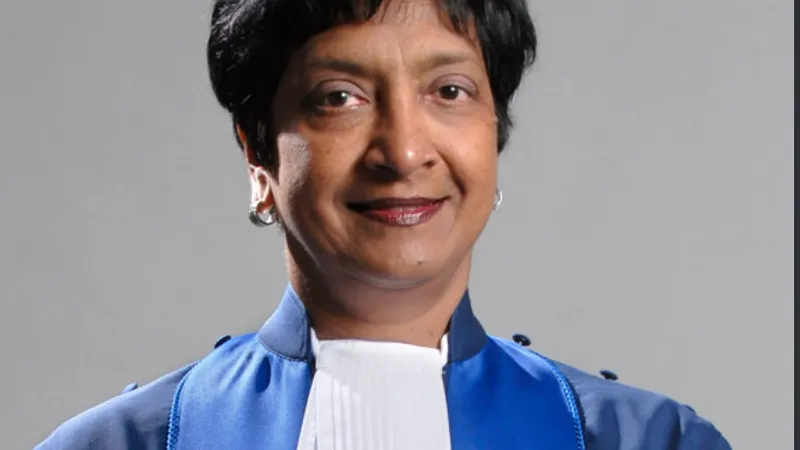
Navi Pillay won the 2026 Nobel Peace Prize, with the committee presenting her selection as support for an international legal order.
The Nobel Committee announced its choice on October 9, honoring a South African jurist whose career spans apartheid-era legal work, international criminal courts and United Nations human rights institutions. Its citation placed the award within a broader argument about the relationship between legal accountability and peace.
The committee described international institutions as facing mounting challenges and warned against allowing political power to displace legal constraints. "The system of international law is under tremendous pressure, and its institutions are under attack," it said.
Pillay’s career crosses courts and borders
Pillay, 85, previously served on the International Criminal Court (ICC) and the International Criminal Tribunal for Rwanda. She also held the position of United Nations High Commissioner for Human Rights, bringing experience in both judicial proceedings and international human rights oversight.
She was born into a family with Indian Tamil roots in Durban, in South Africa’s Natal province. In 1967, she established a legal practice there, becoming the province’s first woman to do so.
The committee linked her work against apartheid with her later judicial responsibilities, citing her defense of Nelson Mandela and other opponents of the system. It credited her with pursuing accountability for governments and political leaders while offering encouragement to people affected by conflict and violence.
Gaza inquiry draws Israeli rejection
Pillay also chaired the UN Commission of Inquiry on the Occupied Palestinian Territory, which concluded in 2025 that Israel had committed genocide in Gaza. That finding belongs to the commission; Israel rejected its report as "scandalous".
The Nobel citation recognized Pillay’s wider record rather than presenting the prize solely through the Gaza inquiry. Its stated concern was the preservation of an organized international order, connecting her individual career to the institutions in which she served.
Trump’s ICC position frames institutional debate
The award comes after President Donald Trump called on countries in September to withdraw from the ICC. Washington has also placed several of its judges and prosecutors under targeted sanctions, putting Pillay’s former court within a dispute over international judicial authority.
Haakon Gjerloew, acting director of the Peace Research Institute Oslo, interpreted the selection as support for international legal institutions rather than a direct rebuke to Trump. "Of course, he might react to someone who has been part of the ICC, but it's not a direct attack on Trump," Gjerloew said.
That distinction separates the committee’s stated rationale from an assessment of its political meaning. The committee emphasized accountability and legal constraints; Gjerloew cautioned against reading the choice principally as a message to the US president.
The ceremony is scheduled for December 10 in Oslo, with an award of 12 million Swedish crowns, approximately $1.2 million. The date commemorates the death of Alfred Nobel, whose 1895 will established the prizes; Pillay follows Venezuelan opposition leader Maria Corina Machado, the 2025 recipient.