Strait of Hormuz tanker attacks put oil routes in focus
Iran claimed it hit a US unmanned vessel near the Strait of Hormuz, while Washington denied it as oil flows remain below prewar levels.
Omar Farouk ·
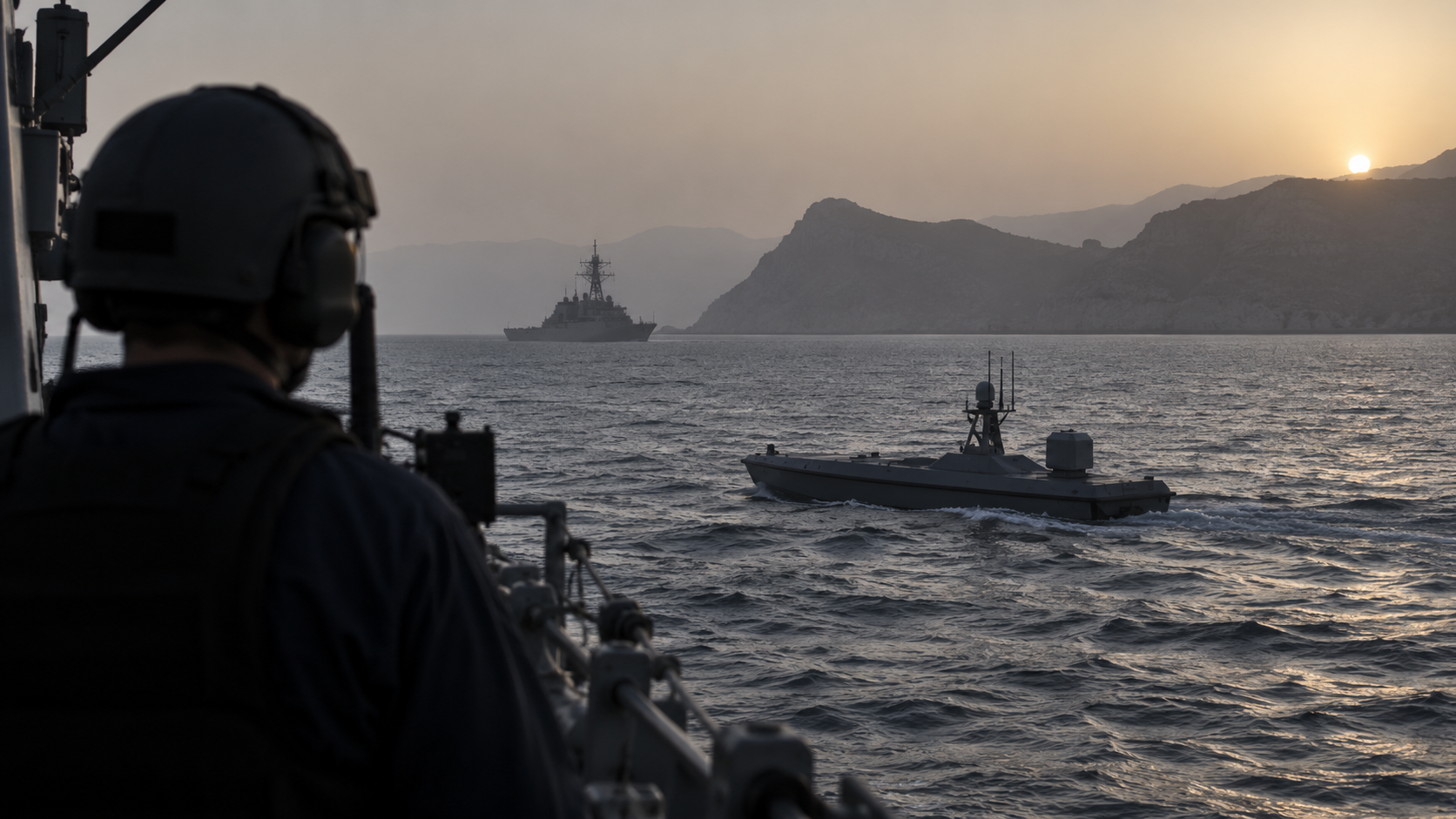
Iran said it hit one unmanned US vessel near the Strait of Hormuz on Sunday, while Washington rejected the claim as oil-security risks widened.
The US military called Tehran's account a "total lie," leaving the incident as a contested claim rather than an established strike. The allegation followed a US statement a day earlier that its forces hit three Iranian oil tankers after the military said Navy warships had been targeted with ballistic missiles.
June ceasefire frays at sea
The confrontation returns pressure to a conflict that began with US and Israeli attacks on Iran on February 28. A ceasefire announced in June has not stopped intermittent fighting, and negotiations between Washington and Tehran have broken down.
The newest exchange followed roughly a month of relative calm before attacks resumed last week around the strait and Iran's southern coast. At least five people were killed earlier in the week during a US bombardment that returned attention to an area where a school was hit in the opening strikes.
Nine million barrels through Hormuz
US Energy Secretary Chris Wright said Sunday that an average of 9 million barrels of oil a day is moving through the strait, a flow he said should help limit pressure on energy prices. He said regional pipelines were also carrying oil, leaving total movement "probably two-thirds or more of pre-conflict flows."
Wright's estimate was above average flows over the prior 28 days indicated by TankerTrackers.com and other shipping data cited in the account. The difference matters because the strait had been treated as an international waterway before the war and remains a chokepoint for oil and natural gas shipments.
Those shipments now depend partly on US Navy escorts for tankers moving near Iran. Wright said he expected other countries to eventually support the Navy's protection efforts, which would spread the burden of keeping energy cargoes moving.
Sanctions meet a shadow fleet
President Trump's administration has paired naval action near the strait with pressure on foreign financial institutions that handle Iranian money. The approach puts military protection of shipping lanes alongside efforts to limit Tehran's access to oil revenue.
Iran's senior hard-line leadership has signaled that it is prepared to endure additional pressure after decades of sanctions. Tehran has also used methods to move oil around sanctions and a US blockade of its ports, relying in part on a shadow fleet that transports crude to buyers.
That fleet gives Iran an economic outlet but also exposes shipping to greater scrutiny and potential interdiction. For tanker operators and insurers, the practical issue is whether naval escorts lower the risk enough to keep cargoes moving at rates close to current levels.
Nuclear talks face UN track
Iran's nuclear program remains the diplomatic fault line behind the conflict. Talks meant to address it faltered soon after the United States and Iran signed a memorandum of understanding in mid-June.
Diplomats say the United States, Britain, France and Germany now seek to refer Iran to the UN Security Council over alleged failure to meet nuclear nonproliferation obligations. That step would move the dispute toward a more formal international process while fighting continues at sea.
Three paths for oil traffic
If naval escorts and pipeline routes keep flows near Wright's two-thirds benchmark, the global macro effect would likely be contained through steadier energy supply. In that scenario, Iran would still face revenue pressure, while the tanker sector would operate with higher security requirements rather than a broad halt in traffic.
If attacks expand from contested vessel claims and tanker strikes into a wider pattern, the mechanism changes from price pressure to supply disruption. That would test importers exposed to Gulf cargoes, tighten Iran's economic leverage around the strait, and raise costs for shipowners, insurers and energy traders.
If the nuclear file moves to the UN Security Council, sanctions enforcement could become the main channel of pressure while naval risks persist. The open question is whether diplomacy can restore a negotiating track before military exchanges around the Strait of Hormuz become the dominant constraint on regional oil flows.