UN General Assembly tests Trump’s stance on crises and AI
The UN General Assembly opens with about 130 leaders facing wars, AI risks, US funding pressure and questions over the UN’s role.
Lauren Collins ·
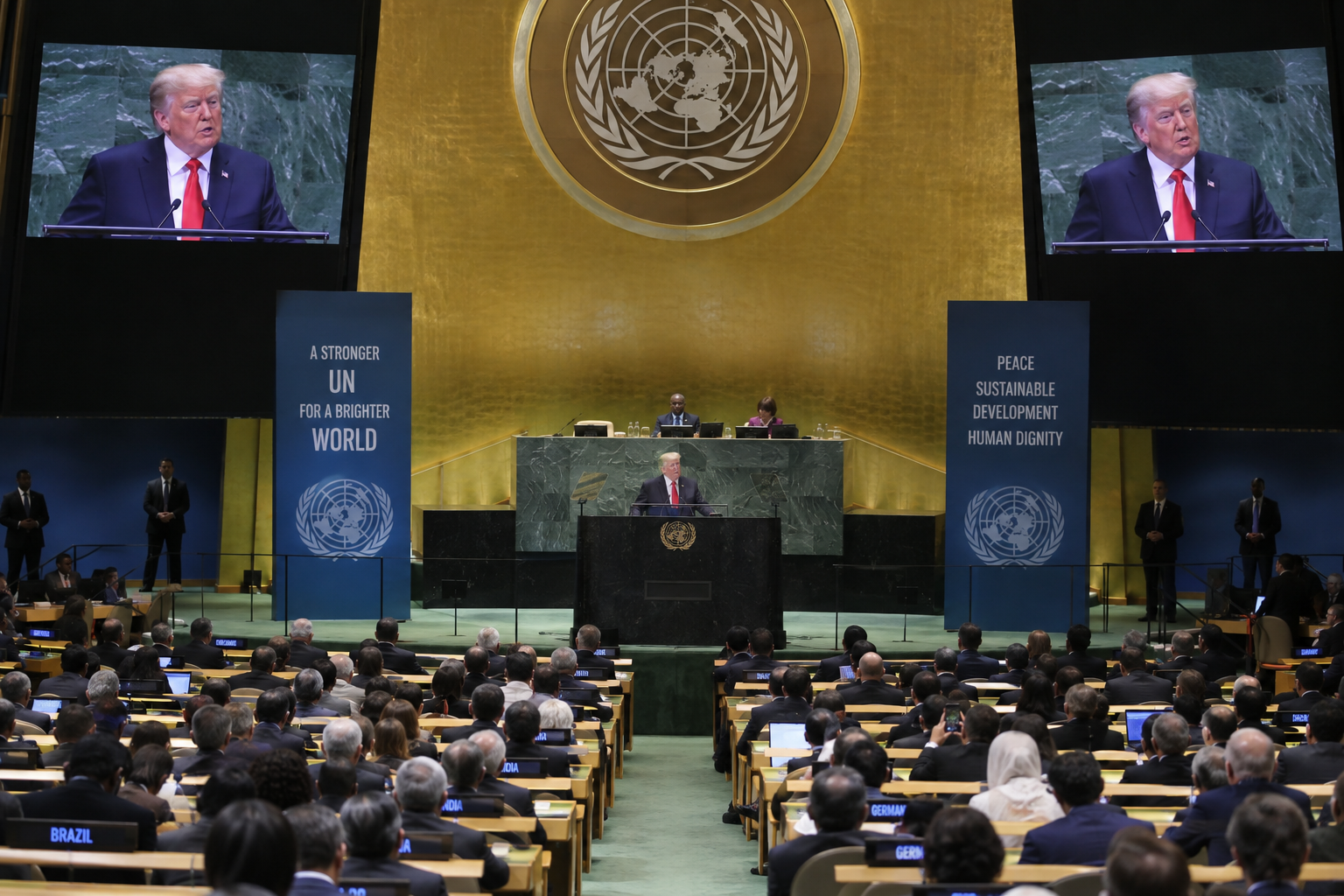
The UN General Assembly opens in New York with about 130 national leaders, as wars, AI risks and President Trump test the institution.
Trump’s return to the rostrum for a second consecutive year gives the week a sharper political edge. The agenda is crowded by conflicts in the Middle East and Ukraine, while governments are also being pressed to address risks from artificial intelligence.
Chinese leader Xi Jinping will not attend the New York gathering, last addressing the meeting by video in 2021. He is instead set for one-on-one talks with Trump in Washington on Thursday, a choice that has fed debate over whether the UN remains central to crisis diplomacy.
Trump pressure meets UN finances
The gathering comes with the post-1945 diplomatic system under strain and the UN facing a more openly skeptical White House. Trump has cut US contributions and pulled Washington out of dozens of UN bodies, according to the source material.
The most immediate financial pressure eased only after the United States paid $725 million toward the UN’s regular budget this week. That payment kept Washington from losing its General Assembly vote, though the United States still owes the organization more than $1 billion and is pressing for spending cuts and institutional changes.
Richard Gowan of the International Crisis Group said the organization is no longer in the same emergency condition it faced last year, but not back on stable ground. The UN, he said, is “stuck in an open-ended crisis,” a phrase that captures the bind between financial dependence on major powers and the demand for broad legitimacy.
Security Council agenda widens
The 15-member UN Security Council may hold high-level sessions on Ukraine, artificial intelligence and the Middle East, including discussions with Arab leaders, diplomats said. Those meetings would put the body’s most divisive files into the same diplomatic week, even as its permanent members remain split on several of them.
For Ukraine, the UN stage offers a way to keep the war visible among governments that have competing regional priorities. For Middle Eastern governments, the week provides access to the Security Council and to bilateral meetings around it, even if the council’s formal decisions remain constrained by veto politics.
The leadership question adds another layer. Secretary-General Antonio Guterres ends his term at the close of 2026, and no clear frontrunner has emerged to succeed him at the 80-year-old organization.
AI risks enter diplomacy
Artificial intelligence has moved onto the week’s agenda after several industry leaders called for a coordinated slowdown in development. Their warning was that the technology could soon improve itself and move beyond human control.
Guterres has argued for global AI governance and has said countries at the frontier of the technology should establish “common guardrails in order to avoid this race to the bottom that could lead one day to a gigantic disaster at the global level.” In 2023, the UN created an advisory body on AI that includes technology executives, government officials and academics.
That position puts Guterres at odds with Trump’s public framing of the issue. Trump has dismissed AI risks as a “hoax” and described criticism of the technology as a “sick conspiracy,” while saying China would benefit from doubts about rapid development.
The split matters because AI governance depends on states that are also competing for technological advantage. If the US treats regulation mainly as a constraint, UN efforts may shift toward voluntary standards and advisory work rather than binding rules.
Three pressures define the week
The first pressure is financial: if the US payment is followed by broader budget commitments, the UN gains room to operate while negotiating reforms. If arrears continue, agencies and diplomats will face a narrower operating base, and Washington will retain leverage over cuts.
The second is geopolitical: if leaders use the week to keep Ukraine and the Middle East in the Security Council’s line of sight, the UN remains a forum for pressure even without consensus. If bilateral meetings dominate, the organization risks looking more like a venue than an actor.
The third is technological: if AI discussions produce shared guardrails, companies and governments would have a clearer framework for development. If Trump’s skepticism prevails among major powers, the industry is likely to face a more fragmented set of national rules rather than a global system.