Andy Burnham edges toward premiership as rivals fade away
Andy Burnham said 322 Labour MPs nominated him, leaving him one backer short of a leadership contest lockout and a likely path to No. 10.
Atlas Newsdesk ·
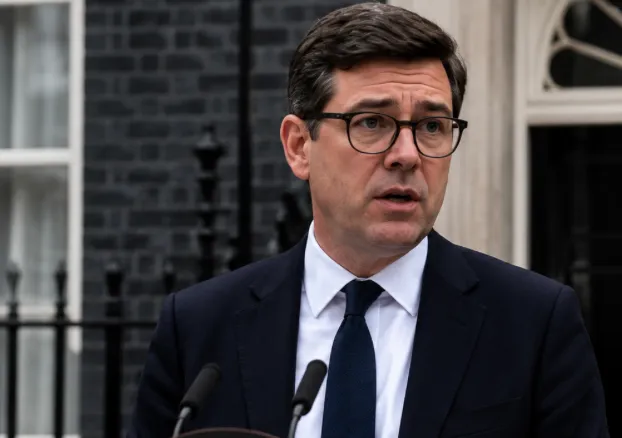
Andy Burnham neared the Labour leadership after saying 322 of 403 party MPs nominated him, putting Downing Street within reach.
The July 10 tally left Burnham one endorsement short of the point at which no rival could enter the race to replace Keir Starmer. Burnham announced in a short video that he had nominated himself, saying, "It's all starting to feel very real."
The 323 nomination hurdle
The race now turns on a simple piece of parliamentary arithmetic. Labour has 403 MPs, and any candidate needs 81 nominations to qualify for the leadership contest.
If Burnham reaches 323 backers, only 80 MPs would remain outside his column. That would put every other potential candidate below the threshold before nominations close.
The nomination window is due to shut next Thursday. The current timetable points to Burnham being confirmed as Labour leader next Friday and officially named prime minister on July 20.
Some Labour MPs said they could not cast a nomination on Thursday but intended to support Burnham when they returned to parliament on Monday. Their backing would be enough, if delivered, to move him past the 323 mark.
Starmer exit reshapes Labour
Starmer said last month that he would step down after Labour’s weak showing in May’s local elections. The result intensified pressure from MPs who wanted a change in leadership and political direction.
Burnham’s route cleared further on Wednesday night when Al Carns, a former junior defence minister, said he would not run against him. That removed the only named alternative in the account and left the contest without an obvious challenger.
The speed of the consolidation matters for Labour because it reduces the time available for a wider debate over policy. The source account does not provide a manifesto from Burnham, so claims about his likely tax, spending, foreign policy or regulatory agenda cannot be stated as fact.
For voters and markets, the immediate issue is continuity. A swift handover would give the governing party a clearer chain of command, while a contested race would stretch the period in which cabinet appointments and policy priorities remain unsettled.
Three paths for Burnham
If Burnham passes 323 nominations on Monday, the leadership process would effectively narrow to confirmation rather than competition. For the global macro picture, the mechanism would be reduced political uncertainty in a major economy; for Labour, it would strengthen Burnham’s mandate among MPs; for the wider political field, it would force opposition parties to respond to a new prime minister quickly.
If he remains below 323 until nominations close, another candidate could still qualify by gathering 81 MPs. That would extend the contest, potentially delaying clarity on appointments and policy signals; Labour would face a more visible internal fight, and Britain’s political sector would get a fuller debate over the post-Starmer direction.
If Burnham becomes prime minister on July 20 as scheduled, the next test will be whether a leadership change is enough to answer the dissatisfaction that followed the May local elections. The open questions are specific: whether remaining MPs fall in line, whether Burnham names a new cabinet quickly, and whether he gives policy detail before public patience narrows.