Maine Senate race shifts as Platner suspends his campaign
Graham Platner suspended his Maine Senate campaign after denying a rape allegation, forcing Democrats to seek a new challenger to Susan Collins.
Lauren Collins ·
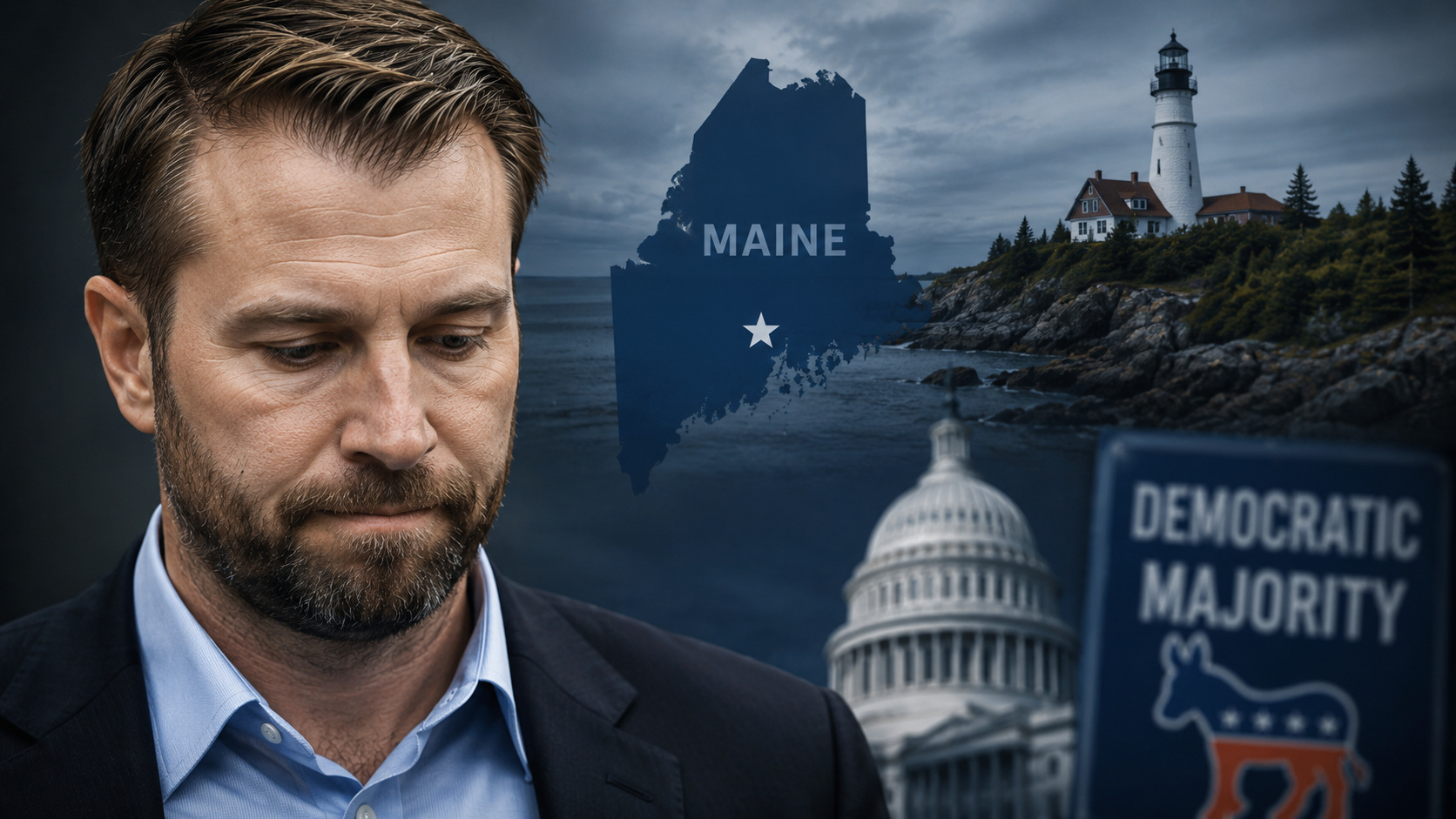
Graham Platner suspended his Maine Senate campaign, reshaping a Senate race scheduled for November’s midterm elections.
The Democratic nominee announced the decision in a video statement Wednesday. His exit gives the party room to choose another candidate to run against Republican Sen. Susan Collins in Maine.
Platner leaves after allegation
The campaign collapsed after a woman accused Platner of rape in accounts published by national political reporters. She said the alleged assault occurred nearly five years ago, during a casual dating relationship, and described Platner as heavily intoxicated at the time.
Platner denies the allegation. The available source material does not include a court filing, police record, campaign filing or full transcript of his video statement, so the allegation remains reported as an accusation rather than an established fact.
The timing matters because Democrats now face a candidate-selection problem in a race already on the midterm calendar. A nominee’s suspension is not only a personal campaign decision; it can force a party to rebuild field operations, donor outreach and voter messaging with limited time.
Democrats need a replacement
Platner had been positioned as the Democratic nominee for the Maine Senate contest. With his campaign suspended, the party can move toward selecting a replacement to challenge Collins, though the source account did not specify the procedure, deadline or list of possible contenders.
Collins enters the reset as the sitting Republican senator and the named opponent in the race. An incumbent generally benefits when the other party must reorganize, because staff, fundraising and earned media attention can shift from persuasion to internal decision-making.
For Democrats, the immediate challenge is credibility as much as logistics. A new candidate would need to separate the party’s campaign from the allegation against Platner while giving voters a clear reason to focus on Collins and the Senate seat rather than on the nomination turmoil.
For Republicans, the opening is simpler. Collins and her allies can frame the Democratic side as unsettled, although the durability of that argument depends on how quickly Democrats name another candidate and whether the replacement avoids an extended intraparty fight.
Maine contest enters uncertainty
The Maine race is one of the contests on the November midterm map, according to the source account. No verified polling, fundraising totals, ballot-access deadlines or state party rules were provided, which limits any firm assessment of how much Platner’s suspension changes the race.
The wider Senate campaign sector will still draw lessons from the episode. Candidate vetting, rapid-response protocols and replacement rules are likely to receive more attention from party committees because a late personnel crisis can consume time that campaigns normally spend on voters.
The macro effect is political rather than economic. If the race becomes more competitive or less competitive because of the Democratic reset, the channel runs through Senate control, committee power and the legislative agenda, not through a direct market or growth mechanism visible from the available information.
If Democrats select a replacement quickly, the party can limit operational damage by preserving donor lists, field plans and anti-incumbent messaging. In that scenario, the global macro impact would remain indirect, Platner’s role would fade to a ended campaign, and Senate campaigns elsewhere would treat the case as a vetting warning.
If the replacement process becomes drawn out, Collins could gain more time to define the race while Democrats spend resources on internal repair. Under that path, the broader industry effect would be a sharper focus on nominee screening, crisis communication and contingency planning across competitive Senate races.
If additional verified facts emerge about the allegation, the campaign’s direction could change again. The key open questions are the Democratic selection timetable, whether Platner formally withdraws from ballot processes where applicable, and how voters respond once a new nominee is named.