

Activists block Erez Crossing in protest against Gaza aid shipments
Right-wing demonstrators are challenging the Israeli defense ministry’s ongoing humanitarian aid protocols, raising tensions over wartime governance.
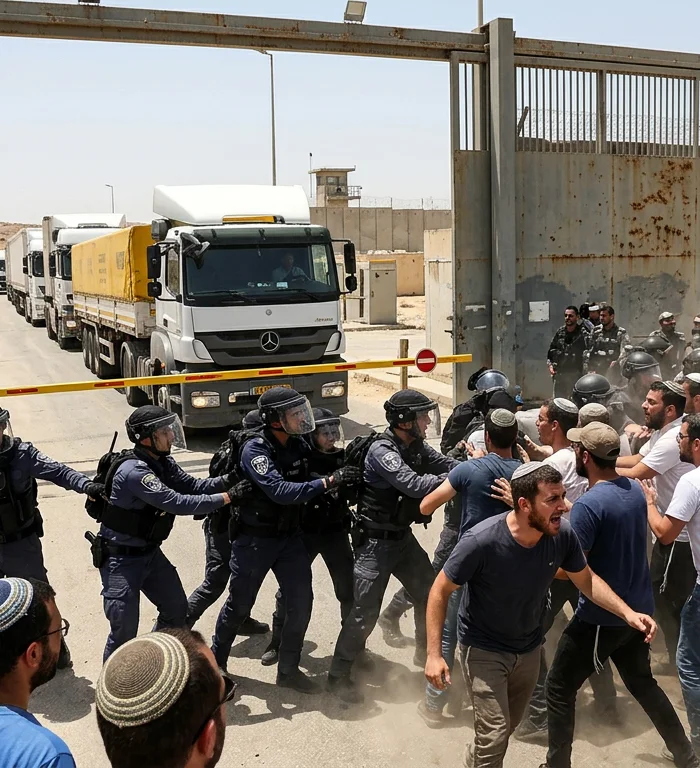
Internal pushback against aid logistics
Activists gathered at the Erez Crossing this week to obstruct the passage of humanitarian aid trucks into the Gaza Strip. The participants, who represent various right-wing organizations, claimed that the continued transfer of supplies serves to consolidate Hamas's operational capabilities rather than assist the local civilian population.
The protest marks a direct confrontation with the current administrative policies overseen by the defense establishment. Demonstrators asserted that the ongoing logistical flow contradicts statements from Defense Minister Israel Katz, who has faced increasing scrutiny from coalition members over the management of aid entry points.
Security policy and cabinet friction
Erez Crossing
Israeli cabinet policy on humanitarian access has functioned as a central point of contention throughout the conflict. The government, operating through the Coordinator of Government Activities in the Territories (COGAT), balances international pressure for aid delivery against internal security concerns regarding the diversion of goods by non-state actors. For several months, the debate over who oversees the distribution of supplies inside Gaza has served as a proxy for the broader national argument concerning future civilian control of the territory. While the military maintains that secure distribution is necessary to prevent a total governance vacuum, vocal members of the right-wing coalition have consistently advocated for stricter conditionality and the complete cessation of shipments until specific security benchmarks are reached. Global implications for diplomatic alignment The unrest at the border carries significant weight for Israel's international diplomatic standing, particularly concerning its relationship with the United States. Washington has maintained consistent pressure on the Israeli government to scale up the volume of humanitarian supplies entering the region to mitigate the unfolding crisis.
Any disruption to the established supply routes complicates the administrative efforts to stabilize the regional theater and forces the security cabinet to navigate competing demands from domestic political allies and foreign partners. The outcome of these protests could influence whether the government opts for a more restrictive aid policy, potentially triggering further international diplomatic challenges in the coming weeks.
Operational shifts and government oversight
The stability of current logistics depends heavily on the security establishment's ability to manage transit corridors despite mounting domestic resistance. Should the government move to tighten or pause aid protocols to address coalition grievances, it would likely provoke a severe response from international aid organizations and donor nations that monitor these corridors as a litmus test for government policy.
More stories
- Germans oppose Ukraine aid as poll shows support slipping
- Kim Jong-un receives 10 envoys after constitutional shift
- Ukraine claims Libya strike sinks Russian naval corvette
- COP31 climate talks collapse over fossil fuels and funds
- Russian military faces 1,087 recorded suicides in Ukraine war
- US faces China, Russia in Africa minerals contest
- ICJ holds Myanmar responsible for Rohingya genocide
- Pakistani authorities detained 130 Malaysians in scam-centre raid
- EU methane rule faces three-year delay push by gas groups
- Russian strikes leave many Kyiv homes with 4 hours of power
Latest news
- Trump prepares tariffs on China and other major exporters
- New-car buyers pay record average $50,087 in October
- Banks face ECB reserve debate over liquidity and profits
- Investors see Anthropic debut gains fade below $83 a share
- Iraq orders federal control over Kurdish-area oilfields
- Nvidia shares retreat as AI rally cools before PCE data
- Macy’s parade faces balloon limits as storm winds approach