

Russian strikes leave many Kyiv homes with 4 hours of power
The outages have intensified a wartime dispute between Volodymyr Zelenskyy and Mayor Vitali Klitschko over preparations for winter.
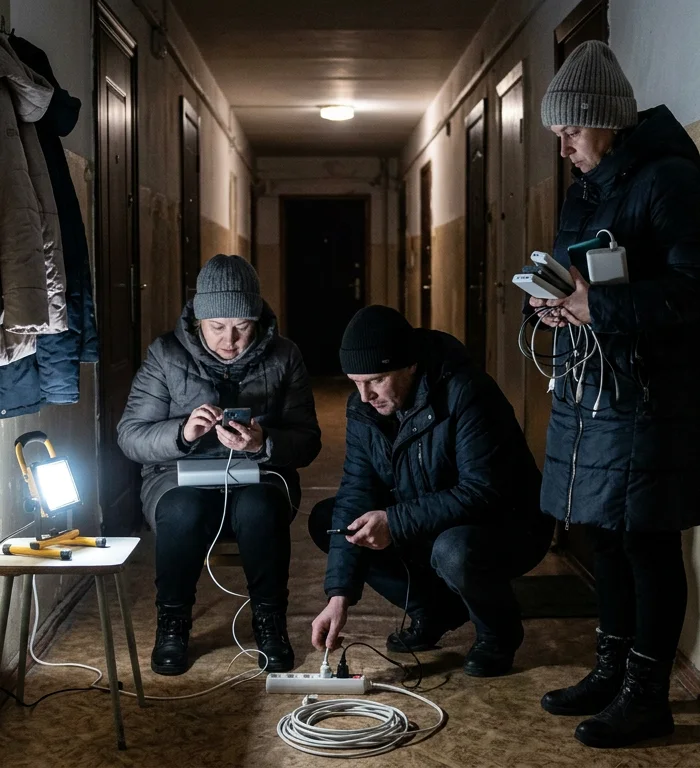
Russian strikes have reduced electricity in many Kyiv homes to four hours daily ahead of winter, a Guardian news report said Wednesday, increasing pressure on Mayor Vitali Klitschko over city preparations.
The immediate stakes are practical and political: the same Wednesday report said some homes in Desnianskyi, a 600,000-resident district, endured blackouts lasting up to 37 hours.
Maksym Bakhmatov, head of Desnianskyi, attributed the crisis first to Russia’s president and then to Kyiv’s mayor. “First, because of Putin,” he said. “Second, because of lack of normal management from the mayor, [Vitali Klitschko].
That’s it.”
Bakhmatov said the district lacked the budget to carry out larger projects he said should have been pursued over the past five years, including decentralised power generation. “We have no alternative generators in order to generate electricity inside of Kyiv,” he said. “They didn’t build anything for this, and for now we have almost a collapse of city.”
President Volodymyr Zelenskyy wrote last week that Kyiv faced the country’s most serious urban disruption. “The situation is worst in Kyiv – people and businesses are facing prolonged power and water outages, and the challenges are extremely serious,” he wrote, linking the situation both to Russian attacks on energy infrastructure and what he called failures at city level.
Klitschko rejected the attack, asking: “How is [Kyiv]… supposed to stop the Russian special operation against the Ukrainian energy system?” The Guardian report said Ukraine’s central government is responsible for defending most large energy sites and, because of the centralised grid, for maintaining electricity and water supplies across cities.
The dispute draws on a long rivalry. Volodymyr Fesenko, a political analyst, said the “conflict between Zelenskyy and Klitschko is very old and very personal,” while adding that Kyiv had fallen short compared with cities such as Kharkiv. He said it was unclear whether Zelenskyy would move to limit Klitschko’s authority over city infrastructure.
Public anger has already surfaced. About 500 people gathered on Kyiv’s Khreshchatyk street on Oct. 17 to accuse Klitschko of shortcomings including winter readiness, shelter shortages and the energy crisis, according to the report.
The military pressure is also widening inside the capital. The Guardian reported that Russia struck two important Dnipro river bridges in Kyiv this week with ballistic missiles, threatening links between the city’s western and eastern sides.
Kharkiv offers a comparison. Mayor Ihor Terekhov said the city, 19 miles, or 30 kilometres, from the Russian border, is trying to decentralise utilities through “energy islands,” meaning small fuel-powered generators for essential services, along with modular boilers. “It is very costly and time-consuming,” he said.
Bakhmatov said Desnianskyi had no workable evacuation plan for residents facing a cold winter with unreliable power. “We need help with the generators, with food, with power stations, and so on,” he said. “Just help us.”
Source: news report, The Guardian, Nov. 18, 2026
More stories
- Ruto pledges police reforms after 127 protest deaths
- Botswana ranks last for feeling safe after dark at 28%
- Connected Advocacy and 7 partners seek local climate finance control
- EU methane rule faces three-year delay push by gas groups
- Cebu groups seek probe into protest dispersal with more than 20 hurt
- Malaysia AG warned Najib house arrest risked stability
- Trump says Israel aid ends this year, arms sales continue
- Retail investors face timing risk after OCBC's nearly 6% fall
Latest news
- Average 30-year mortgage APR falls 21bp to 7.13%
- Home insurers charge low-score homeowners nearly $2,000 more
- German founders need 3,942 hours to open small business
- Türkiye Desk: GTA 6 puts console access and network demand in focus
- Liberia to cut port charges, add 30 days of free storage
- Leaked Deutsche Bank files test Sewing's reform narrative