

Connected Advocacy and 7 partners seek local climate finance control
The COP31 initiative could give Niger Delta communities a platform to push for more say over funding, remediation and coastal protection.
Connected Advocacy and seven partner organisations announced the World Locally Led Foundation on Nov. 13 at COP31 in Antalya, Turkey, Premium Times reported on Nov. 18.
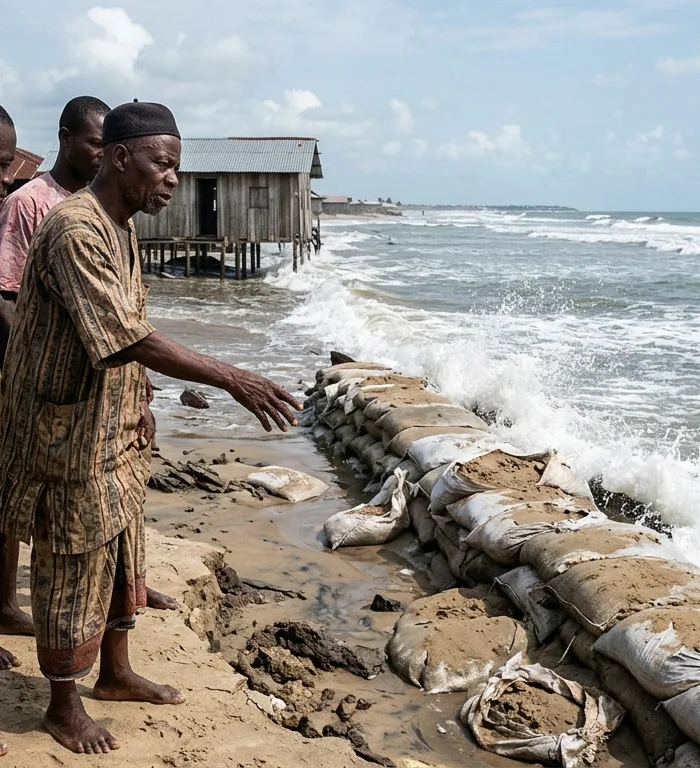
The initiative could sharpen pressure for community control in Nigeria’s Niger Delta, where lawmakers cited Ayetoro in Ondo State as having reportedly lost about 80% of homes and infrastructure to sea incursion.
The foundation seeks to address barriers that limit frontline communities’ role in climate finance, which means funding for emissions cuts, adaptation and resilience, and in environmental decisions affecting local livelihoods.
The announcement followed a Global Localisation Forum side event on local climate action and energy democracy, a term used by participants to describe community participation in planning cleaner energy systems.
“Communities must be part of setting priorities, shaping solutions and overseeing implementation. The commitments made at the global level must translate into resources, leadership and accountability at the local level,” Israel Orekha, global director of Connected Advocacy, said, according to Premium Times.
The seven partner organisations are Clean Climate and Environment Campaign Initiative, Support to Life, Climate Action Network West and Central Africa, Rise for Ocean, Charter for Change, Tax Justice Africa, and the Traditional Council of Oku Kingdom in Cameroon.
Premium Times said the proposed Coordinated Trust platform would link community organisations, traditional leaders, civil society groups and international partners to exchange experience, promote locally led solutions and advocate for more inclusive climate policies.
The Nigerian context is especially sensitive in the oil-producing Niger Delta. Communities there face oil pollution, gas flaring, wetland and mangrove degradation, flooding, coastal erosion and threats to fishing and farming livelihoods.
In October, Premium Times reported that residents of Obite, Obagi and neighbouring communities in Rivers State continued to witness gas flaring around facilities operated by TotalEnergies, despite the company’s declaration that it had ended routine gas flaring in Nigeria. The newspaper said its investigation examined satellite data, regulatory records and community accounts, and found persistent flare activity around OML 58 and OML 130 assets.
Forum participants identified limited access to climate finance, exclusion from decision-making, weak technical resources and insufficient leadership opportunities as obstacles for frontline and coastal communities. Giuliana Battisti of Warwick Business School and the Circular Economy Powered Renewable Energy Centre, and Gloria Majiga, a policy officer on tax, natural resources and climate finance, called for simpler funding procedures and fairer financing mechanisms, Premium Times reported.
Traditional and humanitarian actors also pressed for a larger local role. Fon Ngum IV, Paramount Ruler of the Oku Kingdom in Cameroon, said indigenous knowledge should inform climate policies, while Sema Karaosmanoglu of Support to Life Turkey and Qarnar Igbal of Climate Alliance Pakistan and Charter for Change said local organisations often respond first to emergencies but lack authority and resources.
The foundation is expected to facilitate the Antalya forum’s outcomes, including design and operation of the Coordinated Trust platform, Premium Times reported. Orekha said it would pursue policy reforms, stronger institutions and collaboration between local actors and international partners.
Source: Premium Times via AllAfrica, Nov. 18, 2026.
More stories
- Ruto pledges police reforms after 127 protest deaths
- Botswana ranks last for feeling safe after dark at 28%
- EU methane rule faces three-year delay push by gas groups
- Russian strikes leave many Kyiv homes with 4 hours of power
- Cebu groups seek probe into protest dispersal with more than 20 hurt
- Malaysia AG warned Najib house arrest risked stability
- Venezuela protests seek elections as vote dates stay unset
- Xizang earthquake blocks highway as crews build shelters
Latest news
- Average 30-year mortgage APR falls 21bp to 7.13%
- Home insurers charge low-score homeowners nearly $2,000 more
- German founders need 3,942 hours to open small business
- Türkiye Desk: GTA 6 puts console access and network demand in focus
- Liberia to cut port charges, add 30 days of free storage
- Leaked Deutsche Bank files test Sewing's reform narrative
- CMS raises Medicare Part B premium $6.50 for 2027