

Liberia to cut port charges, add 30 days of free storage
The measures target cargo clearance delays averaging nearly 13 days at the Freeport of Monrovia, Liberia’s main commercial gateway.
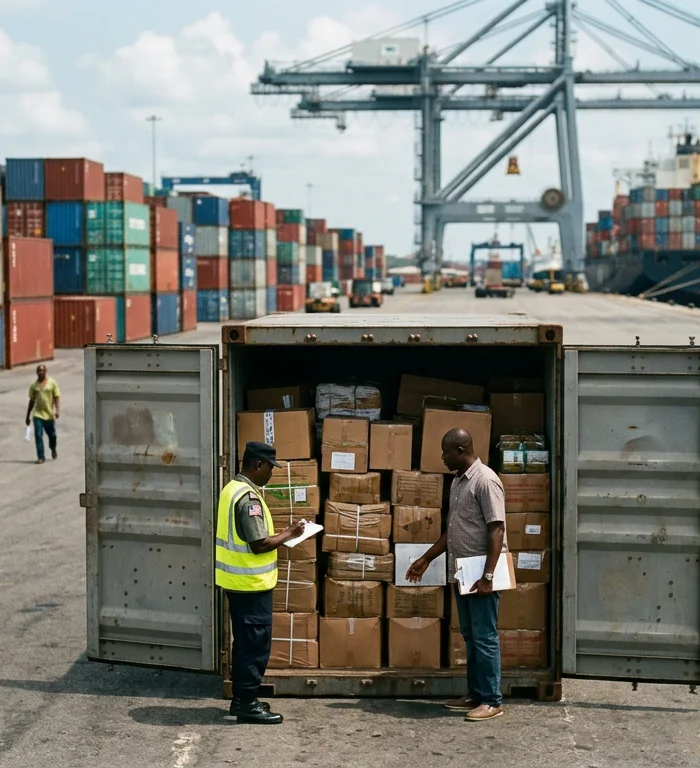
Liberia’s government announced port-relief measures after a Nov. 16 meeting, including an extra 30 days of free storage for eligible containers, the Liberian Observer reported on Nov. 18.
The changes target clearance delays at the Freeport of Monrovia, where average cargo release time was 12 days, 19 hours and 42 minutes in July 2026, compared with 12 days, 22 hours and eight minutes in August 2022, according to Liberia Revenue Authority studies.
The package includes plans to remove certain shipping fees, introduce 24-hour port operations, deploy additional customs personnel and digitize customs payments. The Freeport is Liberia’s principal commercial gateway for imported food, construction materials, machinery and other goods.
Finance and Development Planning Minister Augustine Kpehe Ngafuan said shipping lines had been asked to remove the Delivery Order Fee and were given one week to consult their principals, according to the report. The government is also discussing removal of an MSC-related surcharge.
National Port Authority Managing Director Sekou Dukuly announced the 30-day storage relief for eligible containers that have remained at the port for as long as one year. The authority also suspended certain vessel movement charges imposed on shipping lines, including 30% and 100% charges linked to peak-season movements and departures.
The measures follow business complaints about high port charges, slow clearance and container congestion. For importers, the costs can include storage expenses, demurrage, delayed sales and working capital tied up in goods awaiting release.
The July 2026 Liberia Revenue Authority study identified bottlenecks including manifest submission, customs declarations, banking integration, manual procedures and weak coordination among agencies. Those findings point to delays across a chain involving shipping lines, terminal operators, customs authorities, banks, inspection agencies, brokers and importers.
The government is also moving toward round-the-clock operations at the port, including nights and weekends. That plan would require customs, payment services and other operators to be available outside regular hours, as partial coverage would leave bottlenecks in place.
The Liberia Revenue Authority is preparing an electronic customs payment system for Jan. 1, 2027, Customs Commissioner Saah Saamoi said, with support from the Central Bank of Liberia, commercial banks and the National Switch. The rollout was scheduled for January to avoid disrupting the busy December import period.
The relief has limits. The extra storage period applies to charges under NPA control and should not be read as a blanket waiver of charges by terminal operators, shipping lines or other service providers. Lower port charges also do not automatically mean lower retail prices, which can be affected by exchange rates, transport costs, commodity prices and commercial margins.
A General Auditing Commission management letter on the NPA’s financial statements for the fiscal year ended June 2017, published in 2021, raised earlier concerns over the authority’s access to APM Terminals revenue records under a 25-year concession signed in 2010. APM Terminals disputed a cited reconciliation involving $29.6 million in auxiliary revenue, and the matter was referred to the Ministry of Justice.
The next test is whether the government’s measures reduce release times from the July 2026 benchmark and whether importers see lower clearance costs once the fee removals, staffing changes and Jan. 1 payment system take effect.
More stories
- Ethiopia faces 905,000-person poverty risk in IFPRI scenarios
- Nvidia investigation puts SEC focus on investor disclosures
- G7 economic optimism falls to 22% despite steady growth
- US challenges Airbus financing over $3.4bn EIB loan
- Deutsche Bank shares fall 6.4% after leaked-file reports
- G7 governments face Italian-style surplus test
- The week ahead for the markets
- The week ahead for the markets
Latest news
- Average 30-year mortgage APR falls 21bp to 7.13%
- Home insurers charge low-score homeowners nearly $2,000 more
- Ruto pledges police reforms after 127 protest deaths
- Botswana ranks last for feeling safe after dark at 28%
- Connected Advocacy and 7 partners seek local climate finance control
- German founders need 3,942 hours to open small business
- Türkiye Desk: GTA 6 puts console access and network demand in focus
- EU methane rule faces three-year delay push by gas groups