

Venezuela protests seek elections as vote dates stay unset
Venezuela’s opposition rallied nationwide on October 22 to demand elections, with no voting date set by the interim government.
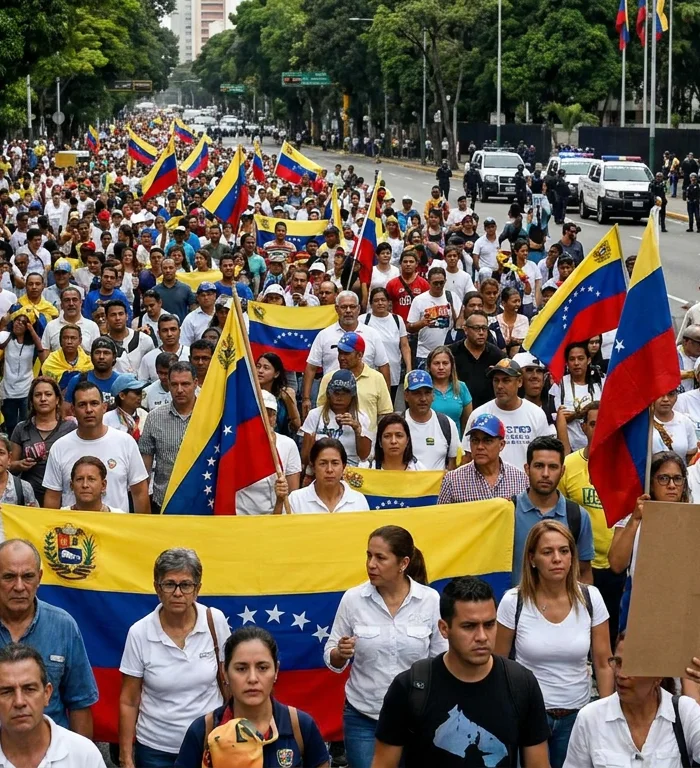
Venezuela's opposition rallied nationwide on October 22 to demand elections, with no voting date set by the interim government.
Thousands participated in the opposition's first countrywide demonstrations in almost two years. The gatherings brought demands for political change back into public view, while security personnel maintained a limited presence at the locations described in reporting from Caracas, Maracay and Valencia.
Election promises lack a timetable
Acting President Delcy Rodriguez and US President Donald Trump have each promised elections, without announcing when presidential or legislative voting would occur. Washington has been cooperating closely with the interim administration under Rodriguez, previously Nicolas Maduro's deputy.
Opposition leader Maria Corina Machado has called for elections no later than July 2027. Her organization, Vente Venezuela, arranged the demonstrations, bringing supporters onto streets in Caracas, Valencia, Maracay, San Cristobal and Maracaibo.
Machado, a Nobel Peace Prize recipient, has spent almost a year abroad. Before leaving Venezuela, she had remained in hiding after the disputed presidential election of 2024, making Thursday's mobilization a test of her movement's ability to organize publicly during her absence.
Caracas marches compete for space
In Caracas, the governing Socialist Party directed supporters to assemble at Plaza Venezuela before proceeding toward the presidential palace. Its march, organized to mark Breast Cancer Awareness Month, was scheduled to start two hours ahead of the opposition gathering at that same square.
Opposition demonstrators shifted their assembly to another nearby site. State television showed Interior Minister Diosdado Cabello participating in the governing party's procession; the supplied account described him as closely connected to the security services.
The limited security deployment contrasted with previous opposition demonstrations, including those following the 2024 vote, when authorities deployed forces against protesters. In numerous smaller cities, Thursday's participants left before nightfall, although the account does not establish whether the restrained security presence represented a lasting policy change.
The socialist movement has governed Venezuela since 1999, first under Hugo Chavez and subsequently Maduro. Earlier protests challenged political repression alongside inflation, inadequate public services and other economic difficulties, grievances that formed part of the backdrop to the renewed mobilization.
Maracay protesters press for change
In northern Maracay, hundreds assembled with Venezuelan flags as music played. Among them was Leosmary Hernandez, an 18-year-old cosmetology student, who linked her hopes for political change to financial hardship and obstacles to continuing her education.
Hernandez expressed support for Machado and described feeling less apprehensive about demonstrating than during previous protests. Her account offered a personal explanation for participating, rather than evidence that all demonstrators shared the same priorities or assessment of their safety.
The immediate institutional question is whether the election commitments become a dated process, and whether that process meets Machado's July 2027 demand. Neither Rodriguez nor Trump supplied a timetable in the material available, leaving the opposition's deadline separate from any announced government schedule.
If authorities announce voting dates, the dispute could shift toward the conditions under which elections would take place. Without a schedule, the opposition's demand for an electoral commitment remains unresolved, while Thursday's limited security presence alone cannot establish how authorities would respond to further demonstrations.
More stories
- Xizang earthquake blocks highway as crews build shelters
- Typhoon Champi weakens but keeps Taiwan largely shut down
- Zelensky urges Trump to press Putin into ceasefire talks
- France limits protests as Paris braces for more closures
- Portugal housing shortage prompts call for more building
- Canada signs Turkey partnership to widen global trade options
- Saudi Arabia travel warnings follow airport attack deaths
- AU launches Africa Credit Rating Agency ahead of license
Latest news
- Bruno Fernandes keeps United captaincy after Como criticism
- Oil rises as Aramco staff reportedly told to leave offices
- Damages dispute puts Trump finances at center of lawsuit
- Apple Finally Folds, and the Critics Are Mostly Charmed
- Citi gets China securities license, now faces scale test
- Oil and Iran frame Trump’s pitch before November midterms