

Canada signs Turkey partnership to widen global trade options
Canada and Turkey signed a strategic partnership on October 22, establishing a framework for trade ties as Ottawa seeks alternatives to the US.
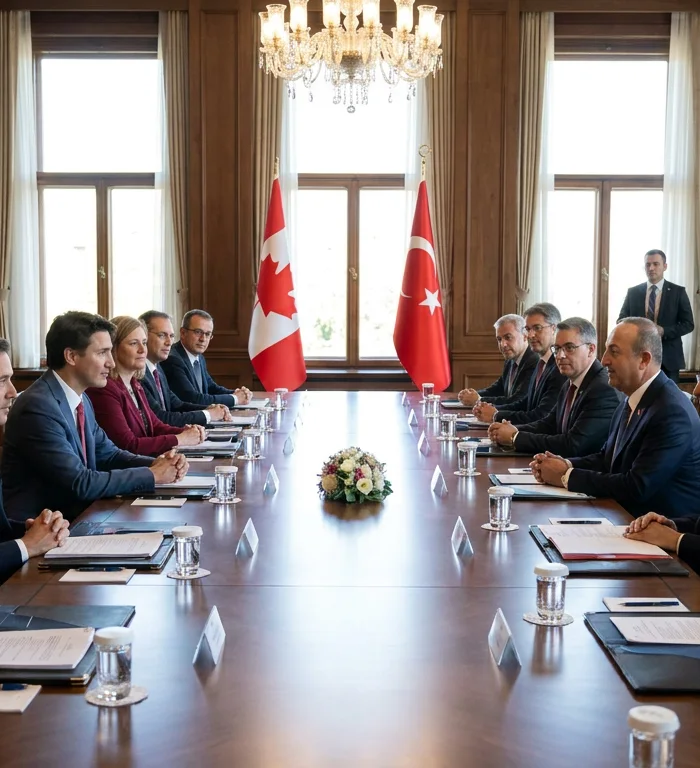
Canada and Turkey signed a strategic partnership on October 22, establishing a framework for trade ties as Ottawa seeks alternatives to the US.
Canadian Prime Minister Mark Carney and Turkish President Tayyip Erdogan agreed to the arrangement in Ankara during the first bilateral visit to Turkey by a Canadian prime minister. Carney presented the initiative as a partnership organized around four pillars, supported by an action plan covering three years.
The agreement brings commercial cooperation into a broader diplomatic framework between the NATO allies. Its stated objectives include employment and expanded business opportunities for companies from both countries, alongside cooperation on security and energy.
Carney broadens Canada's trade outreach
The Ankara visit forms part of Carney's international effort to develop trading relationships beyond the United States. He hopes those connections will help cushion Canada against its trade confrontation with Washington and reduce dependence on the American market.
President Trump has imposed broad tariffs and challenged Canada's sovereignty. Those developments provide the political and commercial setting for Carney's outreach, although the partnership itself is a bilateral arrangement with Turkey rather than a settlement of Canada's disputes with the United States.
The distinction matters for assessing the announcement: the immediate development is an agreement to deepen cooperation, while additional trade remains an objective. Carney's three-year timetable sets a period for pursuing that objective, not a measure of commercial results already achieved.
Ankara agreement follows strained diplomatic ties
The initiative follows a prolonged period of strained relations over Canada's human-rights concerns and an earlier Canadian embargo on arms shipments to Turkey. The new framework includes defense cooperation despite that history, placing an area of previous friction within the partnership's stated agenda.
The four pillars encompass commerce and investment; defense and security; energy; and social and diplomatic relations. That breadth distinguishes the agreement from an initiative concerned solely with selling more goods, while leaving businesses and governments with several separate areas to develop.
For Erdogan, the agreement establishes a closer framework with a fellow NATO member after those bilateral tensions. For Carney, it adds Turkey to his effort to cultivate international commercial relationships while managing pressure from Canada's largest neighbor.
Three-year plan sets the implementation horizon
If the framework produces additional business, Canadian and Turkish companies could gain customers, investment relationships or opportunities in the sectors identified by the agreement. For Canada, any contribution to diversification would depend on those activities adding trade beyond its existing US relationship.
If cooperation remains primarily diplomatic, closer government relations would not by themselves establish that Canadian businesses have become less dependent on American demand. Defense and energy are named priorities, but the announcement alone does not establish a change in procurement, investment or cross-border supply.
The central uncertainty is how the partnership's broad objectives translate into implementation during the three-year plan. Its commercial significance will turn on the business opportunities it produces; its diplomatic significance begins with the decision to pursue closer ties after years of friction.
More stories
- Venezuela protests seek elections as vote dates stay unset
- Xizang earthquake blocks highway as crews build shelters
- Typhoon Champi weakens but keeps Taiwan largely shut down
- Zelensky urges Trump to press Putin into ceasefire talks
- France limits protests as Paris braces for more closures
- Portugal housing shortage prompts call for more building
- Iran threatens Gulf infrastructure if air strikes resume
- Enterprise Singapore urges firms into China niches
- Sudan strikes kill 112, rights group says
- Riyadh airport attack kills 12, Saudi aviation body says
Latest news
- Bruno Fernandes keeps United captaincy after Como criticism
- Oil rises as Aramco staff reportedly told to leave offices
- Damages dispute puts Trump finances at center of lawsuit
- Apple Finally Folds, and the Critics Are Mostly Charmed
- Citi gets China securities license, now faces scale test
- Oil and Iran frame Trump’s pitch before November midterms