

Portugal housing shortage prompts call for more building
Portugal’s housing shortage requires more construction to address a deficit of about 300,000 homes, its central bank governor said.
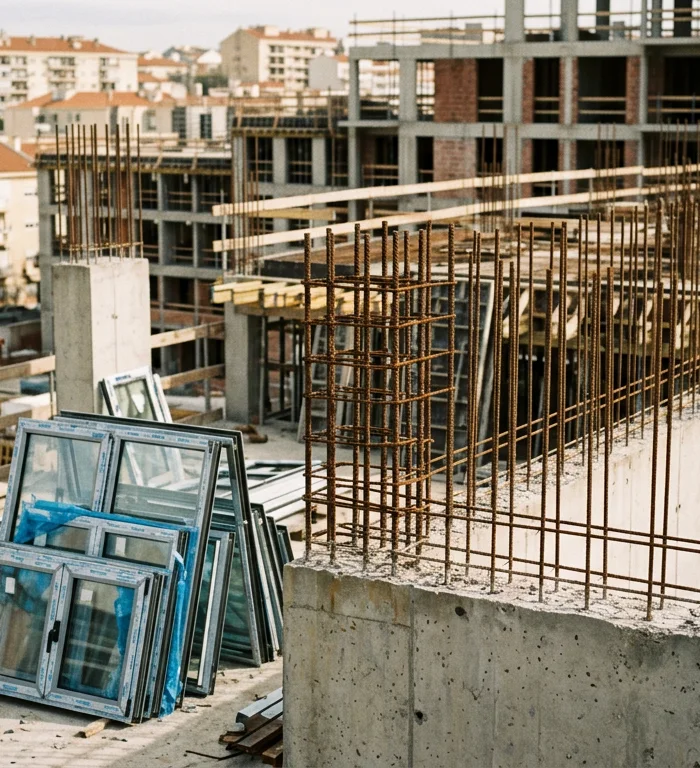
Portugal’s housing shortage requires more construction to address a deficit of about 300,000 homes, its central bank governor said.
Banco de Portugal Governor Álvaro Santos Pereira urged an expansion of building activity and public housing, identifying the shortage as Portugal’s leading domestic risk. Speaking at a Lisbon conference on Thursday evening, he placed additional supply at the center of his proposed response.
Bank of Spain Governor José Luis Escrivá described a similar mismatch in Spain at the same gathering. His assessment linked housing demand to population increases, migration and economic growth, with building activity failing to match those pressures.
Portugal’s supply prescription takes shape
“The solutions have to come from the supply side. We have to build considerably more,” Pereira said. His call encompasses both an increase in overall construction and a larger role for public housing, rather than treating the shortage solely as a question of household purchasing power.
The roughly 300,000-home deficit is Pereira’s estimate of the scale of Portugal’s construction shortfall. It is not a building commitment or a timetable for delivery, distinctions that matter when assessing how his diagnosis might translate into additional homes.
The central bank governor’s intervention sets out a policy priority rather than an announced housing program. The account of his remarks provides no spending allocation, construction schedule or division between public housing and other development.
Spain shares the demand imbalance
Escrivá’s explanation identifies several sources of demand rather than a single driver. Population growth and migration add housing needs, while economic expansion also supports demand, according to the Spanish governor.
“The key thing is that we are facing an imbalance between very strong demand and supply that has been very sluggish,” Escrivá said. He also identified tourism as a contributor to housing pressures on both sides of the border.
The two governors therefore describe a shared supply problem, but the material does not establish identical conditions in Portugal and Spain. No comparable Spanish housing-deficit estimate was provided, preventing a numerical comparison with Pereira’s assessment.
Affordability protests sharpen the stakes
Housing costs have also become a focus of public demonstrations across Europe. In Lisbon and Madrid, protesters have occupied public spaces to draw attention to affordability as rent increases outstrip income growth for many residents.
The supply argument leaves an important question of timing. If additional construction delivers homes where demand is strongest, it could narrow the imbalance the governors describe; an announcement alone would not establish that the shortage is easing.
If demand instead continues to exceed new supply, the mismatch identified by Escrivá would persist, even with more building activity. Assessing the response will require evidence of completed homes and changes in affordability, alongside details of any public-housing expansion that follows Pereira’s appeal.
More stories
- Venezuela protests seek elections as vote dates stay unset
- Xizang earthquake blocks highway as crews build shelters
- Typhoon Champi weakens but keeps Taiwan largely shut down
- Zelensky urges Trump to press Putin into ceasefire talks
- France limits protests as Paris braces for more closures
- Canada signs Turkey partnership to widen global trade options
- Iran threatens Gulf infrastructure if air strikes resume
- Ethiopia's coffee sector faces $453m EU export risk
- EU faces Vietnam rights test over $57.9bn trade gap
Latest news
- Bruno Fernandes keeps United captaincy after Como criticism
- Oil rises as Aramco staff reportedly told to leave offices
- Damages dispute puts Trump finances at center of lawsuit
- Apple Finally Folds, and the Critics Are Mostly Charmed
- Citi gets China securities license, now faces scale test
- Oil and Iran frame Trump’s pitch before November midterms