

Trump says Israel aid ends this year, arms sales continue
President Donald Trump says $4 billion in yearly Israel aid will end this year, despite a funding framework running through 2028.
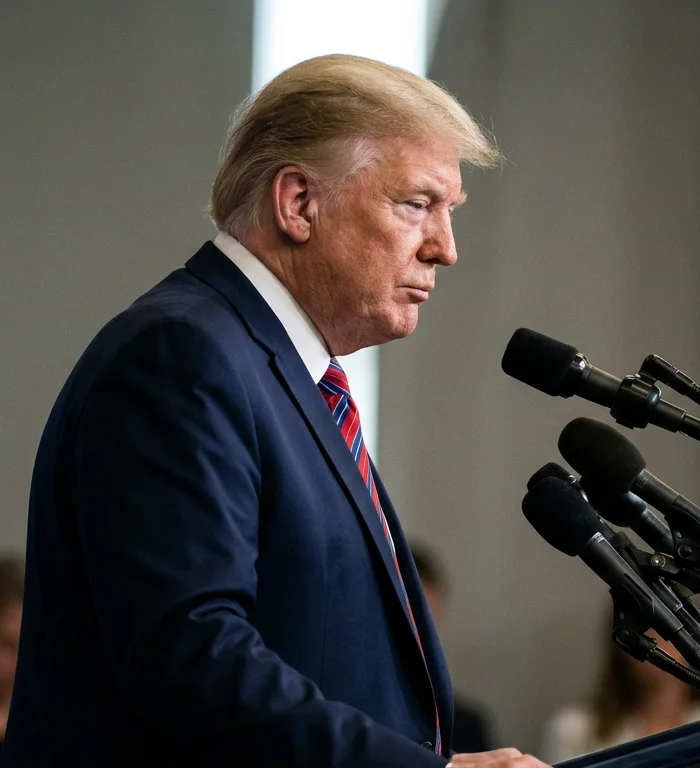
President Donald Trump says $4 billion in yearly Israel aid will end this year, despite a funding framework running through 2028.
Speaking on November 3, Trump said he and Israeli Prime Minister Benjamin Netanyahu had agreed months earlier to discontinue the payments. He said Washington would keep selling Israel weapons, distinguishing financial assistance from the broader defense relationship.
The announcement leaves the implementation unresolved: Trump offered no explanation of how his deadline would work alongside existing funding arrangements. Neither leader's office provided clarification in response to requests for comment.
Funding pact extends beyond Trump's deadline
The current Memorandum of Understanding provides annual military assistance worth $3.8 billion, compared with the $4 billion Trump cited. Its September 2028 expiration falls after the cutoff he described, making the announcement more immediate than discussions about assistance beyond that agreement.
Congress authorized the assistance through legislation passed in 2020, but releasing money still requires annual appropriations approved by both chambers. Trump's statement did not identify what legislative or administrative steps would accompany the claimed agreement.
Netanyahu had already indicated that American assistance would diminish over time. In an October television interview, he warned Israelis against expecting defense funding on the scale he had previously secured, but the supplied remarks did not establish a year-end termination date.
Election timing draws political scrutiny
Trump announced the change as Americans voted in midterm elections determining congressional control. He explicitly connected the funding decision to domestic political attacks, arguing that Israel did not need the money and that ending payments would remove an argument used against Republicans.
His remarks singled out Abdul El-Sayed, the Democratic Senate candidate in Michigan who opposes unconditional military assistance for Israel. Trump characterized the funding issue this way: "It's a bad talking point."
A June Quinnipiac University survey found that 48% of voters considered Washington overly supportive of Israel, compared with 16% in 2017. Among Democrats, the figure reached 66%, up from 20% when the university first posed the question.
Jon Alterman of the Center for Strategic and International Studies questioned the announcement's timing. "The curious issue is timing," he said. "Why did President Trump announce it on Election Day?"
The dispute also intersects with uncertainty over Israel's government after Netanyahu lost his parliamentary majority in the October 27 election. His opponents lacked a clear route to replacing him, leaving negotiations over government formation ahead.
Opposition bloc leader Gadi Eisenkot criticized Netanyahu on X, alleging that Israeli citizens and the security establishment had learned of the proposed change through media coverage. His account of who knew about the arrangement was not independently established in the supplied material.
Weapons sales and technology remain separate
Ending grants would not, under Trump's stated approach, end American weapons sales to Israel. If implemented while purchases continue, the change would shift the financing question toward Israel's own defense budget rather than automatically halt procurement from US suppliers.
The House also passed a provision during the summer envisioning closer military technology cooperation. Section 219 of the 2027 National Defense Authorization Act points toward a separate channel for defense ties, although House passage alone does not establish its enactment.
The immediate tests are whether Netanyahu confirms Trump's timetable and whether Congress changes the funding it approves. Until those steps become clear, the announced cutoff remains a presidential claim without an explained implementation process.
More stories
- Singapore to open 3 MRT stations for 25-minute trip savings
- De Wever offers resignation as Belgium budget talks stall
- Airlines face bomb threats as Europe orders plane checks
- Ukraine rescuers search shelter after 31 reported deaths
- Retail investors face timing risk after OCBC's nearly 6% fall
- Planned North Africa hydrogen plants may draw 170 litres per kilogram
- US official denies Trump Starshield restriction directive
- Norway panel backs nuclear arms exception for $2.2tn fund