

Singapore to open 3 MRT stations for 25-minute trip savings
Bedok South, Xilin and Sungei Bedok will connect two rail corridors, widening access to housing areas and employment hubs in eastern Singapore.
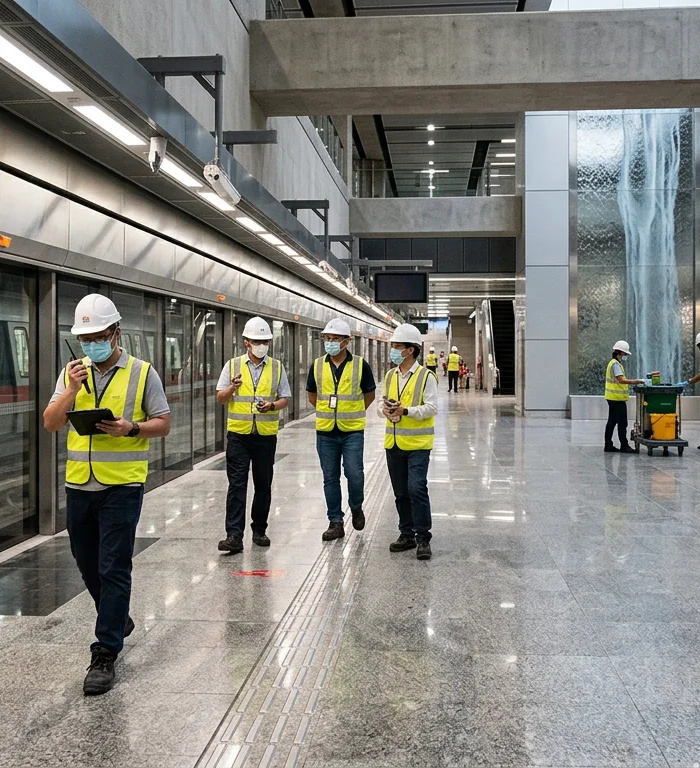
Singapore will open three Mass Rapid Transit stations in the east on Dec. 26, Transport Minister Jeffrey Siow said in a Nov. 4 speech at Singapore Urban Mobility Week.
The Land Transport Authority said on Nov. 4 that Havelock-to-Changi Business Park trips via the two lines will take about 45 minutes, compared with 70 minutes now.
The new stations are Bedok South on the Thomson-East Coast Line, Xilin on the Downtown Line and Sungei Bedok, an interchange linking both lines. Together, they add 4.3 kilometres of rail extensions, equal to about 2.7 miles.
Siow said the additions would connect two major rail corridors and give commuters more direct routes. “In fact, residents in the east may even be able to take the Thomson-East Coast Line continuously into the city centre, up north to Woodlands, and maybe conveniently across the Straits into Malaysia very soon,” he said.
Bedok South and Sungei Bedok form Stage 5 of the Thomson-East Coast Line. The Land Transport Authority said their opening will put more than 240,000 households within a 10-minute walk of a station on that line.
Xilin and Sungei Bedok make up the Downtown Line 3 Extension. With those stations in service, more than 220,000 households will be within a 10-minute walk of a Downtown Line station, the authority said.
The additions are intended to shorten journeys between residential areas, job centres and the city. The authority said Xilin will improve access to Changi South industrial estate, Changi Business Park and nearby employment hubs, while Bedok South will serve nearby residents and schools, including those in the Bayshore precinct.
Travel between Marine Parade and Tampines using the two lines will take as much as 10 minutes less than it does now, the authority said. Sungei Bedok will be the second interchange between the Thomson-East Coast Line and the Downtown Line after Stevens station.
The Thomson-East Coast Line began operations in 2020 with three stations in Woodlands and later expanded in phases from Springleaf to Bayshore. Its completion timeline had been pushed back partly because of the COVID-19 pandemic.
Stage 5 will complete the line’s planned five-stage opening, taking it to 29 operational stations spanning 42.8 kilometres. The authority said a future extension to Changi Terminal 5 is expected to help the line serve about one million commuters daily in the longer term.
The Downtown Line began operations in 2013 and runs from Bukit Panjang to Expo through the city centre. After Xilin and Sungei Bedok open, the line will have 37 operational stations spanning 44.6 kilometres, with another three stations planned by 2035 to link Bukit Panjang to the North-South Line.
Siow also said Singapore will start publishing quarterly reports on autonomous vehicle deployments in December. The reports will cover deployment numbers, passenger experience and safety outcomes, he said.
Singapore currently has 25 autonomous passenger vehicles on its roads, with a small number of autonomous commercial vehicles under trial. Siow said public feedback on passenger vehicles had been positive, adding: “But as we scale up, we want to do so with complete transparency, so that we can strengthen public confidence in autonomous vehicles.”
The Land Transport Authority said it will progressively deploy 660 new electric buses from the end of 2026. The buses will include driver-assistance systems, longer-lasting batteries, low-floor layouts and full-colour rear electronic displays.
On Dec. 26, passenger service is scheduled to begin at Bedok South, Xilin and Sungei Bedok, completing the planned five-stage opening of the Thomson-East Coast Line.
In December, Singapore is due to start quarterly reports on autonomous vehicle deployments, with data on deployment numbers, passenger experience and safety outcomes.
From the end of 2026, the Land Transport Authority plans to begin deploying 660 new electric buses; from 2027, their rear displays are due to show real-time visual alerts to other road users.
More stories
- De Wever offers resignation as Belgium budget talks stall
- Airlines face bomb threats as Europe orders plane checks
- Ukraine rescuers search shelter after 31 reported deaths
- Trump says Israel aid ends this year, arms sales continue
- Retail investors face timing risk after OCBC's nearly 6% fall
- Planned North Africa hydrogen plants may draw 170 litres per kilogram
- Sudan strikes kill 112, rights group says
- Riyadh airport attack kills 12, Saudi aviation body says