

De Wever offers resignation as Belgium budget talks stall
Belgium’s Bart De Wever offered his resignation after budget talks failed, leaving King Philippe to consult coalition leaders before deciding.
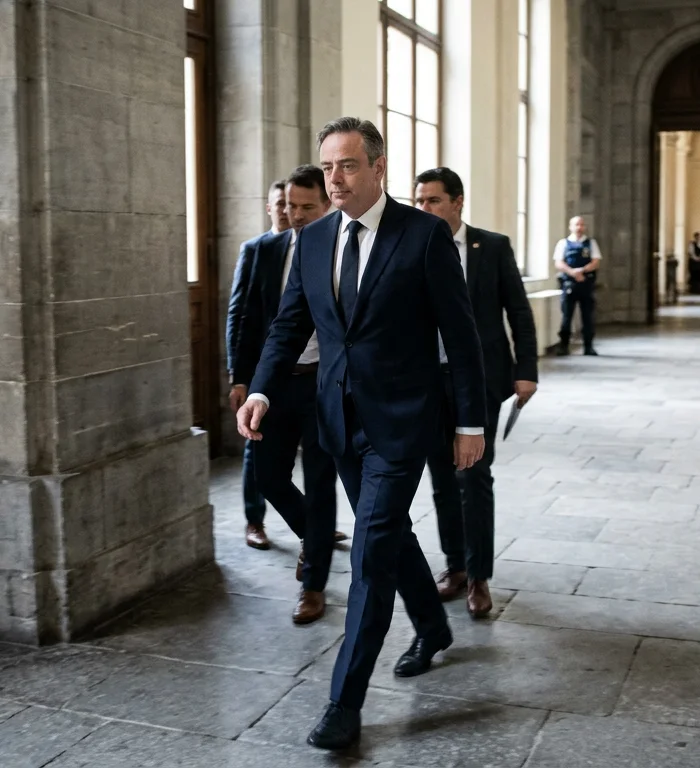
Belgium's Bart De Wever offered his resignation after budget talks failed, leaving King Philippe to consult coalition leaders before deciding.
The prime minister submitted his resignation on Monday, hours after negotiations collapsed. The government is pursuing €10 billion ($11.6 billion) in fiscal savings by 2029, a multiyear target behind the dispute over the coming year's federal budget.
King Philippe deferred a decision on the resignation until the week's end, according to a palace statement. He plans to begin consultations with coalition leaders on Tuesday and meet De Wever again on Friday, leaving the resignation unresolved while discussions continue.
Five parties face another budget impasse
De Wever's New Flemish Alliance (N-VA) heads a center-right government comprising five parties, which took office in February 2025. Their prolonged budget negotiations have exposed disagreement over how to divide the adjustment between spending reductions and additional taxation.
The confrontation echoes an earlier breakdown: roughly a year before this resignation offer, another budget dispute brought De Wever close to taking the same step. Monday's move therefore represents a renewed test of the coalition's ability to settle its fiscal differences, rather than its first confrontation over the budget.
The palace urged the parties to compromise and place the national interest ahead of their differences. It also warned against an extended period of political instability and expressed disappointment that negotiations had not produced a credible fiscal agreement.
Tax dispute complicates spending cuts
The proposed adjustment addresses a fiscal deficit above 5% of GDP. The government is seeking both lower expenditure and additional revenue, although spending reductions account for the larger part of its approach.
Healthcare is among the areas facing cuts, while the package also proposes an increase in value-added tax. That combination puts both public services and taxation into the negotiations, giving coalition members more than one point of disagreement to resolve.
The French-speaking liberal MR party opposes the tax increase, arguing that higher taxes would push up inflation. That is the party's assessment of the proposal, not an established outcome; the inflation argument remains part of the political dispute over how to narrow the deficit.
Trade unions have meanwhile organized recurring demonstrations against the austerity program in recent months, drawing crowds numbering in the tens of thousands. Those protests put organized opposition outside parliament alongside the disagreements inside the governing coalition.
Friday meeting leaves decision pending
De Wever made no immediate public comment after submitting his resignation. The palace's consultations are the next announced step, but its statement did not identify a compromise on either the tax proposal or spending reductions.
If the parties reach an agreement, they would resolve the budget deadlock that preceded the resignation offer; that would not by itself establish how the king will respond. If disagreement persists, Friday's audience would take place with the fiscal package unresolved and the decision on De Wever's resignation still before the monarch.
More stories
- Singapore to open 3 MRT stations for 25-minute trip savings
- Airlines face bomb threats as Europe orders plane checks
- Ukraine rescuers search shelter after 31 reported deaths
- Trump says Israel aid ends this year, arms sales continue
- Retail investors face timing risk after OCBC's nearly 6% fall
- Planned North Africa hydrogen plants may draw 170 litres per kilogram
- Morocco draws $6 billion China EV supply-chain push
- China sanctions two ministers over Taiwan ties