

Morocco draws $6 billion China EV supply-chain push
EU tariffs and Moroccan trade access are giving Chinese battery and component makers a North African route into global auto markets.
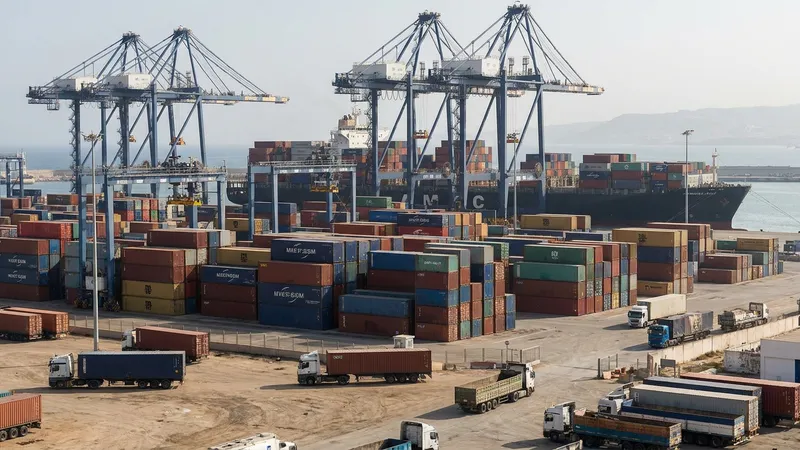
Morocco has drawn $6 billion of announced Chinese battery and electric-vehicle component investment, The Conversation reported Oct. 12, as EU tariffs reshape supply chains around North Africa.
The stakes are rising because China produced more than 12 million electric cars in 2024, including 1.25 million for export, while Morocco made 560,000 vehicles, about 50,000 of them electric.
The EU imposed additional duties of as much as 35% on Chinese electric vehicles, or EVs, in 2024, on top of an existing 10% import tariff, the European Commission said. The Conversation reported that Chinese firms producing in Morocco avoid exposure to those EU tariffs.
China makes more than seven in 10 of the world’s electric cars, according to figures cited by The Conversation. Chinese vehicle sales in Europe nearly doubled between 2024 and 2025, even as the EU sought to limit the impact of low-cost, state-supported Chinese EVs on its domestic auto industry.
The European auto industry supports 13 million jobs, according to figures cited in the article. That employment base helps explain why Brussels has combined tariffs with rules designed to reduce pressure from Chinese imports.
Morocco offers Chinese and European manufacturers a mix of trade access, ports and industrial infrastructure. It has a free-trade agreement with the EU and is the only North African country with one covering the U.S.
Tangier’s deep-water port is the largest in Africa and the Mediterranean, according to the article. Around it, Morocco has built state-backed industrial zones for carmakers and suppliers, including Tanger Automotive City.
Morocco is not entering the auto industry from a low base. Renault and Stellantis, the owner of brands including Peugeot, Fiat and Alfa Romeo, exported $17 billion of cars and components from Morocco in 2024, The Conversation reported.
Cars are Morocco’s biggest export, and the sector already has a trained industrial workforce. That gives the country a stronger platform than would be available to a new entrant trying to build EV supply chains from the ground up.
The country also has materials relevant to batteries. Morocco holds about 70% of global phosphate reserves and has cobalt supplies, both used in battery production.
The current manufacturing base is still mostly built around internal-combustion cars. Of the 560,000 vehicles Morocco produced in 2024, the vast majority were petrol and diesel models, while about 50,000 were electric.
Stellantis and Renault have made recent multi-billion-euro commitments to expand electric and hybrid capacity, according to The Conversation. Chinese investment is targeting cathodes and battery cells; cathodes are a core battery component that helps determine performance and cost.
Morocco’s government has spent two decades developing free zones, where companies can import, process and re-export goods with reduced customs and tax burdens. The country introduced a carbon tax this year to keep exports aligned with EU rules.
The main uncertainty is how much value Chinese firms will create inside Morocco. One possibility is limited local processing intended mainly to bypass duties; another is deeper manufacturing involving technology transfer, trained Moroccan engineers and local suppliers.
EU scrutiny is already part of the backdrop. In 2025, Brussels ruled that aluminium wheels shipped from Morocco were unfairly subsidised by Beijing, according to the article.
The trade-policy basis for the boom is also not permanent. EU tariffs on Chinese electric cars are set for five years, and legal challenges are already underway.
Source: analysis article, The Conversation, Oct. 12
More stories
- Saudi airport attack kills 13, strains missile defenses
- China sanctions two ministers over Taiwan ties
- Zelensky Says Russia Keeps Hitting Ukrainian Energy Sites
- UAE's NCM issues 5.5-hour flood alert as hail hits
- Robert Pether returns after 5-year Iraq detention
- Ukraine accuses Russia of violating energy ceasefire
- Report puts UK defense spending priorities under scrutiny
- China Secures First Overseas Military Airbase in Laos
Latest news
- Trump faces six-day tariff deadline with no public notice
- Tibidabo marks 125 years as Barcelona landmark
- Ollie Pope Exits Afghanistan Premier League Draft Amid Scrutiny
- Moto X lands on modern platforms Oct. 16 at $5.99
- Eisman says S&P 500’s AI exposure tops 65%
- Lam Research turns $1,000 into $31,755 over decade
- BJSM essay urges 3 youth-hockey concussion steps
- Apple reportedly lifts iPhone Duo orders 30%