Report puts UK defense spending priorities under scrutiny
UK defense spending overseas absorbed an estimated 23% of the military budget in 2024/25, the Transition Security Project says.
Claire Dubois ·
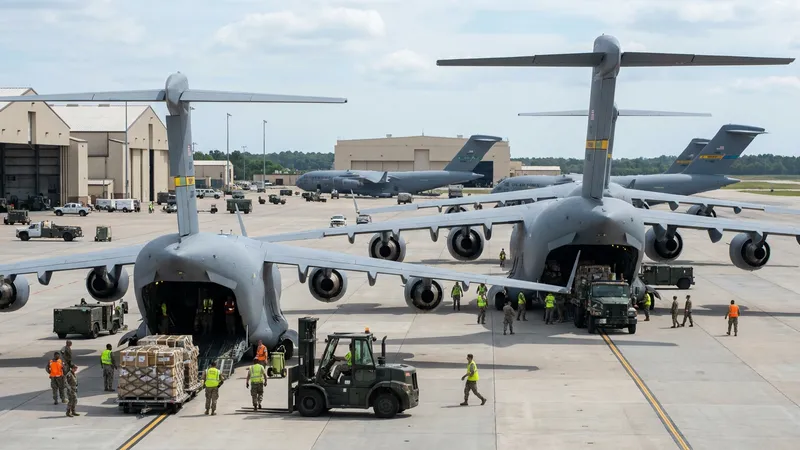
UK defense spending overseas absorbed an estimated 23% of the military budget in 2024/25, the Transition Security Project says.
The research organization is calling for Britain to reconsider its overseas deployments before expanding military expenditure. Its report argues that additional funding risks reinforcing procurement inefficiencies and international commitments rather than strengthening protection at home.
Overseas commitments account for nearly a quarter
The researchers put the annual cost of those commitments at slightly above £14 billion, or almost a quarter of military expenditure, using figures for 2024/25. They describe that estimate as a lower bound, although the supplied findings do not establish how much higher the total might be.
Within that overseas expenditure, the study identifies approximately £2.8 billion spent beyond Europe. It cites military facilities in Cyprus, Kenya and Oman among the locations supporting Britain's ability to operate internationally.
The report ranks Britain's military as more internationally oriented than those of other European NATO countries, while acknowledging that France stations more service personnel overseas. Those measures are distinct: the number of people deployed abroad does not, by itself, establish the financial burden of maintaining international operations.
Budget growth sharpens the allocation debate
The study's spending calculation starts at £70 billion in 2026 and reaches £151 billion in 2035, more than doubling in nominal terms. It connects that trajectory to a defense spending goal equivalent to 3.5% of GDP by 2035; the figures are the researchers' account, not an independently established budget settlement.
That distinction matters when assessing the scale of the proposed expansion. A nominal increase measures cash spending without adjusting for inflation, so it does not establish how much additional equipment, personnel or operational capacity the money would purchase.
The researchers also place today's commitments against the cost of earlier interventions. Their estimate exceeds £51 billion, expressed in updated monetary terms, for British military involvement since 2001 in countries including Iraq, Afghanistan and Libya; the price base underlying that comparison is not specified in the supplied figures.
The report links its criticism of international deployments with concerns about procurement waste. It urges the government to “review its military posture, prioritising defence over the global projection of military force”.
Domestic priorities compete with international deployments
The Transition Security Project advocates a change in policy, rather than merely a different accounting method. Co-author Khem Rogaly, the organization's co-director, favors directing military resources toward defense and public investment toward housing, health and climate needs.
The central uncertainty is whether expenditure classified as overseas represents an avoidable cost or a contribution to British security. The researchers challenge its effectiveness, but their spending totals alone do not resolve the security value of individual bases, deployments or capabilities.
If ministers retain the existing international posture, the report's concern is that budget growth would support those commitments alongside domestic requirements. If they instead adopt its recommendation, the allocation question would shift to which overseas activities to reduce and which home-defense capabilities should receive funding.
Neither path follows automatically from a GDP spending target. The decisions needed to assess the trade-off are the allocations themselves: how much goes to domestic readiness, overseas operations and procurement, and what capability each purchase or deployment is intended to provide.