US and Greece launch counterterrorism data-sharing pact
US and Greek law enforcement agencies will share counterterrorism information under a new security agreement, Marco Rubio said in Athens.
Claire Dubois ·
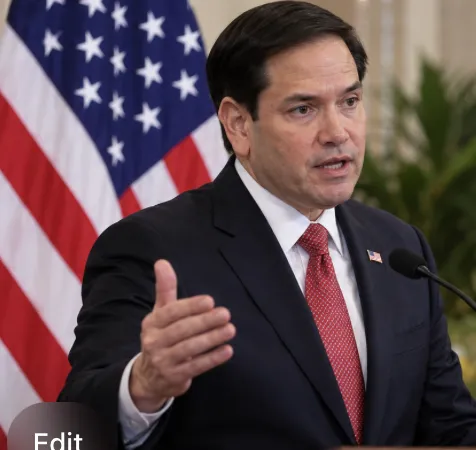
US and Greek law enforcement agencies will share counterterrorism information under a new security agreement, Marco Rubio said in Athens.
The US secretary of state announced the initiative on October 7 during an official visit, appearing with Greek Foreign Minister George Gerapetritis. The memorandum adds cooperation between police and other law enforcement bodies to a relationship that already includes military facilities and maritime security.
Counterterrorism pact expands bilateral cooperation
Rubio said the memorandum establishes a joint security program intended to improve exchanges between the countries' law enforcement agencies. He presented it as a response to shared threats, describing Greece as particularly exposed to risks associated with large-scale migration and trafficking in people.
That assessment belongs to Rubio, rather than establishing any general connection between migration and terrorism. His announcement concerned counterterrorism information exchange; it did not identify a particular investigation or describe an operational response to a specific threat.
The program's practical reach depends on implementation: which agencies participate, what information they exchange and how that material can be used. If it enables relevant information to reach investigators across borders, the agreement would provide a channel for cooperation beyond the countries' existing defense relationship.
Greece ties Hormuz assistance to peace
Greece already provides military facilities supporting security across the Eastern Mediterranean and heads an EU naval mission protecting merchant vessels in the Red Sea. Those roles form the maritime backdrop to the new law enforcement initiative, but are distinct from the counterterrorism program Rubio announced.
Gerapetritis also offered conditional cooperation with Washington over the Strait of Hormuz. He said Greece was prepared to provide maritime assistance if a workable peace process existed, making a diplomatic framework a prerequisite rather than announcing an unconditional deployment.
The distinction matters for assessing the scope of Athens' commitment. His remarks expressed willingness to help, but did not specify vessels, personnel, a deployment schedule or the tasks Greek forces would undertake.
If that diplomatic condition is met, Greek assistance would extend cooperation into another maritime setting. Without it, the offer remains conditional; the remarks do not establish a change in shipping conditions or a measurable effect on commercial activity.
Rubio backs ambassador facing allegations
The visit also brought scrutiny of US Ambassador to Greece Kimberly Guilfoyle. US senators had raised concerns over allegations that she threatened to deploy American influence against the Greek government, claims that remain allegations rather than established conduct.
Asked whether her conduct met State Department ethical requirements, Rubio defended both the embassy and its ambassador. He said: "Suffice it to say, our embassy here is doing a great job. Our ambassador has been a strong ambassador here."
Rubio's endorsement did not resolve the underlying allegations or provide findings from an ethics review. The substantive commitments emerging from the visit remain separate: an announced counterterrorism information-sharing program and a Greek maritime offer whose activation depends on a viable peace process.