North Korea challenges Taiwan arms sales as jets arrive
North Korea condemned US support for Taiwan after two fighter jets arrived, reinforcing its backing for China's position without announcing a military…
Mei Lin ·
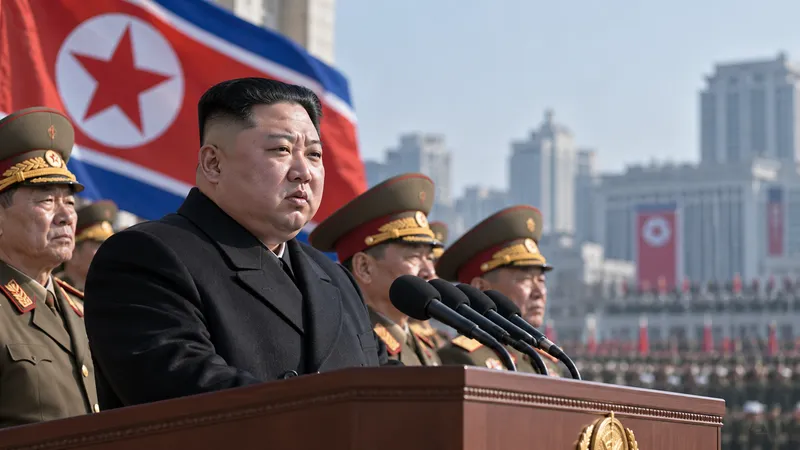
North Korea condemned US support for Taiwan in state media after the island received two of 66 fighter jets ordered from Washington.
The October 7 commentary accused Washington of destabilizing the Taiwan Strait through weapons sales and military assistance. It cited North Korean international affairs analyst Kim Myong Chol and criticized the arrival of American-supplied aircraft, placing Pyongyang alongside Beijing in opposing that support.
Taiwan took delivery of the initial pair of F-16V Block 70 fighters last week under an order placed in 2019. The delivery represents the beginning of that 66-aircraft purchase, rather than a newly announced procurement agreement.
Aircraft delivery meets competing sovereignty claims
Beijing asserts sovereignty over Taiwan, which governs itself democratically. Taiwan's government rejects that position and says China has no authority to speak for the island internationally.
China has repeatedly called for an end to American weapons sales to Taiwan and opposes official contacts between Taiwanese leaders and foreign counterparts. Washington has no formal diplomatic relationship with Taipei, but US law requires it to help provide the island with defensive capabilities.
Those competing positions give the aircraft delivery a significance beyond procurement. Pyongyang's commentary challenges Washington's military relationship with Taipei, while Taiwan's government maintains that Beijing cannot determine the island's international representation.
June talks frame Pyongyang's China support
North Korean leader Kim Jong Un expressed support for the "One China" principle during June talks with Chinese President Xi Jinping in Pyongyang. Beijing interprets that principle as placing Taiwan and mainland China within a single country.
China's Foreign Ministry said Xi also outlined plans for greater bilateral exchanges covering diplomacy, policing and military matters. The wording described cooperation across several fields without establishing a specific North Korean commitment concerning a conflict over Taiwan.
China is already North Korea's treaty ally, and Pyongyang has developed closer relationships with both Beijing and Moscow in recent years. Even so, political backing for China's Taiwan position is distinct from a pledge to contribute forces; the reported commentary contained no comparable operational commitment.
Russia ties provide a separate benchmark
A separate state-media report described Kim pledging further cooperation with Russia in a birthday message to President Vladimir Putin. Kim reaffirmed their strategic partnership and support for Russia's war effort, although the message did not identify Ukraine explicitly.
Ukrainian and South Korean estimates put North Korea's troop contribution to Russia's Ukraine campaign at approximately 14,000–15,000 since 2024. That deployment followed a deepening relationship formalized through a mutual defense agreement signed in June 2024; the estimates remain attributed to those governments.
The distinction between Russia and China is therefore material: the supplied account describes North Korean personnel supporting Moscow, but no equivalent deployment or promise involving Taiwan. Support expressed through a commentary does not establish that Pyongyang would take the same steps in a different conflict.
If North Korea's backing remains diplomatic, subsequent statements would show how closely it continues to align with Beijing without establishing a military role. Any explicit defense pledge or announced deployment would instead provide evidence of a different level of involvement; neither was announced in the reported Taiwan commentary.