Yemeni Army Reports 100 Houthi Casualties, Five Drones Downed in Taiz Offensive
The Yemeni army announced a renewed offensive in the southwestern city of Taiz, stating it killed 100 Houthi fighters and downed five drones, signaling a…
Omar Farouk ·
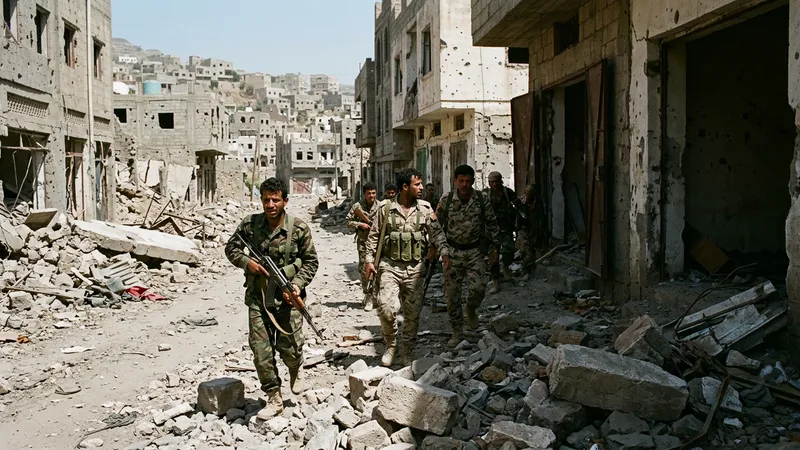
The Yemeni army has launched a new military operation, dubbed “Yemen Dawn,” in the country’s southwestern Taiz governorate, reporting 100 Houthi fighters killed and five unmanned aerial vehicles (UAVs) downed during the initial phase. The announcement, made by the Taiz Military Axis, a unit of the Yemeni army, on Tuesday, marks a significant military push in a key frontline city that has been under partial Houthi siege for years.
Renewed Military Pressure
The military statement, issued by the Yemeni army, indicated that its forces, supported by popular resistance groups, conducted attacks on various fronts within Taiz. Specific areas cited in the operation’s first day included Erbain in northern Taiz and El-Akrud in the south, suggesting a multi-pronged assault aimed at Houthi positions. This offensive follows a period of relative calm in some areas, punctuated by localized skirmishes, after years of intense conflict.
Protracted Conflict Landscape Key factions include the Houthi movement Yemen has been embroiled in a civil war since late 2014, when Houthi forces seized the capital Sanaa, dislodging the internationally recognized government. The conflict escalated in March 2015 when a Saudi-led coalition intervened to support the government. Key factions include the Houthi movement, backed by Iran; the internationally recognized government, led by President Rashad al-Alimi, which receives support from the Saudi-led coalition; and southern separatist groups. Taiz, Yemen’s third-largest city, has remained a critical battleground, largely under government control but besieged by Houthi forces, complicating humanitarian access and daily life for its approximately 600,000 residents. Humanitarian Strain Persists The United Nations has consistently characterized the situation in Yemen as one of the world's worst humanitarian crises, with millions facing acute food insecurity, disease, and displacement. Prolonged blockades and fighting around key ports and supply routes, including the crucial Hodeidah port, have severely restricted the flow of essential goods. Efforts by the UN Special Envoy for Yemen, Hans Grundberg, to broker lasting ceasefires and peace talks have faced repeated setbacks, leaving millions vulnerable to the ongoing violence and its economic consequences.
Regional Stability and Global Trade Implications Yemen controls a portion of the Bab al-Mandab The renewed fighting in Taiz carries significant implications for regional stability and global economic interests, particularly oil and shipping. Yemen controls a portion of the Bab al-Mandab Strait, a narrow chokepoint connecting the Red Sea to the Gulf of Aden, through which an estimated 12% of global trade and a substantial portion of the world's oil supply passes. Escalations in Yemen frequently translate to increased risks for maritime traffic, driving up insurance costs and potentially disrupting supply chains. The conflict also serves as a proxy battleground between regional powers Saudi Arabia and Iran, influencing broader geopolitical dynamics in the Middle East. Monitoring Diplomatic Responses Should the reported offensive expand beyond Taiz or provoke a significant Houthi counter-offensive, international efforts to de-escalate the conflict will intensify. Statements from the UN Special Envoy for Yemen, Hans Grundberg, or the Saudi-led coalition are expected to provide insights into the diplomatic and military reactions. The coming weeks will indicate whether this 'Yemen Dawn' operation represents a limited tactical push or a broader shift in the stalemated war's trajectory.