US housing starts drop while mortgage costs pressure demand
US housing starts fell to a 1.28 million annual pace in August as multifamily construction weakened and mortgage costs pressured demand.
Atlas Newsdesk ·
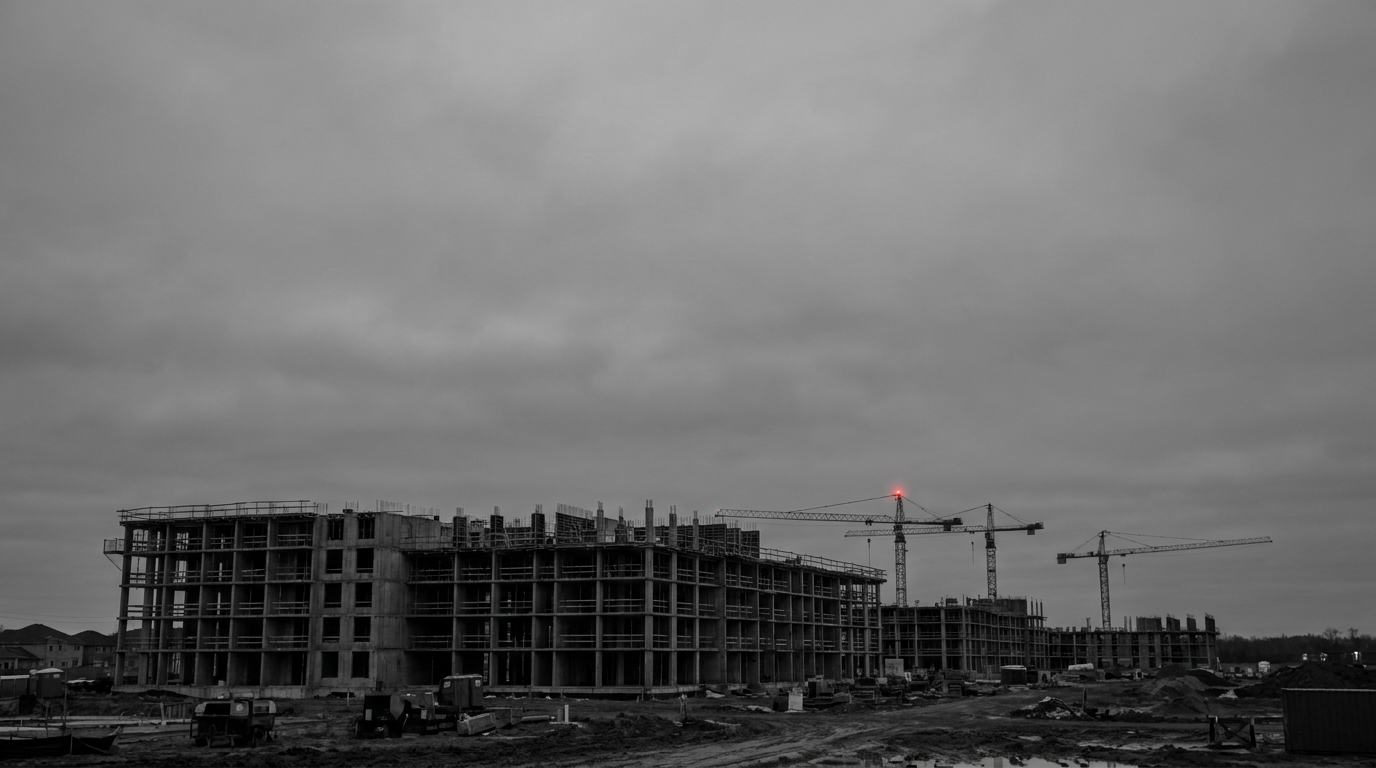
US housing starts fell 2.6% in August to a 1.28 million annual rate, as apartment projects pulled total construction below forecasts. Federal data released Thursday showed the pace missed economists' 1.32 million median estimate.
The decline put residential building near one of its weakest readings since the pandemic, even as detached-home construction improved. The split matters for builders, lenders and suppliers because apartments and single-family homes respond differently to financing costs, inventories and local demand.
Apartment projects set the drag
Multifamily starts fell nearly 22% in August to a 357,000 annualized rate, according to the government report. That drop outweighed a 7.6% rise in single-family starts to 918,000, the strongest pace since March.
The increase in one-family construction was tied in the data to gains in the West and Midwest, where starts improved from July. Even with that rise, the broader market remained constrained as buyers faced mortgage rates near 7% and builders weighed inventories that were above pre-pandemic norms.
Housing completions also weakened, falling nearly 12% to the slowest pace since the end of 2018. A slower flow of finished homes can limit near-term supply, but it may also signal caution among developers managing projects already in the pipeline.
Permits signal a softer pipeline
Building permits, which are used as a gauge of future construction, fell 2.7% in August from July. Permits for single-family homes slipped 1.8% to an 878,000 annualized pace, leaving a weaker near-term signal even after the monthly rise in detached-home starts.
Permits matter because they sit earlier in the construction chain than starts or completions. If approvals keep easing, suppliers of lumber, fixtures, appliances and construction labor may see less demand before the change appears in completed housing units.
The figures also show how uneven the housing adjustment remains. Single-family building improved in August, but multifamily activity, completions and permits all moved lower, leaving the headline number dependent on a narrower source of strength.
Mortgage rates weigh on demand
The average 30-year mortgage rate neared 7% last week, the highest level in more than a year, according to the Mortgage Bankers Association. Higher financing costs raise monthly payments, which can narrow the pool of buyers able to afford a home at current prices.
That affordability pressure can feed back into builder decisions. When financing costs rise and existing inventories remain elevated, developers have less incentive to begin projects that may reach the market months later under uncertain demand conditions.
The macro effect is already visible in growth tracking. Home construction has subtracted from economic growth in five of the last six quarters, and the Federal Reserve Bank of Atlanta's GDPNow estimate pencils in residential investment subtracting 0.16 percentage point from third-quarter growth.
If mortgage rates stay near 7%, housing demand may remain capped, leaving residential investment as a modest drag on US growth and limiting orders across construction-related industries. For builders and multifamily developers, that path would favor slower starts, tighter project selection and greater reliance on incentives to move inventory.
If borrowing costs ease instead, single-family demand could firm first because buyers are more directly exposed to monthly payment changes. The main open question is whether the August rise in detached-home starts can survive weaker permits and a multifamily pullback that has already lowered the headline pace.