Yemen displacement tops 112,000 as coast fighting widens
Yemen displacement has topped 112,000 in two weeks, UN agencies said, as coastal fighting pushes families toward Djibouti.
Lauren Collins ·
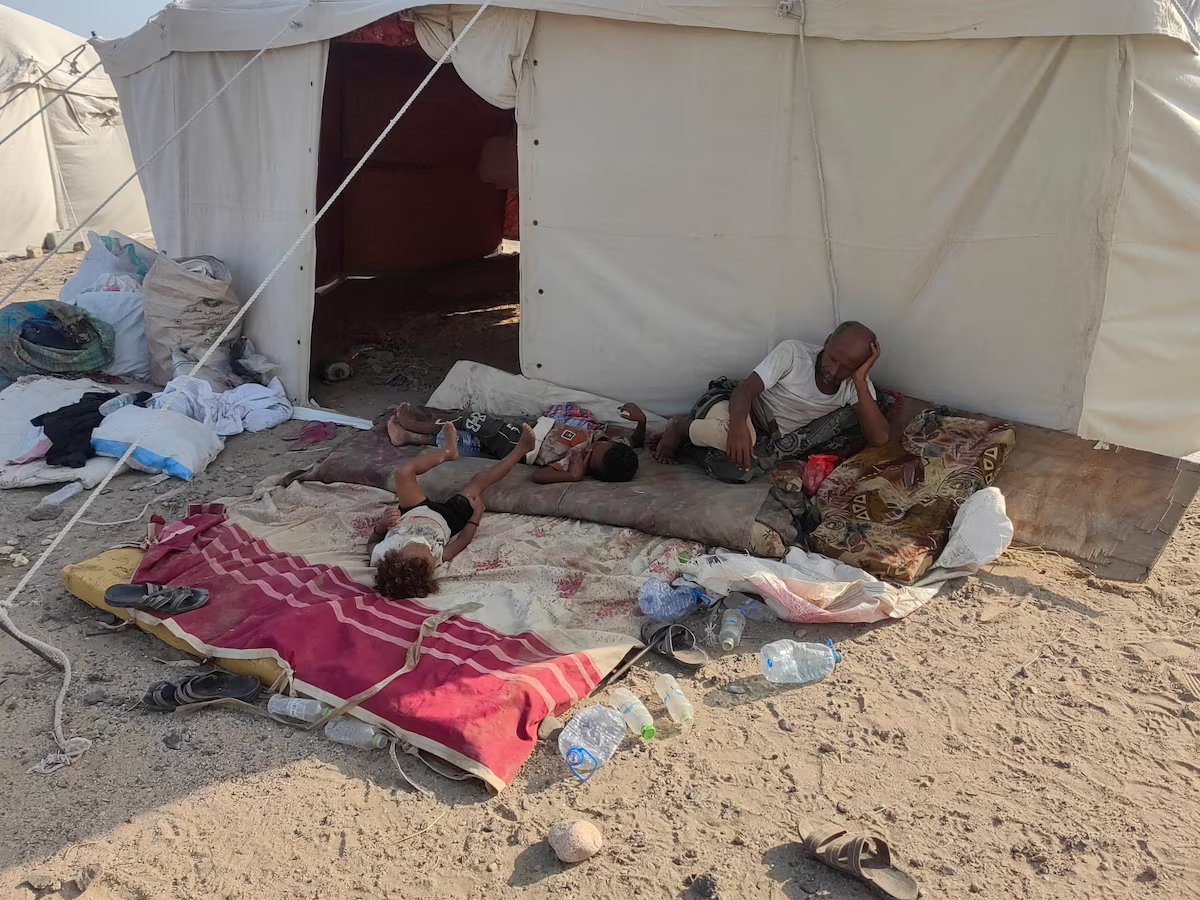
Yemen displacement topped 112,000 in two weeks, UN agencies said, as Red Sea coast fighting pushed families toward Djibouti.
The International Organization for Migration said the movement inside Yemen followed renewed combat along the western coast. UNHCR's representative in Djibouti, Sandrine Desamours, said nearly 3,000 people had reached the Horn of Africa country by sea in less than a week.
112,000 displaced in two weeks
Djibouti's government is preparing for as many as 10,000 refugees, Desamours said. That would add demand for clinics and schools in a country receiving families after a short but risky crossing over the Gulf of Aden.
The migration agency said people are using crowded boats and reaching Djibouti with little food or water. Most are Yemeni families seeking refuge, while a smaller group of migrants, mainly from Ethiopia, is beginning to move along the same route.
Boats reach Somaliland and Puntland
Authorities in Somaliland and Puntland have reported additional arrivals from Yemen, UNHCR said. Those flows remain in the hundreds, a smaller scale than the Djibouti crossings but a sign that escape routes are widening beyond one destination.
The pattern matters for aid planning because sea crossings spread responsibility across governments with limited reception capacity. Registration, health screening, shelter and family tracing become harder when arrivals are dispersed across several ports rather than concentrated at one entry point.
Red Sea battles near shipping lane
The latest flight comes as the Iran-aligned Houthi movement advances along Yemen's Red Sea shoreline toward Bab el-Mandeb. The strait links the Red Sea with the Gulf of Aden and is used by oil, commodities and container shipping.
The conflict track includes Houthi attacks on Saudi cities and energy infrastructure, followed by Saudi and Yemeni airstrikes on Houthi targets. UN agencies described the resulting displacement as another layer of crisis in a country where years of war have damaged health services and the economy.
Yemen's war has pitted the UN-recognized Yemeni government, supported by Saudi Arabia, against the Houthis. The new coastal fighting lands on a civilian system already weakened by disrupted public services, lost incomes and repeated emergency movements.
Djibouti faces a capacity test
For Djibouti, the immediate burden is administrative and humanitarian: registering arrivals, assessing health needs and finding classrooms or temporary learning space. If the count rises toward 10,000, the pressure would move from border response to public-service capacity.
For Yemen, continued coastal combat would keep more people moving inside the country, where aid access depends on road security and port operations. If fighting interrupts those routes, relief agencies would face higher costs and longer delivery times for food, water and medical supplies.
Bab el-Mandeb shapes scenarios
The global effect depends on whether violence stays near local front lines or reaches the Bab el-Mandeb corridor more directly. If traffic through the strait remains open, the macro impact would be contained while refugee reception and aid funding carry the main costs.
If insecurity instead deepens around the chokepoint, shipping operators could face longer routes, higher insurance costs or schedule changes. That would feed into freight rates and energy logistics, while humanitarian agencies and Gulf governments would confront a larger displacement crisis.
The main open question is how long the west coast offensive lasts and whether Djibouti's preparation for 10,000 refugees proves enough. UN agencies are tracking crossings to Djibouti, Somaliland and Puntland as the first test of whether the flight remains regional or becomes broader.