Spain moves Ceuta migrants into port shelters after sweep
Spanish police moved Ceuta migrants from beaches toward port housing as a 1,700-place shelter left thousands without indoor accommodation.
Lauren Collins ·
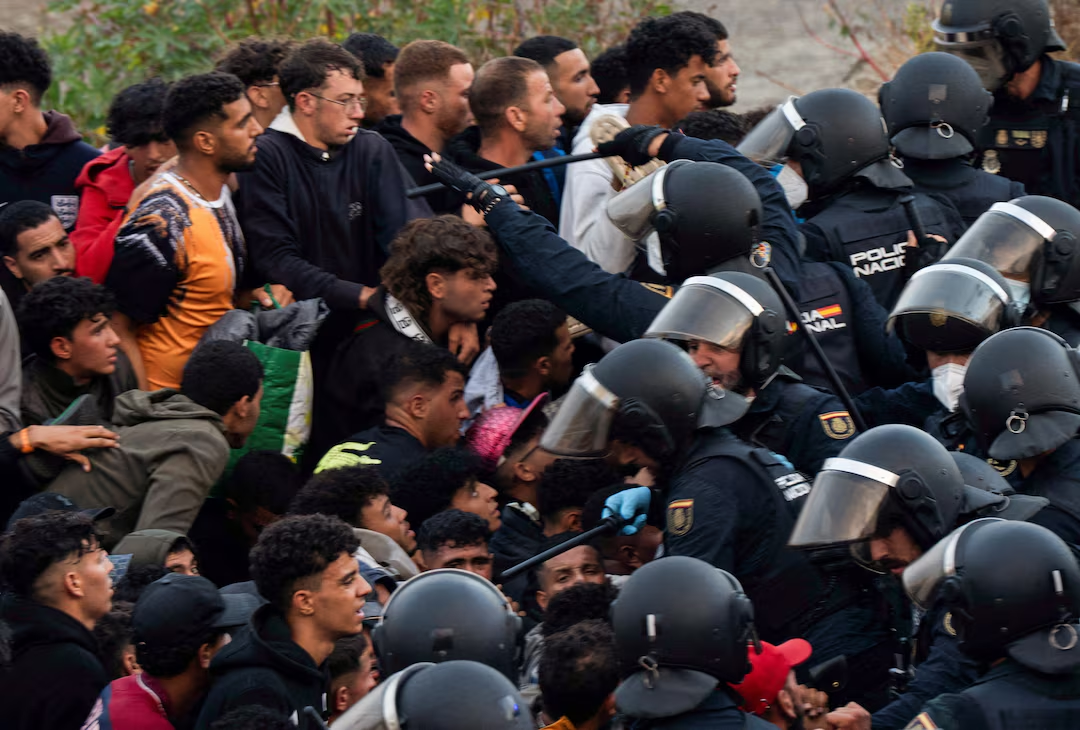
Spanish police moved Ceuta migrants from beaches toward 1,700 port shelter places on Friday, exposing a gap in Spain's enclave reception capacity.
The operation began shortly before 7 a.m. local time (0500 GMT) and involved riot police and the Spanish military. Officers fired rubber bullets into the air and used batons after crowding developed around the route to the port, according to broadcast footage.
Rubber bullets over El Trampolin
Migrants who had spent the night on El Trampolin beach initially applauded as the clearance began, expecting access to a shelter place. Tussles followed as people tried to enter the designated corridor, and the movement resumed only after the confrontation eased.
Later images showed mostly adult men carrying bags along a route of just over 1 kilometer (0.6 miles) from the beach to the port. The escort turned a public beach camp into a controlled transfer line, but it did not resolve the mismatch between the number seeking shelter and the beds available.
A 1,700-place port camp
Spanish authorities estimate that 10,000 migrants remain in Ceuta, down from more than 72,000 who crossed from Morocco at the end of July. The port accommodation can hold 1,700 people, or less than one fifth of the number the authorities say are still in the enclave.
NGO leaders said the reception network has expanded too slowly to meet minimum shelter standards under the European migration pact. One NGO estimated that about 4,000 people were still sleeping on beaches and pavements, more than twice the capacity of the new port site.
The pressure is concentrated in a territory with little spare space and a border that can become a testing point for Spanish and Moroccan migration management. Ceuta is one of Spain's two North African enclaves, making arrivals there an EU border issue as well as a local policing problem.
Minors separated from adult men
The new port housing is intended for adult men, while minors are being separated and placed elsewhere. That division may reduce risks inside the new facility, but it also increases the administrative burden on local authorities already trying to move people out of open-air camps.
Most of the migrants described in the operation were men and boys, leaving officials to sort people by age during a fast-moving clearance. Any error in that process would carry legal and welfare consequences, especially for unaccompanied minors who require different protection under European rules.
The immediate effect on Spain is operational: police, soldiers and local officials must process a beach population larger than the available port beds. For the wider migration system, the constraint is capacity; if reception sites remain below the number sleeping outside, enforcement will keep shifting people without fully absorbing them.
Spain faces capacity tests
If the port site fills near its 1,700-person limit, Spain could clear the most visible beach camps while leaving thousands in temporary or informal arrangements. That path would limit street pressure in parts of Ceuta, but it would keep NGOs focused on shelter standards and sustain pressure on Spanish-Moroccan coordination.
If more migrants return voluntarily to Morocco, as two NGO leaders said officials may be expecting, Ceuta's immediate accommodation gap would narrow without a large new build-out. The mechanism would be a lower headcount rather than higher capacity, leaving the wider system vulnerable if another large crossing occurs.
If arrivals persist and returns do not reduce the population, the port site becomes a stopgap rather than a solution. The open question is how quickly Spain can add verified shelter space, separate minors safely and maintain order without repeated confrontations on the same beaches.