Iran UN delegation gains visas while PA officials are barred
The State Department will allow core Iranian officials into New York for the UN General Assembly under travel and purchasing restrictions.
Omar Farouk ·
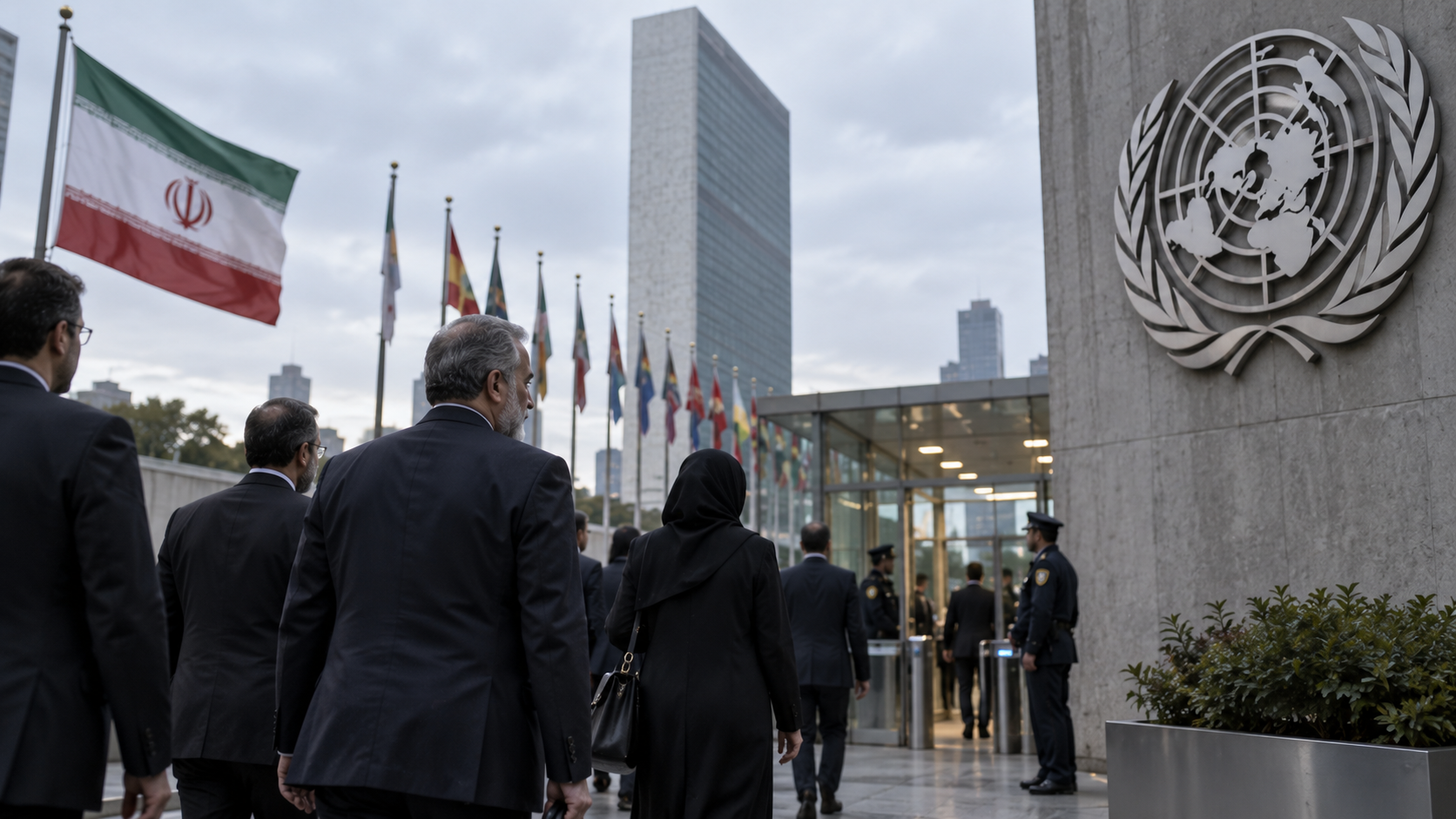
Iran UN delegation members will receive limited US access for General Assembly meetings next week, keeping Washington inside its host-country obligations, the State Department said.
Travel limits follow visa approval
The permission applies to core officials from Tehran attending the annual high-level week in New York, a State Department spokesman said in an emailed statement Thursday. The spokesman said the delegation will be smaller than last year's group, but did not provide a headcount or identify the approved officials.
The authorized visitors will face restrictions on movement inside the United States and will not be allowed to buy luxury and other goods, according to the department. The limits preserve access to UN proceedings while keeping Iranian officials under controls linked to US policy.
There was no announced meeting between Iranian officials and the Trump administration in the statement. That leaves the visa decision as a procedural step rather than evidence of a diplomatic opening between Washington and Tehran.
Sanctions narrow Tehran's roster
The decision comes during a US-Iran standoff that the supplied account describes as wartime. It said the conflict began with Feb. 28 strikes by the United States and Israel in Tehran, in which Supreme Leader Ayatollah Ali Khamenei was killed.
Sanctions have narrowed the pool of Iranian officials able to travel to the United States. Many senior figures who survived the early phase of the war have been designated under measures that would ordinarily block their entry and extend to family members, according to the account.
The host-country issue gives Washington less room to treat UN travel like normal bilateral access. The United States can restrict routes, purchases and local movement, but the State Department framed the approval as consistent with obligations attached to hosting the UN headquarters.
Palestinian visas take another route
The Iran decision followed a separate State Department announcement Wednesday denying visas to top Palestinian Authority officials seeking to attend the same UN meetings. The department attributed that step to what it described as unmet pledges under earlier peace arrangements with Israel.
The contrast creates two visa tracks for the same diplomatic week: limited entry for Iranian officials under host-country rules, and refusal for Palestinian Authority leaders under a separate policy judgment. Both decisions affect which foreign officials can lobby diplomats in person as leaders gather in New York.
For hotels, air carriers and banks handling diplomatic traffic, the practical effect is narrow but compliance-heavy. Approved travel and lodging may proceed for permitted purposes, while restricted purchases and sanctioned-party exposure remain the main operational risks.
New York week carries three paths
If the Iranian delegation stays within its assigned limits, the immediate effect is procedural rather than diplomatic. Macro risk remains tied to the war itself, Tehran keeps a UN platform, and travel-sector exposure stays bounded by the restrictions described by the State Department.
If travel limits become a point of dispute, the mechanism changes. Investors would have another political friction to price, Iranian officials could argue that access to multilateral forums is being constrained, and future UN host-country disputes could become harder for diplomats to manage.
If informal contact occurs despite no announced meeting, the effect would depend on whether it opens a channel or only restates existing positions. The main uncertainty is whether President Trump pairs visa access with direct diplomacy or keeps the delegation at a controlled distance during the Assembly week.