Merz enters Germany election weekend with CDU exposed anew
AfD gains in Saxony-Anhalt have put Friedrich Merz under pressure before Sunday votes in Berlin and Mecklenburg-Western Pomerania.
Claire Dubois ·
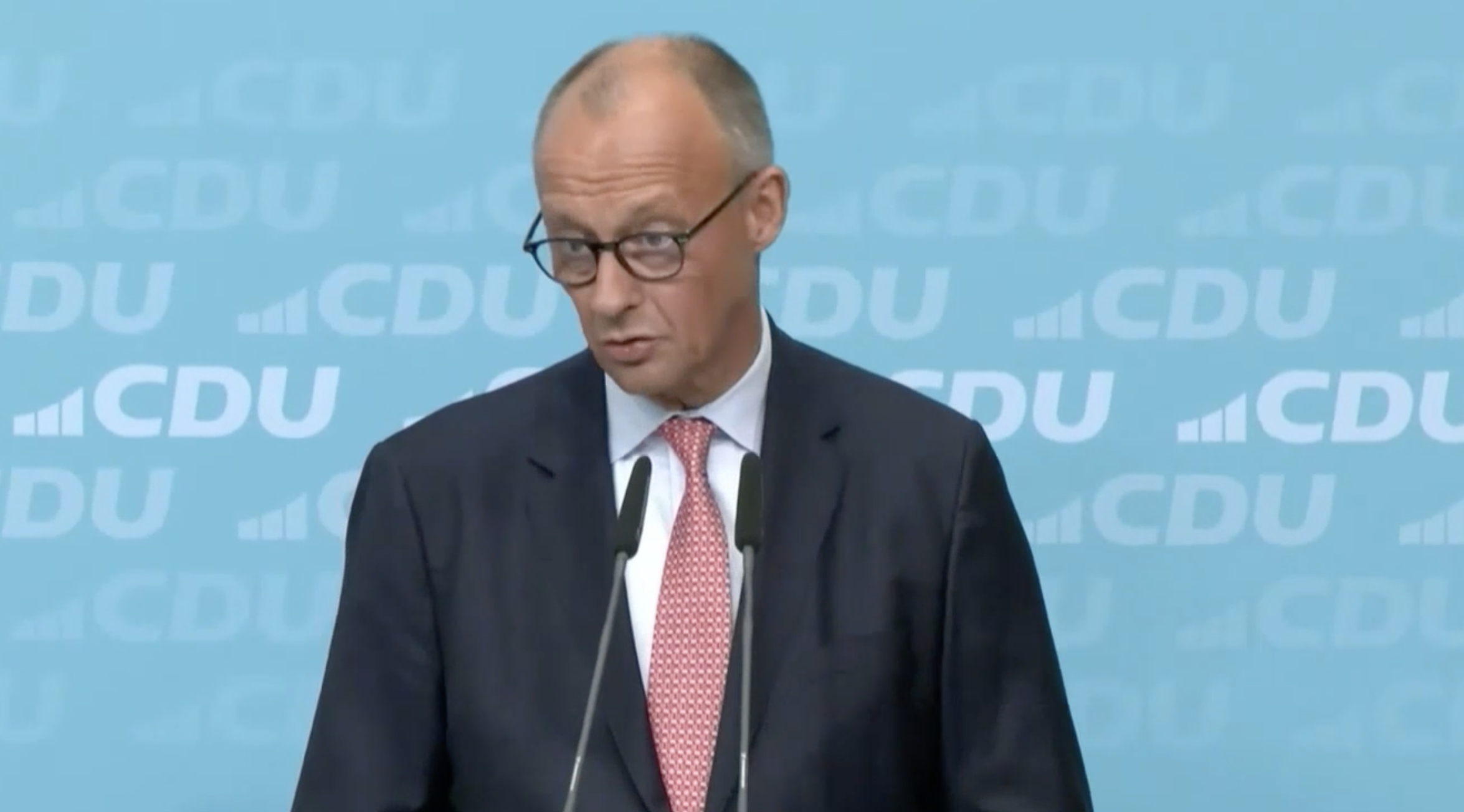
Merz crisis faces a two-state Germany election test after AfD beat the CDU in Saxony-Anhalt, squeezing Berlin during European strains.
Saxony-Anhalt defeat jolts CDU
The immediate trigger was the Christian Democrats' loss this month in Saxony-Anhalt, an eastern state where the anti-immigration Alternative for Germany finished ahead of the chancellor's party. The result gave Merz's critics a concrete election setback after his earlier claim that he could cut AfD support in half.
Instead, the AfD result has intensified the argument inside the CDU over whether Merz can still contain the party's right flank after 16 months in office. Recent polling cited in the political debate has put his personal approval at a postwar low for a German chancellor, leaving the party to defend both its leader and its electoral line.
Merz has already adjusted his schedule around the domestic crisis. He canceled a planned trip to the United Nations next week and, during a flight to Finland for an Arctic security summit, called party figures to secure backing, according to a person familiar with the matter.
Premiers draw Berlin line
The chancellor has called CDU leaders to Berlin on Sunday evening as votes are counted in two more state contests. The group includes state premiers with regional power bases who could become internal challengers if the party suffers further losses.
Merz plans to ask critics either to present a replacement strategy or support the leadership line, according to a person familiar with closed-door deliberations. The account is single-sourced to that person, so the exact wording of the planned message should be read as a description of internal maneuvering rather than a public statement.
The eight CDU state premiers tried to lower the temperature on Wednesday by issuing a statement of support for Merz. They said restoring trust in the party would require political action, not "debates about personnel," giving the chancellor a public shield before the next count.
Sunday votes widen pressure
The next tests are Mecklenburg-Western Pomerania, on Germany's Baltic coast, and Berlin, the federal capital. In Mecklenburg-Western Pomerania, the CDU faces the prospect of another weak showing; in Berlin, it risks slipping behind The Left, the anti-capitalist party competing for disaffected urban voters.
The stakes extend beyond CDU personnel. Germany is Europe's largest economy and a central actor in EU policy debates on energy, defense, trade and relations with Washington, so a weakened chancellor has less room to broker compromises at home or abroad.
Those constraints arrive as Europe is managing transatlantic tensions, high energy costs and competition with China over trade. If Berlin's coalition politics become more inward-looking, the practical effect would be slower decision-making on measures that require German fiscal, industrial or diplomatic weight.
If the CDU limits the damage on Sunday, Merz can argue that Saxony-Anhalt was a contained setback and use the premiers' declaration to reassert control. That path would leave Germany's macro policy stance more stable, keep the CDU focused on governing, and give mainstream European parties more evidence that losses to the right can be managed.
If the AfD extends its gains and the CDU underperforms in both states, the mechanism changes. Internal critics would have fresh electoral evidence, Merz would face a harder task holding regional leaders in line, and parties across Europe would read the result as another test of whether center-right forces can compete with anti-immigration challengers without fracturing.
The main open question is whether Sunday's results produce a personnel challenge or only a warning shot. For now, Merz has public support from the premiers, but that support is tied to his ability to show that the CDU can recover votes rather than continue arguing about its leadership.