Russians go to the polls
Russia mobilization concerns have intensified before parliamentary voting, with a European security official saying Moscow is preparing to draft 300,000 more…
Claire Dubois ·
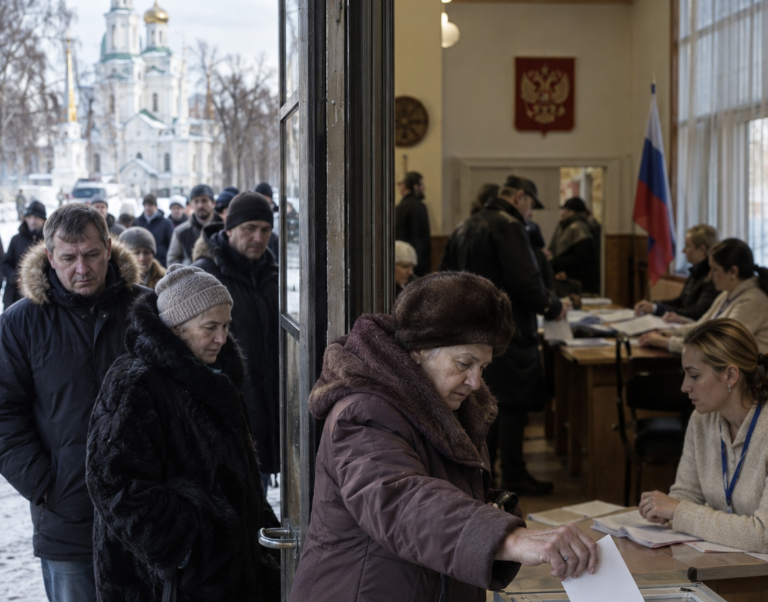
Russia mobilization fears are rising before parliamentary elections, as a European security official says 300,000 more men may be drafted this year.
President Vladimir Putin has denied plans for another call-up, but the claim comes as voting opens Friday in Russia's first parliamentary election since the 2022 full-scale invasion of Ukraine. The potential size of the draft, if carried out, would match the 300,000-man mobilization announced in September 2022, which prompted public anxiety and departures from Russia.
Election timing frames draft fears
The vote runs for three days and is expected to leave United Russia, the party that campaigns as Putin's political vehicle, in control of the State Duma. The party has held a majority in the lower house since 2003, and the election is taking place under tight Kremlin control, according to the source material.
The timing matters because a new call-up after ballots close would reduce the immediate political risk during the campaign period. The European security official cited in the account said Russia is preparing to bring an additional 300,000 men into the army by the end of 2026; the Kremlin has not publicly confirmed that plan.
Documents cited in the reporting describe anxiety inside parts of the state apparatus, including among officials in Kremlin-linked circles and army recruitment offices. Those documents say some officials have explored foreign bank accounts, shifted assets abroad and urged relatives or friends to leave Russia in recent months.
Digital summons narrow exit options
A second mobilization may not look like the first one. The earlier September 2022 call-up was announced publicly and led tens of thousands of people to leave the country, according to the source material.
The Kremlin has since built a more centralized digital system for military summonses, giving authorities a way to notify eligible men without relying solely on paper notices. The same infrastructure could make it harder for recipients to ignore orders or leave quickly once a notice is issued.
That shift changes the pressure on households. In 2022, the central question for many families was whether to leave after a public announcement; this time, the practical window could be shorter if orders arrive through electronic systems and restrictions follow more quickly.
Volunteer pool faces strain
Russia's army has continued to rely heavily on contract soldiers, using recruitment bonuses and higher military pay to attract volunteers. Putin has said about 700,000 Russian troops are deployed in Ukraine, a figure that sets the scale of the manpower requirement.
The source material says Russia needs to recruit about 400,000 people a year to replenish its ranks. That figure, if accurate, helps explain why a new mobilization is being discussed as the war moves deeper into its fifth year and the supply of willing recruits shows signs of strain.
The battlefield context is central to the personnel problem. Russia is sustaining high casualties while making limited territorial progress in Ukraine, according to the account, leaving officials to balance military needs against domestic political and economic costs.
For the Russian economy, another large draft would pull more working-age men away from civilian jobs at a time when defense spending already competes with other sectors for labor and state funding. For the military recruitment system, a formal or informal mobilization would test whether digital summonses can deliver numbers that voluntary incentives no longer secure.
Three paths after the vote
If the Kremlin proceeds with a broad call-up near the 300,000 figure cited by the European security official, the immediate effect would be more manpower for Ukraine and more pressure on Russia's labor market. Globally, that path could keep war-related uncertainty elevated for energy, grain and defense planning; inside Russia, it would tie the state more tightly to coercive recruitment; across the defense sector, it would reinforce demand for personnel systems, equipment and logistics.
If Moscow instead avoids a public order and continues relying on contracts, the strain would move through budgets rather than a single political shock. Higher pay and bonuses would keep recruitment market-based, but the mechanism would still draw labor from civilian employers and sustain demand from defense-linked industries.
If digital summonses are used without a formal national announcement, the political signal would be less visible while the practical impact could still be large. The main open question is whether Russia can raise enough troops without triggering the kind of departures and domestic anxiety seen after the 2022 mobilization.