Nestle Russia assets shift to Kremlin control under decree
Nestle Russia assets moved under Kremlin control under a presidential decree, adding legal and operational risk to a scaled-back business.
Kofi Mensah ·
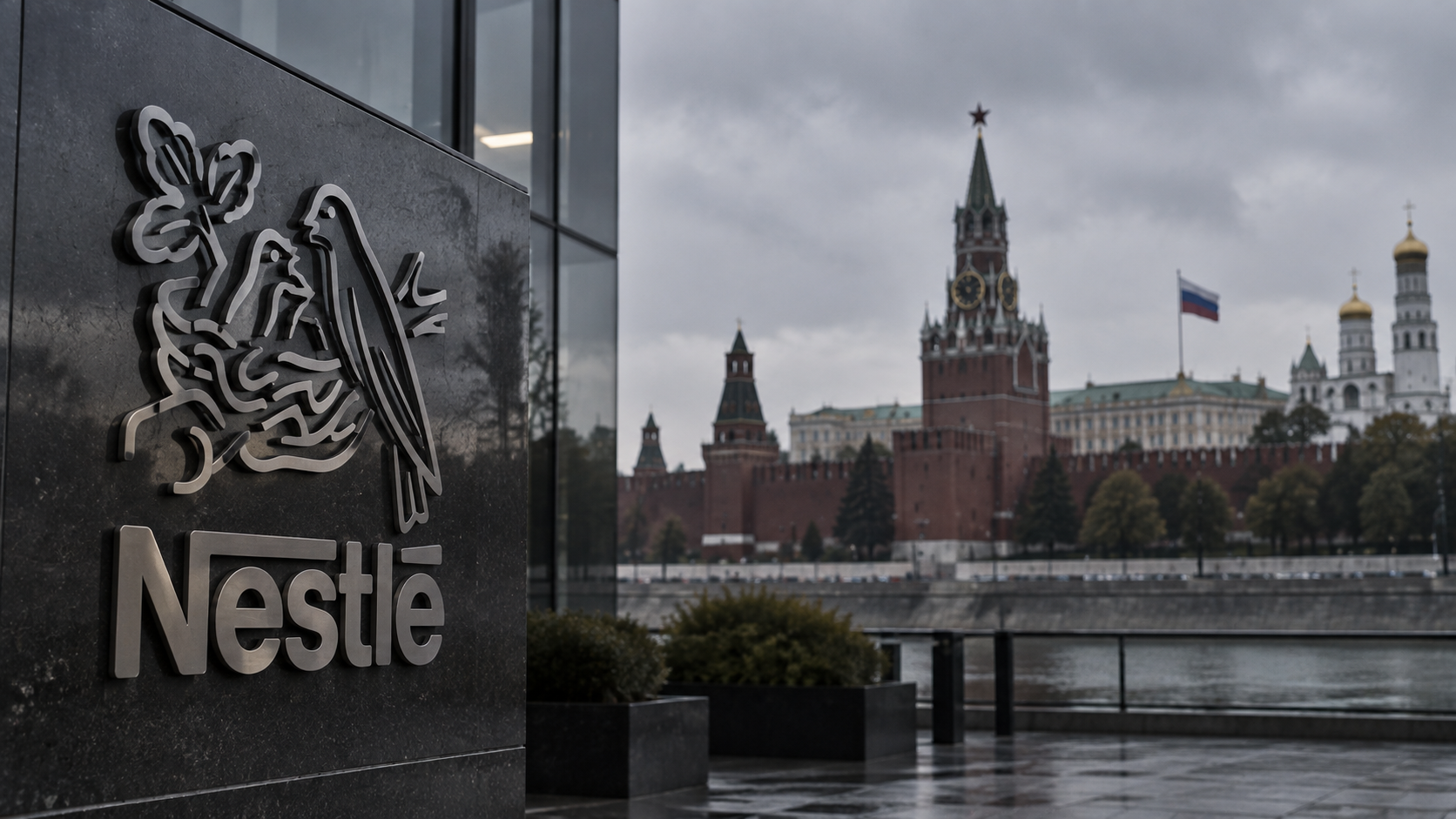
Nestle Russia assets, including six factories, were put under Kremlin control, leaving the Swiss food group to assess legal options.
The company said on Friday it was reviewing the presidential decree issued a day earlier and weighing steps to protect its rights. The order places another Western-owned business under Russian state-directed management as Moscow tightens its grip on assets linked to countries it classifies as hostile.
Six factories enter state control
Nestle’s Russian operations include six factories making coffee, petcare products and infant formula. The company said it would seek to maintain operations for employees while it assessed the scope of the decree.
The legal basis is a 2023 decree signed by President Vladimir Putin that allows temporary administration of assets tied to countries Russia deems "unfriendly." Since the Ukraine war began in 2022, Moscow has used asset controls, forced-sale terms, exit taxes and discounts to shape how Western companies leave or stay.
Kremlin spokesman Dmitry Peskov told reporters that politics had been a factor in the latest decisions. He alleged, without naming Switzerland or France directly, that the affected countries were involved in military actions against Russia, including strikes on economic infrastructure.
Russia was already smaller
Nestle last disclosed Russian sales of about 2 billion Swiss francs ($2.4 billion) for 2021, equal to roughly 2% of group sales at the time. The business also had about 7,000 employees there, giving the decree labor and operational consequences beyond the accounting treatment.
The group has since reduced activity in the country, suspending most sales, non-essential imports and exports, advertising and capital investment, according to Bank Vontobel analyst Jean-Philippe Bertschy. Bertschy estimates Russia now contributes around 1% of Nestle’s group sales, compared with the 2% level disclosed for 2021.
"While negative for sentiment and raising the prospect of an asset impairment or unfavourable disposal, we expect a marginal financial impact, given Russia's limited contribution to group sales," Bertschy said. Market data showed Nestle shares down 2.4% from the previous close at 1005 GMT on Friday.
Auchan broadens the asset sweep
The same decree also covered the Russian assets of French supermarket group Auchan, which operates 230 stores and an online business in Russia. Auchan employs about 30,000 people in the country, compared with Nestle’s 7,000 disclosed employees there.
Auchan’s assets were transferred to temporary management by L.E.V. Management, according to the decree. The retailer declined to comment, while the Swiss government had no immediate response after Moscow’s criticism of Switzerland for following European Union sanctions on Russia.
For Nestle, the immediate risk is whether temporary administration limits management control, triggers an impairment or pushes the company toward a sale on terms set in Moscow. For the wider consumer-goods sector, the mechanism is clearer than the timetable: companies with remaining Russian assets face higher exposure to state intervention when diplomatic ties deteriorate.
If the order remains administrative and operations continue, the macro effect is likely limited to another sign of Russia’s economic separation from Western capital, while Nestle absorbs a smaller Russia exposure and rivals watch for similar decrees.
If Moscow instead forces a disposal or imposes tougher exit terms, Nestle could face a less favorable write-down or sale, and other food, retail and consumer companies may reassess whether any remaining Russian presence can be controlled from abroad.