Iran attack tests Trump's options after Jordan base hit
President Trump threatened retaliation after an Iran attack on a Jordan base, while oil rose above $90 and regional strikes widened.
Lauren Collins ·
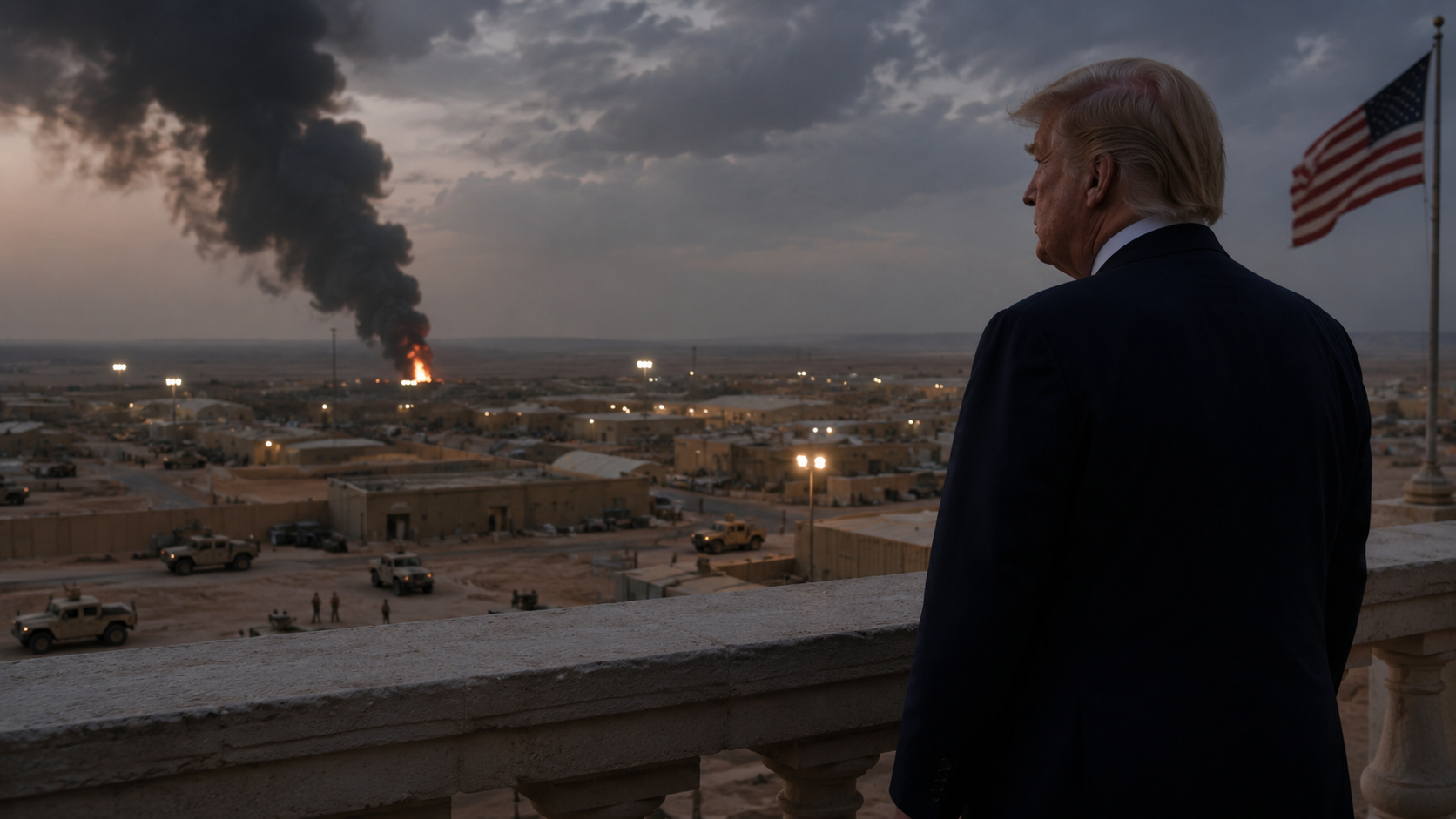
President Trump vowed a US response after an Iran attack targeted a military base in Jordan, pushing oil back above $90 a barrel.
Trump framed the planned response in unusually direct terms during a phone interview. “We’ll be hitting them hard,” he said, adding that “they’re going to get a beating.”
Jordan base raises stakes
The threat followed a break in a short lull in strikes across the region. US forces said they were targeted by Iran on Tuesday night, and Trump described the episode as a “surprise attack.”
Iranian state media gave a different account of the same escalation, saying the US hit a site in Iran’s West Azerbaijan province. Iranian media also said the Islamic Revolutionary Guard Corps targeted the Jordan base in response to “aggressive US actions,” but offered no operational detail.
The competing accounts matter because they shape the legal and political space for any US response. If Washington treats the Jordan incident as a direct Iranian strike, the White House has more room to argue for retaliation; if Tehran casts itself as responding to US action, the cycle becomes harder to contain.
Saudi oil sites enter fighting
The fighting also pulled Saudi Arabia more visibly into the chain of attacks. The US and Saudi Arabia struck Iran-backed militants in Iraq after Riyadh said it intercepted drones launched by Iraqi groups toward Saudi oil facilities.
Iraq’s Popular Mobilization Forces, an umbrella group for Shia militias, said the US-Saudi strikes killed 20 people. Semi-official Iranian media reported that four members of the IRGC were also killed.
Those casualty claims could not be reconciled from the available accounts. The immediate political effect is clearer: Iraq is again a pressure point between Washington, Tehran, and Gulf capitals, with militia activity tied directly to energy security.
Oil’s move back above $90 a barrel showed how quickly regional violence can reach global markets. A threat to Saudi energy sites carries a different market signal than a battlefield exchange because it raises questions about supply routes, export capacity, and insurance costs.
Three paths for Trump
For President Trump, the decision now sits between deterrence and escalation. A limited US strike on IRGC-linked assets could aim to restore costs for attacks on American forces while keeping the fight below a wider state-to-state confrontation.
If that narrower path holds, the global macro effect would likely run through a contained oil risk premium rather than a full supply shock. For the White House, the gain would be a visible response; for the energy sector, the benefit would be reduced fear of sustained disruption.
If the response instead expands to Iranian territory, the mechanism changes. Global markets would price greater supply risk, the White House would own a broader military cycle, and refiners, airlines, and shipping firms would face higher uncertainty tied to fuel and transport costs.
A third path depends on whether regional actors re-establish the short pause that collapsed Tuesday night. If that happens, oil could give back part of its risk-driven rise, Trump could claim deterrence without prolonged operations, and Gulf producers would have more room to keep exports running normally.
The open questions are concrete: where the US chooses to strike, whether Iran answers directly or through allied militias, and whether Saudi oil infrastructure remains a target. Each answer will decide whether this becomes another contained exchange or the start of a wider regional test.