Keiko Fujimori takes Peru presidency after tight runoff
Keiko Fujimori became Peru’s president after a narrow runoff, opening a security-focused government with unusual congressional support.
Matteo Ricci ·
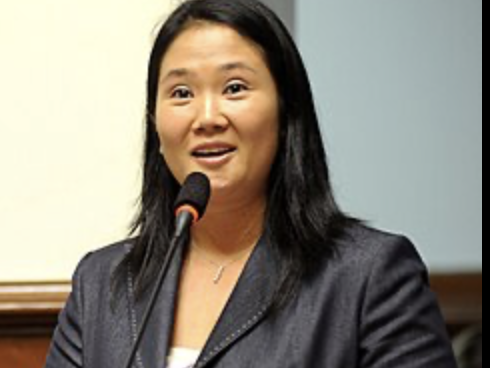
Keiko Fujimori took office in Peru after a razor-thin runoff, promising tougher security and steadier politics in a crisis-prone state.
The conservative leader was sworn in Tuesday after winning the June runoff by under 50,000 ballots. Her arrival gives Peru its ninth person to occupy the presidency in 10 years, a measure of how deeply executive power has weakened in the country.
Fujimori, 51, enters office as the head of Popular Force, Peru’s largest party. Her victory also adds to a wider conservative tilt in parts of South America, where security, crime and economic frustration have become central campaign themes.
A narrow mandate in Lima
The runoff result gives Fujimori the presidency, but not a broad electoral cushion. A margin below 50,000 votes leaves her with immediate pressure to prove that a divided electorate can be governed without deepening Peru’s institutional fatigue.
Peru’s presidency has been one of the most unstable in the region over the past decade. Only three presidents during that period reached office through direct election, while others arrived after resignations or removals by Congress during corruption scandals, protests or political breakdowns.
That history shapes Fujimori’s first challenge. She must show that her administration can survive the congressional pressures that have repeatedly turned Peru’s presidency into a short-term office rather than a stable executive platform.
Congress gives Fujimori room
Fujimori begins with a legislative advantage that recent Peruvian leaders often lacked. Popular Force and its principal ally, Popular Renovation, are set to control 50% of Senate seats once the new legislature is seated.
That bloc does not eliminate conflict, but it raises the political cost of trying to remove her from office. If the alliance holds, Fujimori may have more room to pursue security and infrastructure legislation before opposition parties can organize a serious challenge.
The numbers also carry a risk. A president with stronger congressional backing can move faster, but Peru’s recent history shows that speed without public trust can trigger confrontation outside the legislature.
Security pledges meet economic aims
Fujimori built her campaign around public security, especially extortion rackets that have alarmed businesses and households. She pledged an "iron fist" response, borrowing parts of the political language and policy approach associated with Salvadorean President Nayib Bukele.
One of her most visible proposals is a large new prison inspired by El Salvador’s Cecot facility. The promise may appeal to voters demanding order, but it also places human rights scrutiny at the center of her security agenda from the start.
On the economy, Fujimori has promised to accelerate infrastructure by making public agencies work more easily with private investors. The approach could help unlock projects if her administration can reduce permitting delays and give investors confidence that contracts will survive Peru’s political churn.
Her family name gives the presidency another layer of complexity. Alberto Fujimori governed Peru in the 1990s, restored economic stability and defeated terror groups, but was later jailed over abuses carried out by the military as his rule turned authoritarian; he was pardoned in December 2023 and died the following September.
If Fujimori’s Senate support remains intact and crime indicators improve, Peru could become a stronger regional case for conservative security politics tied to pro-investment policy. In that path, the macro effect would be a steadier Peruvian policy environment, the company-level impact would be clearer conditions for private infrastructure investors, and the wider sector effect would be renewed interest in public-private projects.
If crime persists or prison policy draws legal challenges, the political advantage could erode quickly. That path would keep Peru’s macro risk premium tied to governance instability, weaken Fujimori’s ability to pass economic reforms, and make construction, transport and concession operators more cautious about long-term commitments.
The early tests are concrete: cabinet appointments, the first security bills, the design of any new prison plan and the terms offered to private investors. Those choices will show whether Fujimori can turn a narrow election into a durable government, or whether Peru’s cycle of presidencies under siege continues.