Iran missiles intercepted by US across Middle East region
Iran missiles fired at US forces in the Middle East were intercepted, CENTCOM said, leaving locations, casualties and damage unconfirmed.
Lauren Collins ·
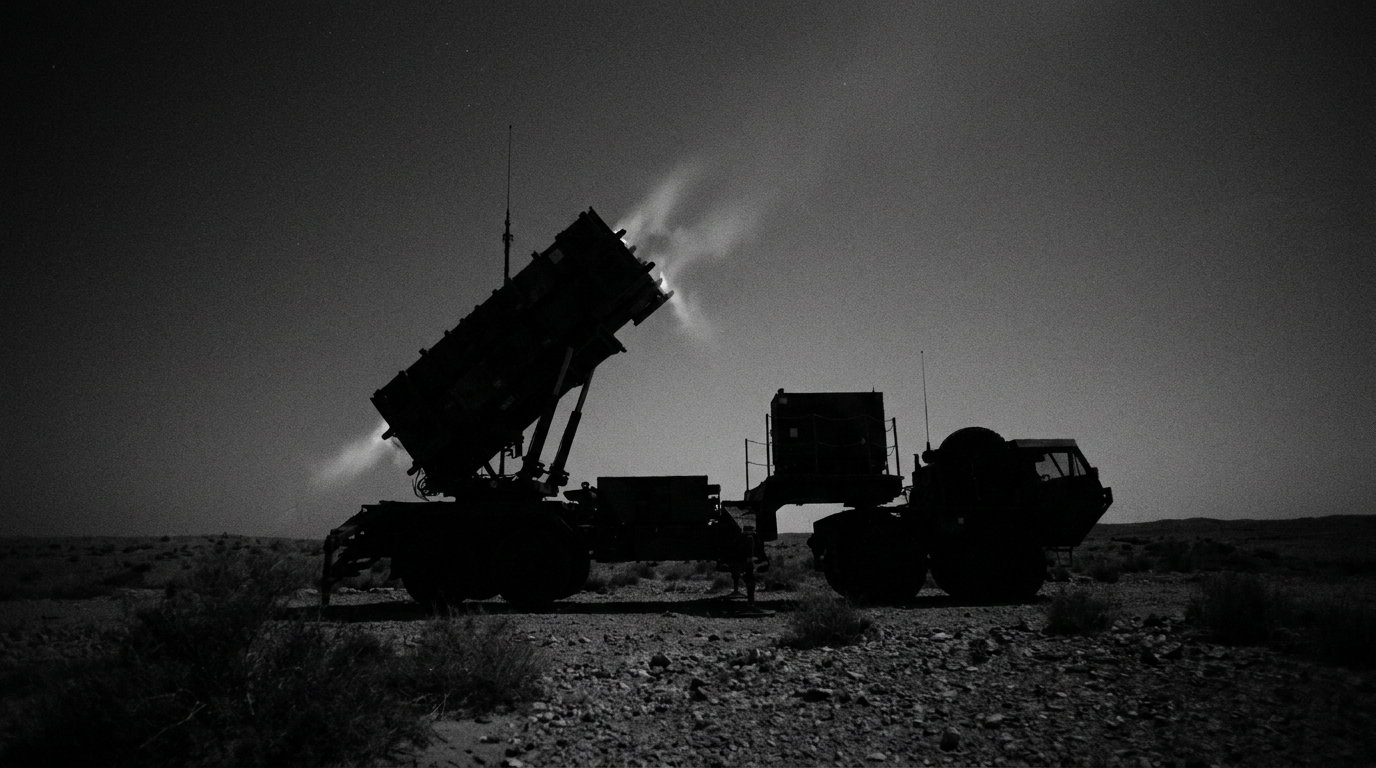
Iran missiles fired at US forces in the Middle East were intercepted, CENTCOM said, framing the launches as an attempted surprise attack.
US Central Command said Wednesday in a statement on X that Iran’s Islamic Revolutionary Guard Corps launched multiple ballistic missiles toward American personnel based in the region. The command did not identify the countries where the intercepts occurred or say whether any missile reached a target.
CENTCOM cites IRGC launches
The statement attributed the launches to the IRGC, Iran’s powerful military organization, and described the episode as an "attempted surprise attack" on US forces. Because the information came from a military command statement, the central facts available are the US account of the launch, the interception and the intended target.
CENTCOM did not provide a missile count beyond saying there were multiple launches. It also did not report casualties, damage, the specific weapons used to intercept the missiles, or the time window of the engagement.
Ballistic missiles raise regional stakes
The use of ballistic missiles matters because such weapons can travel quickly over long distances and compress decision times for air defense systems. Even without confirmed damage, a missile launch against US personnel can widen a crisis by forcing military commanders to protect bases, ships and partner facilities at the same time.
The Middle East hosts a network of US military deployments, though CENTCOM’s statement did not name the bases or countries involved in this incident. That omission leaves a narrow but important factual record: Iran fired, the US intercepted, and the stated target was American forces in the region.
The immediate effect falls first on US military operations. If the interceptions prevented impacts, commanders may focus on air defense readiness, intelligence collection and force protection rather than casualty response or base repair.
Defense systems become the test
For the wider defense sector, the episode places attention on missile warning, tracking and interception systems. The statement did not identify the platforms used, so no specific contractor or weapon system can be tied to the engagement from the available record.
The industry implication is still clear at a general level: repeated missile threats increase operational demand for air defense equipment, radar coverage and command-and-control capacity. The mechanism is direct, because every launch requires detection, classification, engagement decisions and replenishment planning if interceptors are used.
The macroeconomic effect cannot be sized from CENTCOM’s statement alone. No oil price, shipping disruption, market movement or official economic estimate was included, so any claim about global financial impact would require separate verified data.
Three paths from the intercepts
If the incident stops with successful intercepts and no reported casualties, the global macro effect may remain limited to risk monitoring rather than measurable economic damage. For the US military, that path would reinforce air defense posture; for the defense sector, it would sustain attention on readiness and inventories without proving a broader conflict cycle.
If Iran or aligned forces launch additional missiles, the mechanism changes from a single engagement to a sustained air defense burden. That would raise pressure on US commanders to protect dispersed forces, increase demand signals for interceptors and surveillance systems, and heighten uncertainty for regional trade and energy markets, even before any confirmed physical disruption.
If CENTCOM later reports casualties, damage or a specific location, the story would shift from interception performance to consequences and response options. The open questions are precise: how many missiles were launched, where they were aimed, what systems stopped them, whether any debris caused harm, and whether Washington treats the episode as contained or part of a wider pattern.