Iran missile attack tests Jordan defenses near US base site
Jordan intercepted five Iranian missiles as attacks on U.S.-linked sites resumed, raising pressure on Washington, Riyadh and Baghdad.
Lauren Collins ·
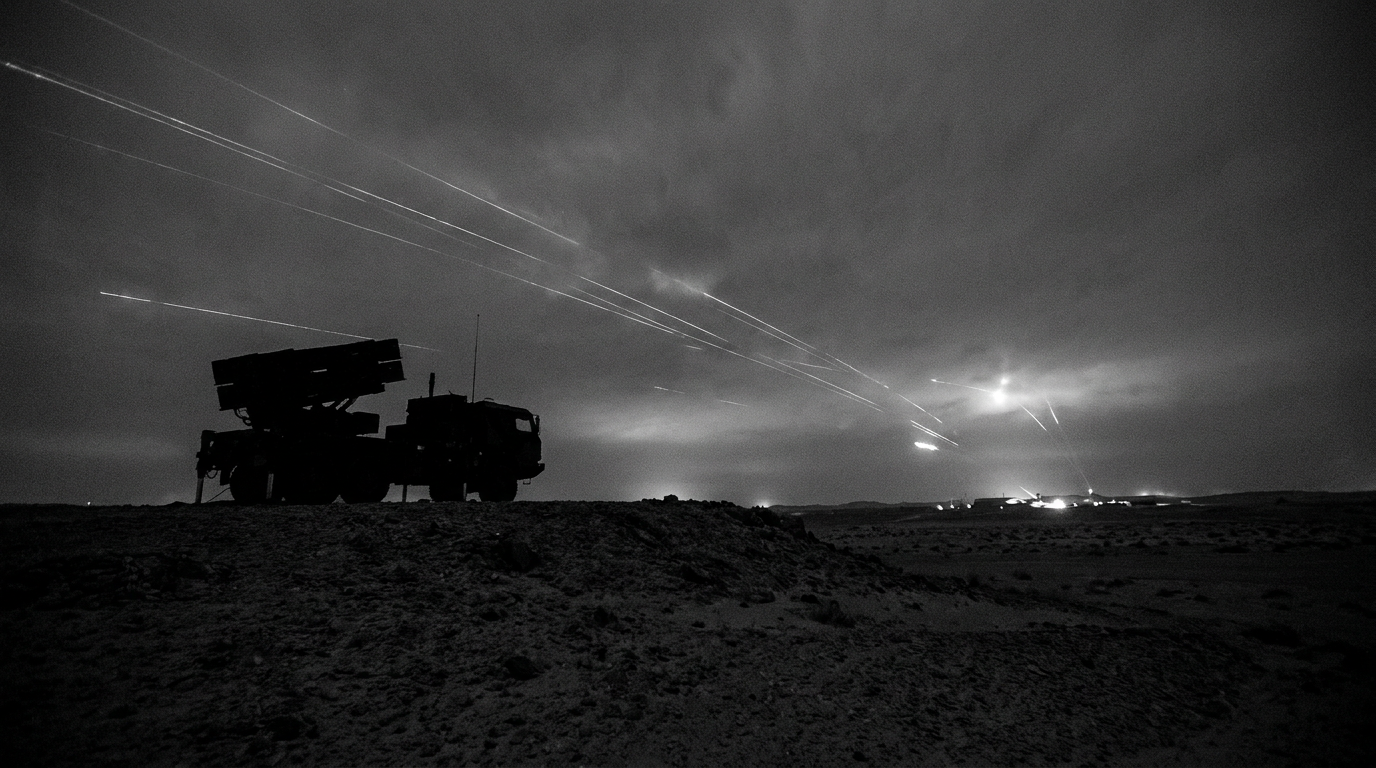
Iran missile attack on sites tied to U.S. forces ended a brief pause, with Jordan intercepting five inbound weapons and oil markets turning higher.
U.S. Central Command said the Islamic Revolutionary Guard Corps launched several ballistic weapons at 5:45 p.m. Eastern time Tuesday and that all were intercepted. The IRGC statement identified Muwaffaq Salti Air Base and a Central Command facility in Jordan as targets; neither Jordan nor the United States had reported verified damage by 5:35 a.m. Wednesday.
A pause without enforcement
The launches broke a roughly three-day interval in which Washington and Tehran had not announced major new attacks. President Donald Trump had halted a nearly two-week American bombing campaign, and Iran appeared to scale back operations, but there was no negotiated ceasefire, enforcement mechanism or agreed timetable.
The unresolved issues are the same ones that kept the conflict live: U.S. deployments, Iranian leverage over Gulf shipping routes and attacks by Tehran-aligned groups. Oman and other regional governments had limited room to test diplomatic proposals, but the missile fire showed that the quiet period was tactical rather than settled.
Drone raids widen Iraq front
The United States and Saudi Arabia also moved against what they described as a broader threat network, carrying out joint strikes in eastern Iraq on Tuesday night. Central Command said American and Saudi aircraft hit logistics and weapons sites after more than 30 drone assaults in the previous 72 hours, all of which it said failed.
The command said Iran-aligned Iraqi factions had tried more than 600 times between February and April to attack American citizens or facilities. That figure explains why Iraq has become both a launch area and a diplomatic liability: military enforcement can answer immediate threats while deepening friction with Baghdad.
The Popular Mobilization Forces said 20 of its members were killed and 32 were injured in the overnight bombing, figures that were not independently verified in the first hours after the strikes. The PMF is formally part of Iraq’s security architecture, but several factions retain separate command structures, political ties and links to Iran.
Prime Minister Ali Faleh al-Zaidi convened the National Security Council and ordered an investigation as his government faced pressure from Washington, Riyadh, Tehran and militia leaders. Iran-aligned factions denied responsibility for attacks on Saudi Arabia, while the Islamic Resistance in Iraq suggested Yemen’s Houthis may have carried out at least some operations.
Saudi strikes change the risk map
Saudi participation changes the regional equation because Riyadh moved from air defense to acknowledged offensive action inside Iraq. The Saudi Defense Ministry said the kingdom did not seek a wider confrontation but would respond to attacks, pairing restraint in language with a threat of further force.
Saudi authorities had reported intercepting drones aimed at petroleum facilities for a second consecutive day, while the Houthis claimed they turned back a Saudi tanker in the Red Sea. Riyadh now has to protect oil infrastructure, domestic airspace and shipping routes near Bab el-Mandeb while watching launch points to the north.
Hormuz dispute reaches oil market
The military escalation coincided with the collapse of an Omani proposal for shared regional management of the Strait of Hormuz. Tehran rejected an arrangement involving joint oversight and voluntary shipping fees, insisting instead on authority over the inbound channel and part of the outbound route.
The IRGC also said Wednesday that it had stopped three tankers after they entered a route it considered unsafe and unlawful, but the vessels were not identified and the claim remained unverified. The dispute is structural: Gulf states and Western governments want predictable navigation, while Iran is trying to convert geography and military reach into formal control.
Oil prices responded quickly. Brent crude traded near $87.13 a barrel at 5:19 a.m. Eastern time, up roughly $3.62, while West Texas Intermediate was near $81.91, reflecting concern over Saudi production risks, Hormuz delays and pressure on the Red Sea route.
Washington faces constrained options
Washington can treat the interceptions as proof that current defenses are working, expand strikes against Iraqi factions or resume direct attacks on Iranian military targets. If interceptions continue and no personnel are killed, the macro effect may stay concentrated in oil risk premiums, while U.S. forces hold a defensive posture and Gulf shipping absorbs higher insurance costs.
If a missile or drone causes American deaths or verified damage to Saudi energy assets, the pressure for broader U.S. and Saudi retaliation would rise. That path would likely lift transport and fuel costs, strain Iraq’s government, expose Iran-aligned factions to further strikes and force energy producers, airlines and import-dependent economies to plan around a more expensive Gulf corridor.