

European Union Unites on Strategy for Ukraine Peace Talks
European leaders have formed a collective “E5” team for Ukraine peace talks, citing the structural impossibility of appointing a single negotiator.
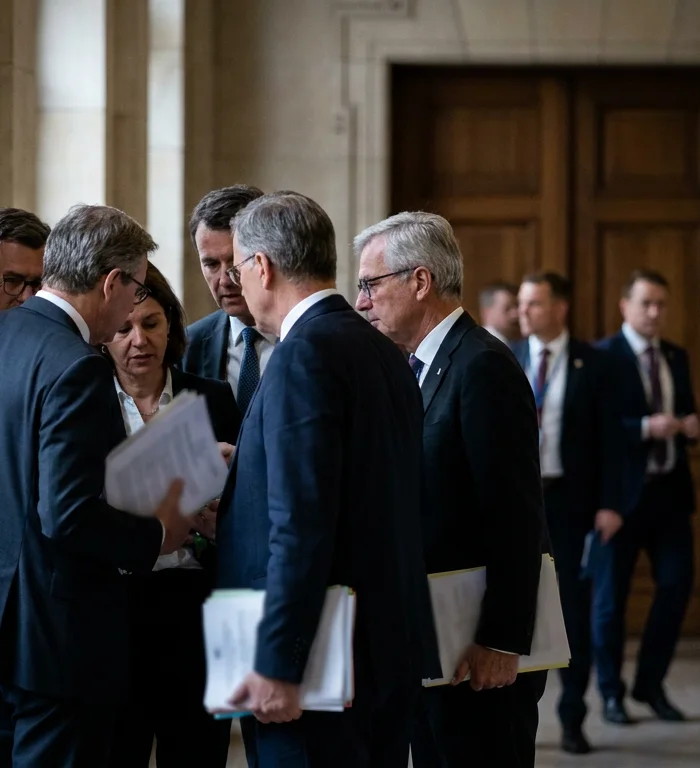
European leaders have formally rejected the appointment of a single representative to lead peace negotiations regarding the conflict in Ukraine. Instead, a collective "E5" group—comprising Germany, France, Poland, Italy, and the United Kingdom, alongside European Commission and Council officials—will manage the diplomatic process. This decision follows pressure from Ukrainian leadership to identify a singular point of contact to streamline engagement with Russia and the United States.
Structural limitations within the European governance framework necessitated this shift. Institutional mandates are currently fragmented, with the European Commission holding authority over sanctions and accession, while national capitals and NATO retain control over security architecture and military commitments. Diplomats have noted that no single individual possesses the legal or political mandate to consolidate these distinct interests, particularly regarding troop deployments or long-term financial guarantees.
While current talks in Abu Dhabi involve intelligence
While current talks in Abu Dhabi involve intelligence
While current talks in Abu Dhabi involve intelligence
While current talks in Abu Dhabi involve intelligence
While current talks in Abu Dhabi involve intelligence
While current talks in Abu Dhabi involve intelligence
While current talks in Abu Dhabi involve intelligence
Negotiations remain in a technical phase, currently focused on preliminary discussions between senior officials rather than heads of state. While current talks in Abu Dhabi involve intelligence and administrative representatives, the transition to high-level political engagement will eventually require the participation of national leaders to serve as signatories or guarantors of any potential settlement.
Strategic focus is now shifting from the configuration of the negotiating team to the substance of the European position. Officials emphasize that the primary objective is to engage Russia on the future of continental security structures, a move intended to incentivize a more cooperative stance from Moscow. The effectiveness of this collective approach will depend on the group's ability to harmonize disparate national interests into a unified policy platform. Future developments will likely hinge on whether this multi-stakeholder model can maintain internal cohesion while navigating the competing priorities of the U.K., EU member states, and non-EU partners.
More stories
- Germans oppose Ukraine aid as poll shows support slipping
- Kim Jong-un receives 10 envoys after constitutional shift
- Ukraine claims Libya strike sinks Russian naval corvette
- COP31 climate talks collapse over fossil fuels and funds
- Russian military faces 1,087 recorded suicides in Ukraine war
- US faces China, Russia in Africa minerals contest
- North Korea changes flag as Kim reshapes national symbols
- Nvidia names Kress interim CEO after Huang exits in scandal
- Makura cites 50 AfCFTA ratifications in Africa image challenge
- Indonesia cuts Singapore gas exports by 31m cubic feet a day
Latest news
- Trump prepares tariffs on China and other major exporters
- New-car buyers pay record average $50,087 in October
- Banks face ECB reserve debate over liquidity and profits
- Investors see Anthropic debut gains fade below $83 a share
- Iraq orders federal control over Kurdish-area oilfields
- Nvidia shares retreat as AI rally cools before PCE data
- Macy’s parade faces balloon limits as storm winds approach