US-Iran conflict tests drone boats and cyber defenses at sea
US-Iran conflict is accelerating the combat use of drone boats and mobile-network targeting, making Gulf operations a live test of low-cost warfare.
Lauren Collins ·
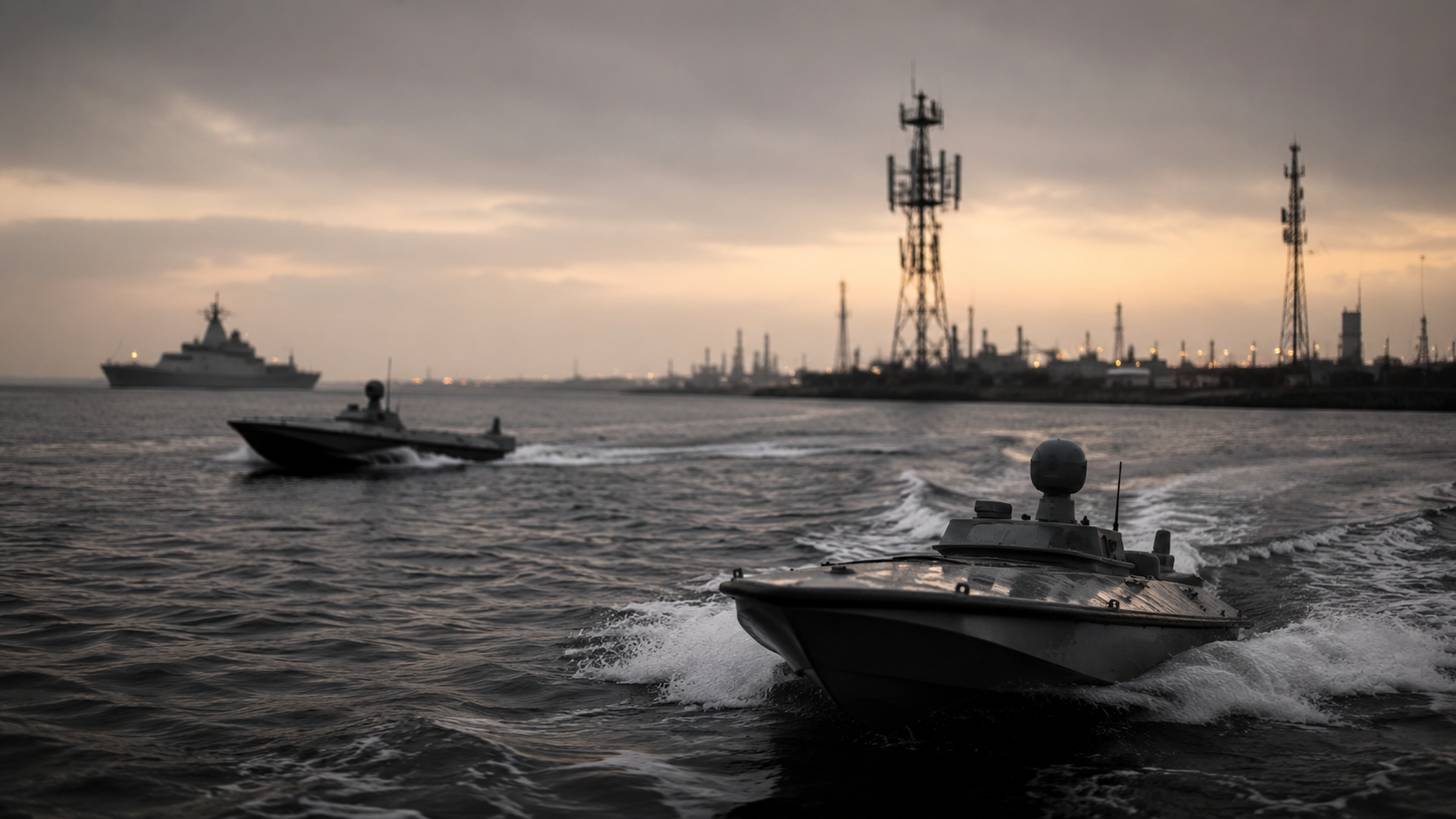
US-Iran conflict is accelerating the combat use of drone boats and mobile-network targeting in the Gulf.
Drone boats enter combat
The US said this week it used unmanned surface vessels in an offensive combat operation for the first time, sending drone boats against Iran’s Bandar Abbas naval base. The operation matters because it places low-cost autonomous naval systems inside a live conflict rather than a controlled test range.
The vessels were described as 24 feet long, priced at less than $1 million each, able to travel more than 1,000 miles and capable of carrying payloads of up to 1,000 pounds. Those figures help explain why military planners are studying smaller systems that can be risked in missions too dangerous for crews.
A related craft made by Saronic Technologies was used last month after a US Apache helicopter went down near the Strait of Hormuz, according to the source material. In that case, the vessel helped rescue the crew, showing how the same platform category can support both strike and recovery missions.
Phones become battlefield sensors
The conflict is also moving through personal devices. The source material says adversaries, assessed as likely Iran or aligned groups, used cyberattacks on mobile networks to search for the locations of specific phones belonging to US military personnel in the Gulf.
Tehran is also suspected of using commercial ad-targeting software to identify hotels where US government staff were staying, according to the account. The allegation points to a broader vulnerability: location data gathered for civilian advertising can become useful in military surveillance when paired with network access or targeting lists.
For troops and civilian staff, the risk is not limited to stolen messages or disabled systems. A phone can become a location beacon, and a hotel booking pattern can become a map of where officials are clustered.
Cheap systems change the math
The drone-boat specifications show why the naval side of the conflict is drawing attention from defense buyers. A vessel below $1 million is still expensive enough to carry meaningful payloads, but cheap enough to change how commanders think about attrition, distance and risk.
For Saronic Technologies, the reported use gives its vessels battlefield relevance across two missions: a strike on a naval base and a rescue near one of the world’s most sensitive maritime corridors. That can support demand from navies seeking autonomous systems, while also increasing scrutiny of reliability, communications links and rules for human control.
The wider defense industry will read the episode through several markets at once. Autonomous hulls, counter-drone systems, electronic warfare tools and secure communications all become more important if small unmanned vessels can operate across long ranges with heavy payloads.
The global effect is less about a single raid than about cost curves. If inexpensive autonomous craft force defenders to protect bases with higher-cost systems, the financial burden shifts toward the side that must guard fixed infrastructure around the clock.
Three paths for the Gulf
If US drone-boat operations remain limited, the macro effect is likely contained to defense planning and Gulf security posture. Saronic would gain validation without necessarily facing a surge in production pressure, while the sector would treat the mission as proof of concept rather than a procurement reset.
If these operations expand, the mechanism changes. Iran would have stronger incentives to harden naval facilities, jam command links or target launch points; Saronic and similar suppliers would face demand for range, autonomy and survivability; the industry would accelerate work on both unmanned vessels and defenses against them.
If cyber targeting proves accurate and persistent, the pressure shifts toward personnel protection. The macro channel would run through higher security costs in the Gulf, the company-level effect would be a push to harden autonomous systems against digital compromise, and the sector effect would favor cyber-resilient platforms over simple mass production.
If both sides find these tools unreliable or too escalatory, adoption could slow. The immediate open questions are whether the US releases more detail on the Bandar Abbas mission, whether Iran demonstrates countermeasures, and whether Gulf-based personnel face stricter phone and location-data rules.