U.S. hits Bandar Abbas bridges to squeeze Iran supply lines
U.S. strikes near Bandar Abbas targeted bridges and supply routes tied to Iran’s naval operations in the Strait of Hormuz.
Lauren Collins ·
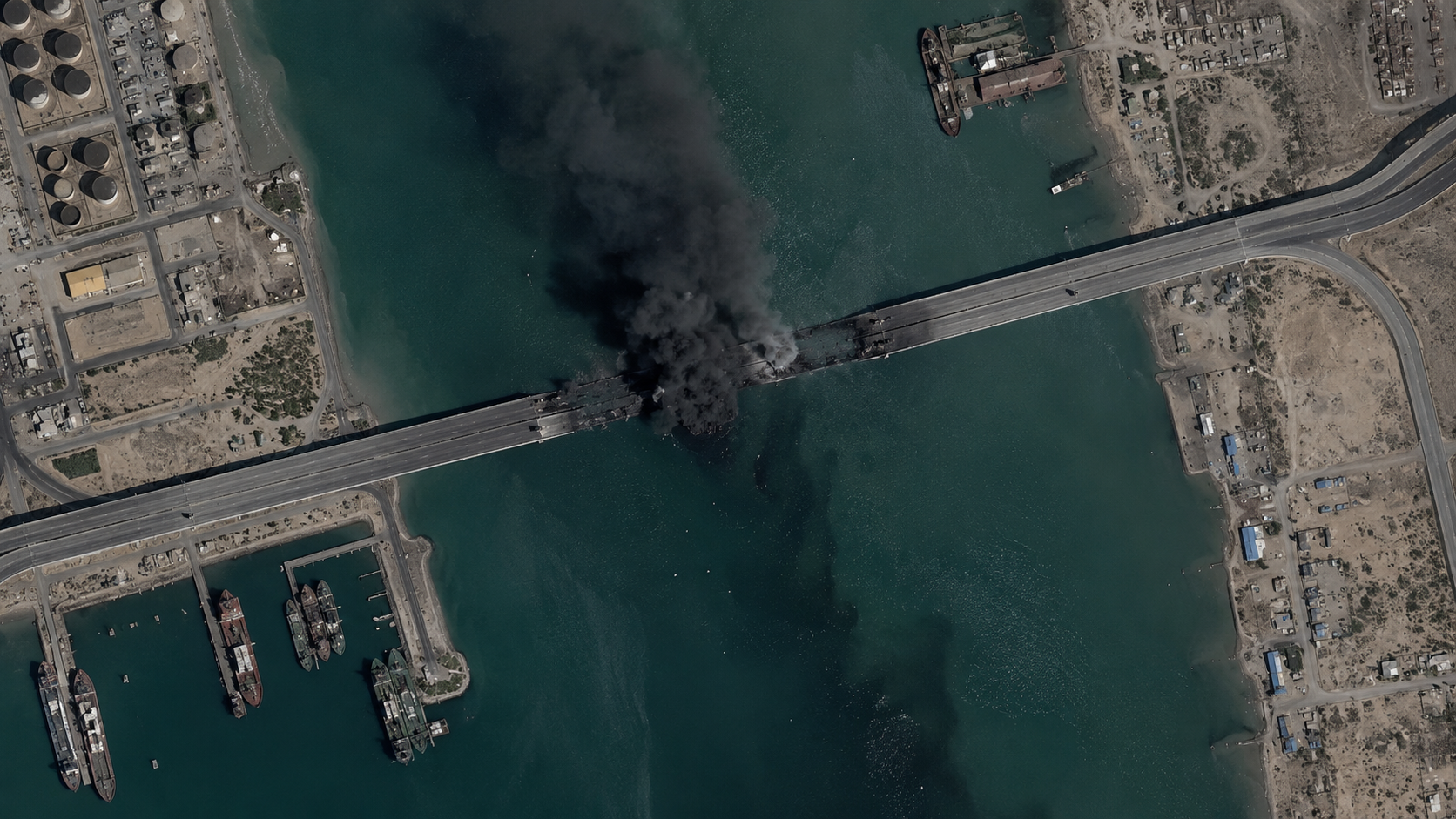
U.S. strikes near Bandar Abbas targeted bridges and supply roads tied to Iran’s naval reach in the Strait of Hormuz, a U.S. official said.
The attacks took place Thursday, according to the senior official, and were aimed at limiting routes into the port city and nearby naval facilities. Iranian state media reported bridge strikes overnight and said highways linking Bandar Abbas with surrounding provinces had been closed.
Bridges become pressure points
Bandar Abbas sits on Iran’s southern coast near one of the world’s most sensitive maritime corridors. The city hosts an Islamic Revolutionary Guard Corps naval base and supports operations that Tehran uses to extend military pressure across the Persian Gulf, according to the U.S. account.
The choice of bridges points to a campaign focused not only on weapons sites, but on the road network that keeps those sites supplied. Cutting highway access can slow the movement of personnel, equipment and replacement parts without requiring strikes on every military facility in the area.
U.S. forces have hit Bandar Abbas repeatedly in recent days, according to the official account. Earlier this week, the U.S. used sea drones against an Iranian submarine and ship facility in the same area, widening the campaign from land targets to maritime infrastructure.
A sixth day of strikes
U.S. Central Command said it had started a sixth straight day of operations against Iran. The command, which directs U.S. forces in the Middle East, said the strikes were intended to weaken Iranian military capacity.
The campaign has concentrated on missile and drone locations, along with other sites Washington says Tehran uses to threaten shipping. The bridge attacks suggest that logistics nodes around Bandar Abbas have become part of the same military calculus.
Iran has answered with attacks on U.S.-linked infrastructure in the region and on Gulf partners, according to the account provided. It has also continued strikes on commercial vessels, keeping the maritime dimension of the conflict at the center of the confrontation.
Iranian military officials have threatened to destroy infrastructure across the Middle East if the U.S. targets Iranian infrastructure, Iranian state media reported. That warning raises the risk that both sides treat ports, roads, energy sites and military logistics as connected targets.
Talks continue under fire
White House press secretary Karoline Leavitt said Thursday that Iran "very much continues to talk to the United States of America and express that they want to make a deal with us because they are suffering devastating blows." Her comment placed diplomacy and military pressure on parallel tracks rather than separate ones.
The immediate effect on Bandar Abbas is operational: closed highways and damaged bridges can complicate access to the port city and naval base. For the U.S. military, the test is whether repeated strikes reduce Iran’s ability to launch missiles, drones or maritime attacks without triggering broader regional retaliation.
For commercial shipping, the risk is less about one bridge than the persistence of attacks near the Strait of Hormuz. If vessels face higher perceived danger in the corridor, insurers, shipowners and energy buyers may reassess routes, security costs and delivery schedules.
If the bridge closures hold and further strikes keep pressure on Bandar Abbas, Iran’s ability to replenish naval and missile operations around the Gulf could be slowed. That path would support the U.S. objective of degrading military capacity, while leaving shipping exposed to short-term disruption and retaliatory attacks.
If Iran expands attacks on regional infrastructure instead, the conflict could shift from military sites toward a wider contest over ports, roads and energy-linked assets. That would raise the stakes for Gulf governments, increase uncertainty for global trade flows through the waterway and force U.S. Central Command to balance interdiction with defense of allied infrastructure.
If diplomacy gains traction while strikes continue, the military campaign could become leverage rather than a prelude to escalation. The open questions are whether Tehran can absorb sustained damage around Bandar Abbas, whether commercial shipping attacks continue, and whether talks produce limits before infrastructure becomes the dominant target set.