

US Gulf strategy faces three-nation defense test
Turkey’s parliament is taking up a Makkah defense agreement with Pakistan and Saudi Arabia alongside the 2027 budget agenda.
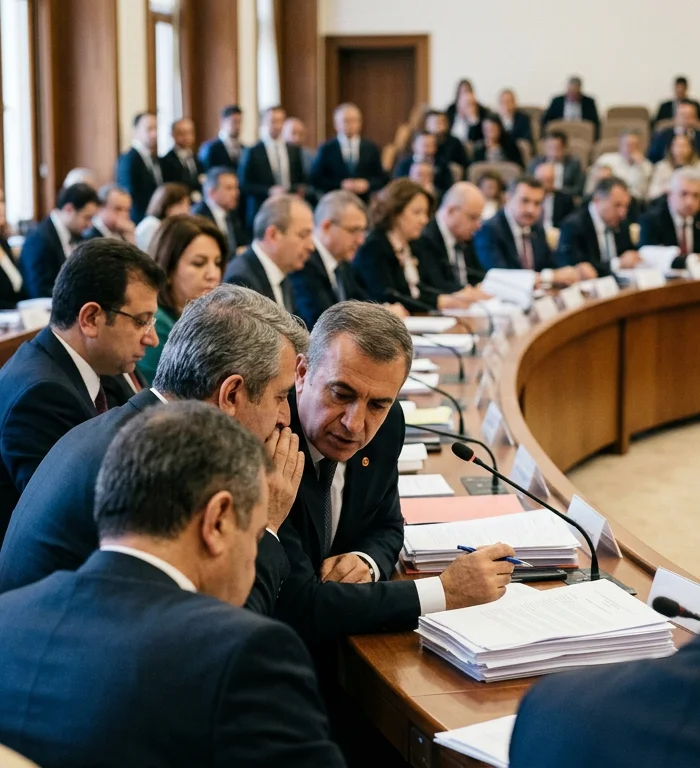
Turkey’s parliament put the 2027 central government budget and a three-country Makkah Joint Defense Agreement on its agenda this week, according to a secondary news report.
For Washington, the security item matters because it links Turkey, a NATO member, with Saudi Arabia and Pakistan in a formal defense channel while Congress and the executive branch keep scrutiny on regional arms transfers.
Makkah Joint Defense Agreement
The report said the Turkish Grand National Assembly’s Plan and Budget Commission will review the 2027 central government budget proposal, the 2025 final accounts proposal and Court of Accounts reports. Vice President Cevdet Yılmaz is expected to attend the commission and answer lawmakers’ questions and criticism, the report said.
The Foreign Affairs Commission is also expected to consider the Makkah Joint Defense Agreement among Turkey, Pakistan and Saudi Arabia, according to the report. The supplied material did not include the text of the agreement, a committee vote date or details on whether the pact contains binding mutual-defense language, procurement provisions or technology-transfer clauses.
Those omissions are material for US policy. A consultative defense framework would carry different implications from an operational pact covering joint planning, weapons development or crisis commitments.
Turkey’s role gives the file a NATO dimension; Saudi Arabia’s role puts it inside the long-running US debate over Gulf security guarantees; Pakistan’s role adds a nuclear-armed partner with its own defense relationship with Riyadh. None of those links proves a break with Washington, but together they make the committee agenda relevant to the State Department, Pentagon and congressional foreign-policy committees.
If the agreement advances with limited operational content, Washington could treat it as burden-sharing among partners rather than a challenge to US security architecture. That path would leave the macro effect muted, give Ankara a diplomatic win and keep the defense industry impact focused on coordination rather than major procurement.
If the text points to weapons co-development, missile cooperation or binding defense obligations, US officials and lawmakers would have a clearer reason to examine compatibility with NATO commitments and existing Gulf security frameworks. That path would increase diplomatic friction, raise compliance questions for Turkish firms and encourage Gulf buyers to look more seriously at non-US defense supply chains.
The next observable test is whether the Foreign Affairs Commission moves the agreement forward and whether US officials address it in a State Department or Pentagon briefing. Without the agreement text, the central open question is whether this is a political statement among three partners or a mechanism that changes defense planning.
More stories
- Eisenkot secures first coalition deal but lacks majority
- Germans oppose Ukraine aid as poll shows support slipping
- Kim Jong-un receives 10 envoys after constitutional shift
- Ukraine claims Libya strike sinks Russian naval corvette
- COP31 climate talks collapse over fossil fuels and funds
- Russian military faces 1,087 recorded suicides in Ukraine war
- Israel to close occupied West Bank crossings on election day
- Nigeria advocates put northern missing at 17,000
- Taiwan concerns test Trump-Xi summit as trade gains loom
- North Korea minister defends nuclear buildup in Beijing
Latest news
- Trump prepares tariffs on China and other major exporters
- New-car buyers pay record average $50,087 in October
- Banks face ECB reserve debate over liquidity and profits
- Investors see Anthropic debut gains fade below $83 a share
- Iraq orders federal control over Kurdish-area oilfields
- Nvidia shares retreat as AI rally cools before PCE data