UAE Saudi visit tests Gulf security ties over Yemen crisis
UAE Vice President Sheikh Mansour bin Zayed is visiting Saudi Arabia as Yemen’s Houthi conflict strains Gulf security calculations.
Omar Farouk ·
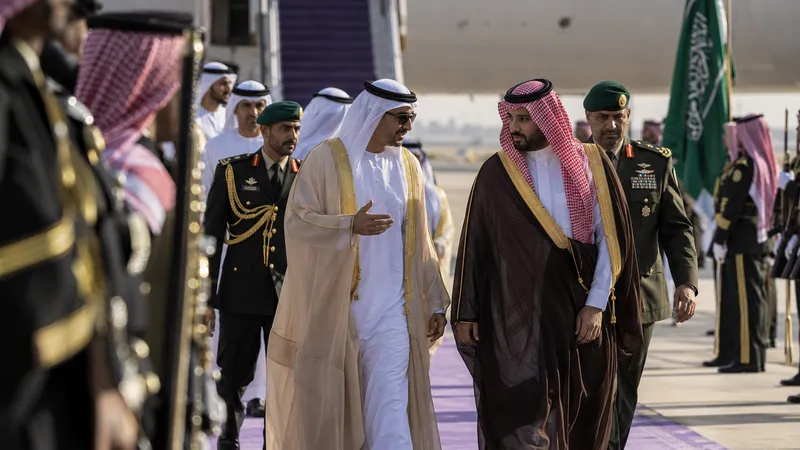
The UAE Saudi visit puts a Yemen conflict that has killed more than 800 people since August at the center of Gulf diplomacy. No agenda was announced.
UAE Vice President Sheikh Mansour bin Zayed is traveling to Saudi Arabia today at the invitation of Defense Minister Prince Khalid bin Salman. The trip gives Abu Dhabi and Riyadh a high-level channel after years in which their Yemen partnership weakened and their regional priorities diverged.
Mansour trip follows Netanyahu talks
The visit comes after Israeli Prime Minister Benjamin Netanyahu made a rare trip to Abu Dhabi for talks with UAE President Sheikh Mohamed bin Zayed. The discussions were described as covering "regional challenges," language that places the meeting in the same security frame as the Saudi outreach.
Yemen is the immediate pressure point. Saudi Arabia has been seeking support for operations against the Houthis after a planned US bombing campaign was pulled back at a late stage, according to the account provided.
The Houthis have targeted Saudi infrastructure, urban centers and trade routes, adding pressure on Riyadh to widen backing for any response. France and the UK were named as limited sources of support so far, leaving Saudi Arabia short of a broad coalition.
Yemen strains Gulf alignment
The World Health Organization said more than 800 people have died since fighting resumed in August, with nearly all of the deaths in Yemen. That toll gives the diplomacy a humanitarian and security dimension at once: the conflict is both a local war and a risk to regional commerce.
The Saudi-UAE relationship has been under strain since their coalition in Yemen came apart. Riyadh and Abu Dhabi once moved in parallel against the Houthis, but the collapse of that alignment exposed different views of how power should be organized in weak states.
Analysts in Riyadh cited in the account see Abu Dhabi as supporting secessionist forces to preserve influence beyond its borders. Analysts closer to the UAE view Saudi Arabia as acting like a regional hegemon and moving closer to an Islamist axis associated with Ankara, Doha and Islamabad.
Those readings matter because they shape what each capital may accept from the other. A Saudi request for backing against the Houthis is not just a military question; for the UAE, it also touches maritime routes, southern Yemen and the balance between deterrence and escalation with Iran.
Houthis test Gulf security design
Emirati political adviser Nadim Koteich framed Sheikh Mansour’s visit as part of a "new regional security architecture" rather than a narrow bilateral repair. His formulation pointed to Gulf and Israeli interests converging against the Houthis without automatically becoming a united front against Iran.
That distinction is central to the next phase. If the visit produces practical coordination on intelligence, air defense or maritime security, the global macro effect would run through lower perceived risk around trade lanes and energy infrastructure; Saudi Arabia would gain political cover, while regional defense and shipping sectors would face a clearer security framework.
If the talks stop at diplomatic signaling, the macro effect would be narrower, with investors and shippers still pricing Yemen as a recurring disruption risk. Saudi Arabia would remain exposed to Houthi pressure, and Gulf defense cooperation would continue to depend on ad hoc alignments rather than a durable arrangement.
If Houthi attacks intensify after the visit, the pressure on Riyadh to act with or without wider backing would rise. That path would carry the greatest risk for trade routes, Saudi critical infrastructure and insurers, while forcing the UAE to choose between deeper coordination and preserving its room for maneuver with Iran and other regional actors.
The main open question is whether Sheikh Mansour’s talks produce a mechanism that survives beyond the visit. The answer will determine whether this is a temporary thaw between two Gulf powers or the start of a more structured response to Yemen’s widening security costs.