Bessent says Iran sanctions close most external flights
Treasury Secretary Scott Bessent said Iran sanctions have halted most external flights and could leave Tehran facing economic collapse within two weeks.
Lauren Collins ·
Treasury Secretary Scott Bessent said Iran sanctions could push Tehran toward economic collapse within two weeks. He cited flight and banking curbs.
Bessent said Wednesday that "Operation Economic Outcast" had cut 80% to 90% of Iran's external flights, a range he tied to coordinated pressure by governments outside Iran. The claim is consequential and rests here on Bessent's account of a campaign aimed at isolating Tehran's transport and financial links.
Bessent names a two-week test
The Treasury secretary described the effort as an "Economic D-Day" involving more than 50 countries, placing the United States at the center of a sanctions drive that asks other governments to enforce access limits. In his telling, the pressure has moved from designations on paper to airport routes, bank licenses and cross-border payment channels.
The reported actions include the United Arab Emirates blocking transactions involving Bank Melli and Turkey revoking Bank Mellat's license last week. Those are not minor channels in Bessent's account: he identified both banks among the targets in a wider squeeze on Iran's largest carriers and lenders.
Flights show uneven pressure
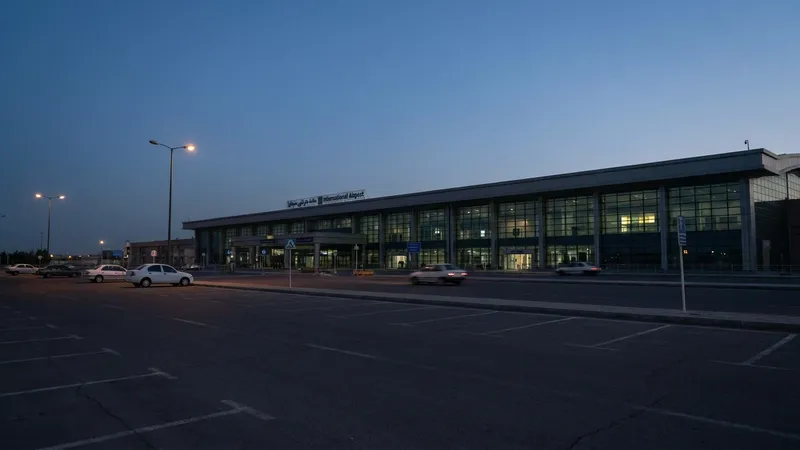
The aviation picture remains mixed. A Thursday review of scheduled traffic at Tehran's Imam Khomeini Airport listed flights to Afghanistan, Armenia, China, Iraq, Pakistan, Tajikistan and Turkey, while showing no scheduled service to nearby Gulf Arab states.
That split matters because sanctions campaigns often work less by banning every route than by raising the cost and risk of the remaining ones. If Gulf links are curtailed while Asian and regional routes continue, Iran keeps some commercial openings but loses part of the network that normally connects it to finance, logistics and travelers.
Smaller Iranian carriers still operate international routes to China, according to the account of the campaign. Their continued service suggests the pressure is not yet uniform across the industry, even as Bessent argued that Iran's largest aviation and banking nodes are being constrained.
Neighbors weigh Washington's request
Mohsen Rezaei, head of Iran's Supreme National Security Council, warned regional governments against joining what he called "America's adventure." He told them, "You are our friends, but you should not join America's ranks."
Rezaei's message points to the political hinge of the policy: Washington can designate and threaten, but the commercial effect depends on whether neighboring states and financial centers deny access. Countries that comply may reduce exposure to U.S. penalties; countries that resist may preserve trade ties with Tehran while risking pressure from Washington.
Bessent also suggested that Iranian delegates at the United Nations General Assembly in New York City could face travel difficulties. That claim extends the sanctions argument from cargo and banking into diplomacy, where logistical friction can become part of the contest over legitimacy and access.
Collapse claim meets hard gaps
The phrase "economic collapse" is a high bar, and Bessent's two-week timetable should be read as a U.S. official's forecast rather than an established outcome. The source material does not include Iranian macro data, bank balance-sheet figures or independent flight counts that would confirm the scale of the claimed damage.
If Bessent's estimate holds and 80% to 90% of external flights remain disrupted, the macro channel would run through trade frictions, payment delays and reduced physical connectivity. Iran's carriers would face thinner route networks and higher compliance barriers, while banks and airlines across the region would have stronger incentives to screen Iranian counterparties.
If, instead, smaller carriers and Asian routes keep operating at scale, the pressure may become more selective than systemic. In that scenario, Tehran would retain some trade and travel outlets, Iranian airlines would adjust around blocked hubs, and regional aviation firms would face a patchwork of enforcement rather than a clean cutoff.
The next evidence will come from licenses, payment blocks and airport schedules, not from slogans attached to the campaign. The open question is whether more than 50 governments maintain coordinated pressure long enough to turn Bessent's forecast into a measurable economic shock.