UAE Confirms Netanyahu Visit, Signaling Diplomatic Momentum
The UAE has officially confirmed a meeting between President Sheikh Mohammed bin Zayed and PM Benjamin Netanyahu, marking formal high-level engagement.
Omar Farouk ·
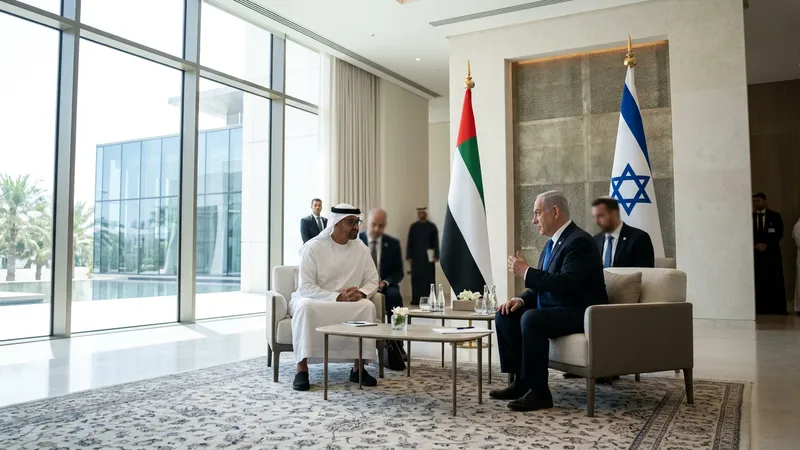
The United Arab Emirates officially confirmed a meeting between President Sheikh Mohammed bin Zayed Al Nahyan (MBZ) and Israeli Prime Minister Benjamin Netanyahu, according to a report by the state news agency WAM. This confirmation, released on July 10, 2024, follows earlier denials by the UAE regarding a similar visit reported by the Israeli Prime Minister’s Office in May, indicating a potential shift in diplomatic public posture.
Abraham Accords Framework
The Abraham Accords, signed in August 2020, normalized diplomatic relations between Israel and several Arab nations, including the UAE. This agreement, brokered by the United States, established full diplomatic, economic, and cultural ties, fundamentally reshaping regional alliances. Prior to the Accords, most Arab nations maintained an official policy of non-recognition with Israel, tying normalization to the resolution of the Israeli-Palestinian conflict.
Since 2020, bilateral trade and cooperation have expanded across various sectors. However, the relationship has faced periods of public strain, particularly concerning the Israeli-Palestinian conflict and Israel’s judicial overhaul debates, which occasionally led to muted or critical responses from Abu Dhabi. The official acknowledgment of high-level talks suggests a renewed emphasis on direct engagement, despite these underlying tensions.
Regional Political Ripple Effects
This confirmed high-level engagement carries implications for the broader Middle East. The UAE, a key member of the Gulf Cooperation Council (GCC), has pursued a strategy of de-escalation and diversified partnerships, including with Iran. Deeper public ties with Israel could influence the calculus of other regional actors, such as Saudi Arabia, which has been considering its own potential normalization with Israel under specific conditions.
The United Arab Emirates
The discussion between President Sheikh Mohammed bin Zayed and Prime Minister Netanyahu likely covered bilateral relations, regional security, and economic cooperation, impacting sectors like technology, energy, and defense. The UAE's move to officially confirm the meeting could reflect a strategic decision to project stability and strength in a volatile region, potentially signaling a united front on certain security concerns or a push for regional economic integration.
Monitoring Further Diplomatic Signals
Future official statements or joint communiqués from the UAE and Israel will provide clarity on the substance and trajectory of this re-engagement. Should both nations announce concrete steps towards new economic or security cooperation, or articulate a shared position on a regional issue, it would signal a strengthening of ties beyond previous public acknowledgments. Conversely, a lack of follow-up details or contradictory statements from either side would suggest the confirmation was a limited strategic move, rather than a precursor to deeper collaboration.