Iran talks draw Qatar push as Hormuz terms loom this week
Qatar is expected to mediate Iran talks in New York over a seven-day plan covering hostilities, assets, oil sanctions and Hormuz access.
Omar Farouk ·
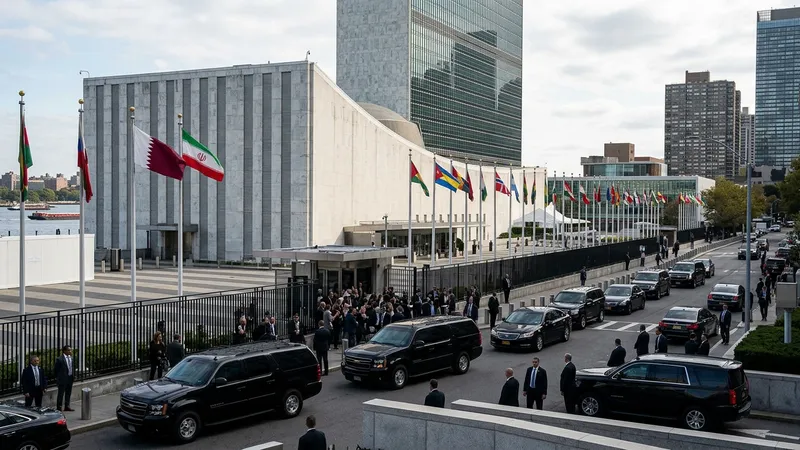
Iran talks may resume within 48 hours around a seven-day ceasefire plan, linking Hormuz access to sanctions and frozen assets.
Qatari mediators are expected to hold separate discussions with Iranian Foreign Minister Abbas Araqchi in New York and with the US side on Monday or Tuesday, according to an official briefed on the negotiations who spoke on condition of anonymity. The effort centers on an amended version of a proposal Iran put forward last week during the United Nations General Assembly.
Qatar splits the negotiating room
The planned format points to indirect diplomacy rather than a joint US-Iran meeting, with Qatar carrying messages between the sides. Araqchi remained in New York after the General Assembly session, while the US representative for the mediator talks was not immediately identified in the source material.
Iranian state-linked media later reported that Araqchi would meet the mediators in the US on Monday morning, New York time. It said the parties would review the latest proposals and positions on the current situation, without saying whether US officials would be in the same room.
Araqchi schedule limits signals
Iranian Foreign Ministry spokesperson Esmaeil Baghaei told state media that Araqchi's stay in New York had not been extended and that he would return to Tehran under his original schedule. Baghaei did not comment on the reported mediator talks, leaving the scope of the meeting attributed to the official and Iranian media reports.
The timing matters because the proposal under discussion is measured in days, not months. The Iranian plan covers a seven-day framework that would halt hostilities in Iran and Lebanon while reopening a channel for nuclear talks.
Hormuz terms frame the offer
Under the proposal described by the official, Iran would seek the release of billions of dollars in frozen Iranian assets, the removal of sanctions on Iranian oil and the lifting of what Tehran describes as a US blockade on Iranian ports. Iran would then allow the Strait of Hormuz to reopen, according to the same account.
The Strait of Hormuz is the central pressure point in the proposal because it links the war track to global energy flows. If access remains constrained, oil traders, refiners, tanker operators and marine insurers face a direct channel through which political risk can affect pricing, shipping schedules and coverage costs.
President Trump said Saturday he had rejected Iran's offer, saying Tehran wanted a fast deal because of economic pressure. He also said in a Sunday interview that he expected US negotiators to take part in further talks this week, keeping a diplomatic track open after the rejection.
Tehran waits on Washington
Araqchi said Sunday that mediators had not formally conveyed a US rejection to Tehran and that Iran was waiting for Washington's definitive position before deciding its next move. “Our conditions are clear, and any move toward reopening the Strait of Hormuz is contingent on these conditions being met,” he said, adding that only negotiations could resolve the standoff.
If the amended seven-day plan holds, the immediate macro channel would run through lower disruption risk in energy transport, while Iran would test whether sanctions relief and asset access can be converted into a broader nuclear negotiation. For the wider energy and shipping sectors, a reopening of Hormuz would reduce operational uncertainty tied to routing, insurance and delivery timing.
If Washington rejects the amended terms or Tehran judges the response insufficient, the conflict could remain tied to shipping access and oil sanctions. In that case, the main open questions are whether Qatar can keep both sides engaged this week, who speaks for the US side in the mediator track and whether Iran keeps Hormuz access as its principal bargaining lever.