

Türkiye fruit output jumps 60.8% in 2026 estimate
The crop forecast gives Ankara a larger food-supply cushion, but the data do not show where additional exports would go.
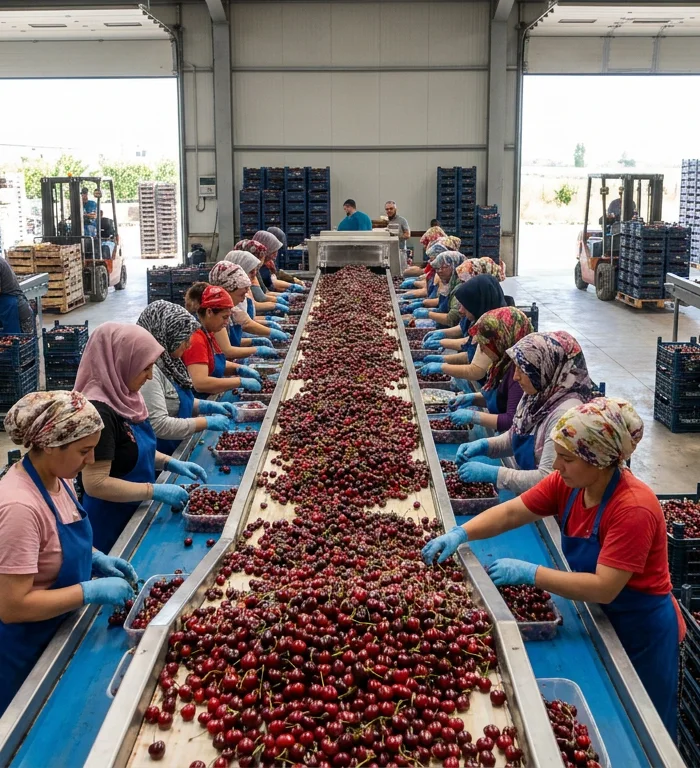
TÜİK forecast Türkiye’s fruit output will rise 60.8% year on year to about 31.5 million tons in 2026 in its second crop-production estimate.
The figure implies about 19.6 million tons in 2025, according to Atlas360 calculations, giving Ankara a larger domestic supply cushion than last year.
TÜİK also expects grain production to increase, while vegetable output is forecast to decline slightly. The summary identified cherries as the fruit category with the largest expected increase, without giving a separate tonnage or percentage for that crop.
For Washington, the agricultural estimate is relevant through commodity trade, payments compliance and regional food corridors, not as evidence by itself of a sanctions issue. The Treasury Department’s Office of Foreign Assets Control administers sanctions programs, while food and agricultural trade can still require bank screening when sanctioned jurisdictions or intermediaries are involved.
The figures do not show where any additional fruit or grain would be sold, and they do not report any response from the White House, State Department, Treasury Department or Congress. That limits the immediate US policy readout.
If the larger harvest turns into higher exports
If the larger harvest turns into higher exports through Turkish logistics firms and banks, the Washington channel would be trade compliance: payment routing, counterparties and end users.
If the added supply is absorbed mainly at home, the macro effect would sit closer to Turkish food inflation and farm incomes, with less direct relevance for US sanctions policy.
For Turkish producers, the upside scenario is higher volume that supports processors and exporters if prices hold. The risk is that a large crop weighs on farmgate prices, especially if storage, shipping or market access cannot keep pace.
The next observable test is whether US economic or sanctions officials publicly connect Turkish agrifood trade to compliance oversight, or treat the crop rebound as a standard commodities development.
More stories
- Eisenkot secures first coalition deal but lacks majority
- Germans oppose Ukraine aid as poll shows support slipping
- Kim Jong-un receives 10 envoys after constitutional shift
- Ukraine claims Libya strike sinks Russian naval corvette
- COP31 climate talks collapse over fossil fuels and funds
- Russian military faces 1,087 recorded suicides in Ukraine war
- AfD leak details 420,000 emails on Trump outreach
- Iran phone buyers face 30% import duties
- LAAF executes 31 people after 15-year Libya moratorium
- Under-50 bowel cancer rates rise across 27 regions
Latest news
- Trump prepares tariffs on China and other major exporters
- New-car buyers pay record average $50,087 in October
- Banks face ECB reserve debate over liquidity and profits
- Investors see Anthropic debut gains fade below $83 a share
- Iraq orders federal control over Kurdish-area oilfields
- Nvidia shares retreat as AI rally cools before PCE data