

Turkey’s 2026 award bolsters antiquities push in Washington
The Paestum honor gives Ankara another diplomatic credential as it presses U.S. officials and museums over Turkish cultural property.
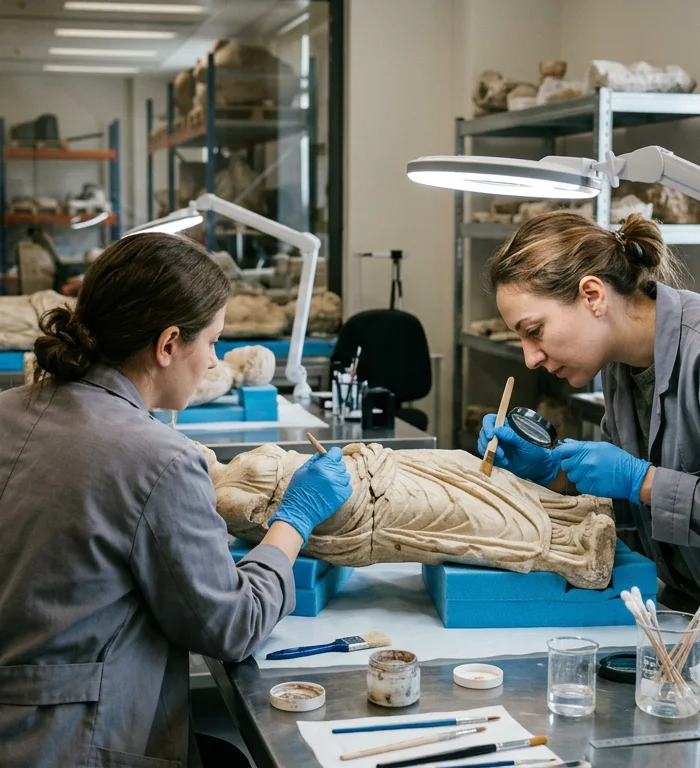
Turkish Culture and Tourism Minister Mehmet Nuri Ersoy won Italy's 2026 Paestum Award for the Geleceğe Miras Projesi archaeology program, according to a Turkish news report on the award.
For Washington, the prize matters because Turkey already has a 2021 Cultural Property Agreement with the State Department restricting illicit imports of Turkish archaeological and ethnological material.
The award, given by the Mediterranean Exchange of Archaeological Tourism, recognizes Turkey's expanded archaeology work under Ersoy, the report said. Ankara has framed the project as a state-backed effort to widen excavation, conservation and heritage management inside Turkey.
That domestic push feeds directly into U.S. policy. The State Department's cultural property program negotiates import restrictions, while U.S. law enforcement agencies can support seizures and returns when objects are tied to illicit trafficking or weak provenance, the ownership record museums use to justify possession.
The supplied background says the Manhattan District Attorney's Antiquities Trafficking Unit and Homeland Security Investigations have carried out artifact seizures from U.S. museums and private collections for return to Turkey. Those cases have made cultural property a recurring issue between Ankara, federal agencies and American institutions holding Anatolian material.
Turkish Culture
The award does not change U.S. law by itself. It gives Turkish officials a European endorsement to cite when arguing that expanded excavation and documentation strengthen their claims over contested objects abroad.
American museums are likely to focus on proof. A stronger Turkish heritage program may help Ankara identify objects and challenge collection histories, but restitution still turns on documentary evidence, export law, acquisition records and law-enforcement findings.
If Turkey uses the Paestum recognition to support new claims, the State Department and U.S. agencies would face more pressure to show the 2021 pact is producing returns. That would reinforce Ankara's soft-power campaign and raise compliance costs for museums with Turkish holdings.
If U.S. institutions resist and provenance disputes slow, the award remains a reputational gain rather than a policy lever. The test is whether a U.S.-facilitated return or enforcement step follows the diplomatic recognition.
More stories
- Eisenkot secures first coalition deal but lacks majority
- Germans oppose Ukraine aid as poll shows support slipping
- Kim Jong-un receives 10 envoys after constitutional shift
- Ukraine claims Libya strike sinks Russian naval corvette
- COP31 climate talks collapse over fossil fuels and funds
- Russian military faces 1,087 recorded suicides in Ukraine war
- Abu Dhabi draws private-equity firms as secondary deals hit $121bn
- NNPC puts Nigeria crude output at 1.8m bpd after reforms
- Kallas urges UK to deepen EU defence ties before Nov. 20 summit
- Budi seeks WHO dues above 50% to steady funding
Latest news
- Trump prepares tariffs on China and other major exporters
- New-car buyers pay record average $50,087 in October
- Banks face ECB reserve debate over liquidity and profits
- Investors see Anthropic debut gains fade below $83 a share
- Iraq orders federal control over Kurdish-area oilfields
- Nvidia shares retreat as AI rally cools before PCE data