

Turkey frontier food exports rise 5.6%, testing US sanctions balance
Southeastern Anatolia kept 30.9% of Turkey’s sector exports, making a farm-trade release relevant to US policy near Syria and Iraq.
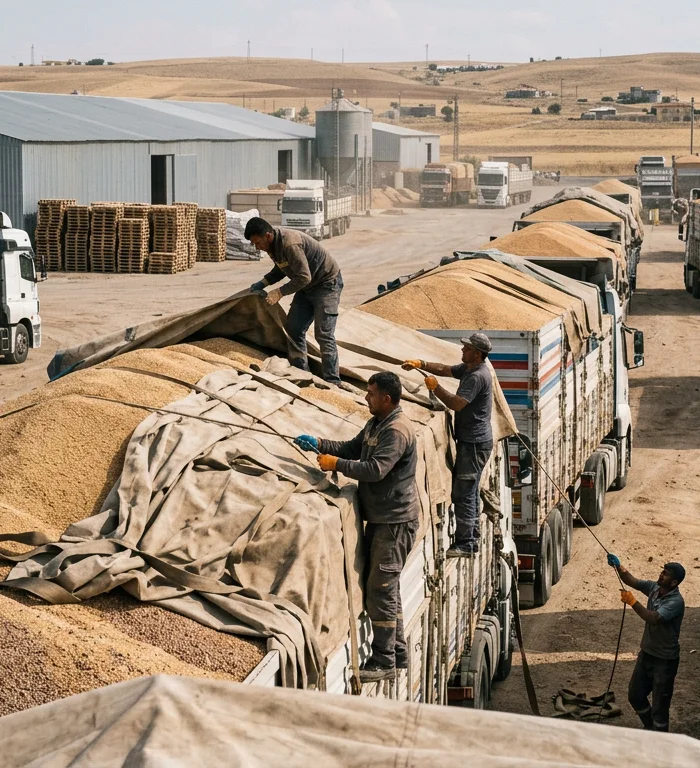
Southeastern Anatolian exporters shipped about $2.75 billion of cereals, pulses, oilseeds and related products in the first nine months, regional export data released this week showed.
The region's foreign sales rose 5.6% from the same period last year and accounted for 30.9% of Turkey's sector exports, the report said.
The reported value was $2,753,097,000 for the nine-month period. The same data said Southeastern Anatolia remained Turkey's leading region in the sector by export share.
For Washington, the release matters beyond farm trade. Southeastern Turkey sits near the Iraq-Syria frontier, where food shipments, transport networks and border finance intersect with US sanctions compliance and stabilization policy.
US sanctions rules, including the Caesar Act targeting the Syrian government and its enablers, leave room for humanitarian flows but still require banks, shippers and traders to screen counterparties. Larger agricultural volumes can make that compliance line harder to police without disrupting food supply.
Ankara's position is also tied to Iraq. Turkey's push for the Iraq Development Road would lean on established trade conduits running through the same broad geography, giving Turkish exporters a commercial role that can counter rival influence in Iraqi logistics and food supply chains.
The open question is whether US officials treat Southeastern Turkey's export base mainly as a food-security channel or as a sanctions-exposure point. If Treasury or State clarifies compliance rules for agricultural corridors, Turkish shippers would gain more certainty and regional food flows could face fewer payment frictions. If Washington tightens secondary compliance around logistics entities tied to Syria or Iraq networks, exporters could face higher screening costs and slower cross-border trade.
Source: regional export data summary, this week
More stories
- Eisenkot secures first coalition deal but lacks majority
- Germans oppose Ukraine aid as poll shows support slipping
- Kim Jong-un receives 10 envoys after constitutional shift
- Ukraine claims Libya strike sinks Russian naval corvette
- COP31 climate talks collapse over fossil fuels and funds
- Russian military faces 1,087 recorded suicides in Ukraine war
- Singapore coroner rules 20-year-old bodybuilder's death accidental
- PE and VC firms lift AI adoption to 71% in IFC survey
- EU migration framework targets sudden border surge rules
- China Iran talks press Hormuz reopening before Xi-Trump
Latest news
- Trump prepares tariffs on China and other major exporters
- New-car buyers pay record average $50,087 in October
- Banks face ECB reserve debate over liquidity and profits
- Investors see Anthropic debut gains fade below $83 a share
- Iraq orders federal control over Kurdish-area oilfields
- Nvidia shares retreat as AI rally cools before PCE data