

Transportation Secretary Cites Funding Shortfalls Following Nationwide Flight Grounding
Transportation Secretary Sean Duffy blames legacy infrastructure and funding gaps for a major flight grounding, while lawmakers challenge the…
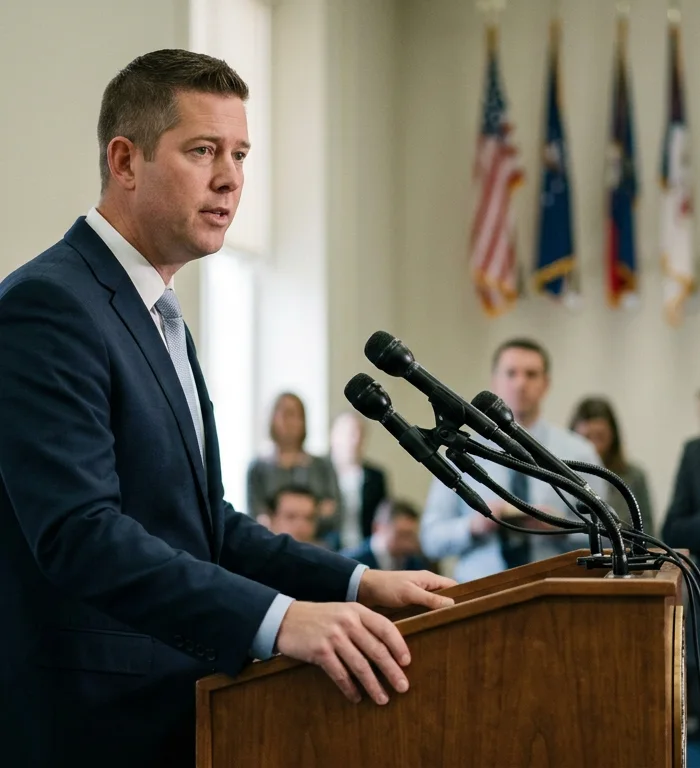
Transportation Secretary Sean Duffy has attributed the recent four-hour nationwide flight stoppage to systemic infrastructure deficiencies inherited from prior administrations and insufficient congressional funding. The grounding, which resulted in thousands of flight delays and cancellations, was initially linked to a botched maintenance procedure involving the replacement of copper telecommunication lines with fiber optic cables.
Secretary Duffy stated that the existing $12.5 billion in congressional funding is inadequate to address the modernization of air traffic control architecture, specifically citing outdated software and physical tower infrastructure. He emphasized that the current systems rely on technology dating back to the 1990s, necessitating significant capital investment to ensure future operational stability.
Conversely, legislative critics argue that the administration has failed to effectively deploy existing appropriations. Lawmakers have indicated that the administration has not provided sufficient justification for additional funding requests, noting that previous allocations were intended to address the very infrastructure vulnerabilities currently under scrutiny.
Transportation Secretary Sean Duffy
The Federal Aviation Administration (FAA) is currently investigating the maintenance failure, which involved equipment managed by a third-party contractor. While officials have ruled out foreign cyberattacks, labor representatives for FAA technicians have stated that their members were not involved in the risk assessment or execution of the specific upgrades that triggered the system collapse.
Secretary Duffy acknowledged that the agency will re-evaluate protocols regarding the timing of maintenance activities. The incident has prompted renewed scrutiny of the agency’s modernization strategy, with recent oversight reports questioning whether the current pace of implementation prioritizes speed over the mitigation of operational risks and service disruptions.
More stories
- FCC approves prison cellphone jamming despite 2.5-mile warning
- Congress tests Black Democrats' growing policy influence
- Cotton faults Lutnick over AI chips allegedly sent to China
- Vance declines to back Iran strikes as Trump defends war
- Paul seeks 20%-30% federal credit for U.S. film shoots
- Trump targets data centers abroad with tax threat to firms
- Sanders proposes $2,400 Social Security increase
- Trump administration plans vaccine-injury payments for doctors
Latest news
- Trump prepares tariffs on China and other major exporters
- New-car buyers pay record average $50,087 in October
- Banks face ECB reserve debate over liquidity and profits
- Investors see Anthropic debut gains fade below $83 a share
- Iraq orders federal control over Kurdish-area oilfields
- Germans oppose Ukraine aid as poll shows support slipping
- Kim Jong-un receives 10 envoys after constitutional shift
- Ukraine claims Libya strike sinks Russian naval corvette